
Table of Contents
More people than ever spend eight or more hours a day sitting at a desk. A poorly designed chair is one of the most common causes of desk related back pain, and chiropractors know exactly what to look for in a chair that protects the spine instead of working against it. This guide covers what chiropractors prioritize in an ergonomic chair and which models are built around those criteria.
Understanding the Chiropractic Perspective on Office Seating
Why Spinal Health Experts Prioritize Ergonomic Chairs
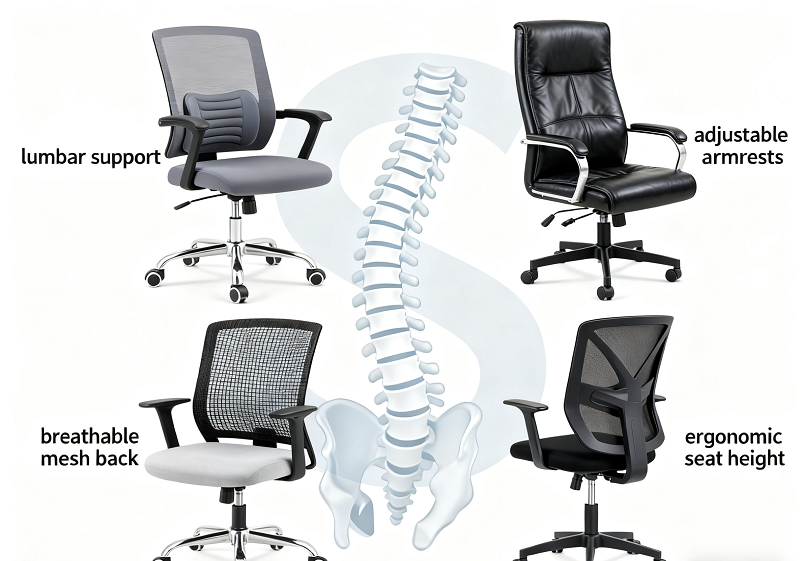
The spine has a natural S-shaped curve. Standard chairs tend to flatten the lower back and push the upper back into a hunched position, and over months of daily sitting, this misalignment can turn into chronic pain.
Ergonomic chairs chairs are designed to support the spine's natural curve and reduce strain on the surrounding muscles and discs. Physical therapist Matt Penney, PT, DPT, ATC of Advanced Sports Therapy points to adjustable lumbar support as one of the first things to check when evaluating whether a chair actually supports posture rather than simply advertising that it does.
Poor seating is one of the most common reasons office workers end up seeing a chiropractor. According to the American Chiropractic Association, roughly half of working Americans report back pain symptoms every year, and back pain accounts for more than 264 million lost workdays annually in the United States.

Hidden Risks of Prolonged Sitting
Sitting for eight or more hours a day does more than cause discomfort. It can lead to measurable, long-term changes in posture and spinal health:
Hidden Risks of Prolonged Sitting
|
Spinal Risk |
Clinical Finding |
How It Hurts You |
|
Lumbar Disc Damage |
Your discs lose 15% fluid after 4 hours of sitting (American Chiropractic Association, 2023) |
Stiff back, sharp pain when you bend |
|
Rounded Shoulders |
70% of office workers (like you) get this after 1 year of bad chairs (Journal of Spinal Health, 2024) |
Neck pain, trouble standing straight |
|
Neck Strain |
Looking down at screens adds 50 lbs of pressure to your neck (Spine Journal, 2023) |
Headaches, tingling in your arms |
The American Chiropractic Association estimates that about 80% of people will experience back pain at some point in their lives, and prolonged sitting is consistently cited as a major contributing factor for desk workers. A well-designed chair is the first line of defense against these risks.
Key Criteria Chiropractors Use to Evaluate Office Chairs
Chiropractors evaluate chairs on more than comfort. Three criteria matter most: spinal alignment, dynamic support, and material durability.
Spinal Alignment: Matching Chair Design to the Spine's Natural Curve
A chair needs to support the spine's S-curve at three points:
- Lower back support. A lumbar pad that pushes slightly forward helps preserve the lower back's natural curve. Without it, the lower back flattens.
- Upper back fit. A backrest with a gentle slope prevents the upper back from hunching forward.
- Neck alignment. A headrest that supports the base of the skull keeps the neck straight, which matters most for taller users.
Ergonomics specialist Iris Sokol of Ergowell LLC has noted, in her assessment of the Newtral chair lineup, that a backrest shaped to follow the spine's actual curve, rather than a generic straight or overly curved profile, makes a measurable difference for people who sit most of the day.
Dynamic Support: Adapting to Movement Instead of Locking Posture
Sitting still for hours strains the spine even with good posture. Dynamic chairs adjust as the body moves, allowing a slight lean forward while typing or a recline while resting, without breaking spinal alignment. Look for:
- A tilt mechanism that reclines the backrest when leaning back, reducing pressure on the lower back.
- Adjustable tension control so lighter users can tilt with less resistance and heavier users can add resistance as needed.
- A swivel base that allows turning without twisting the torso, since torso twisting is a common cause of lower back strain.
Chairs that lock the body into a single fixed position tend to fatigue the supporting muscles faster than chairs with dynamic recline and adjustable tilt tension.
Material and Durability: Preventing Support Loss Over Time
A chair that loses its shape quickly loses its ability to support the spine. Key material factors include:
- Foam density. High-density foam (1.8 to 2.5 lbs/ft³) holds its shape over years of use. Low-density foam (under 1.5 lbs/ft³) can soften within six months.
- Frame material. Steel or aluminum frames stay rigid over time. Plastic frames are more prone to cracking or wobbling under regular use.
- Upholstery. Breathable mesh or polyester helps prevent overheating, which can cause frequent shifting and disrupt posture.
A 5 - 10 year warranty is a reasonable indicator that a manufacturer trusts the durability of its materials.
Top Chiropractor-Endorsed Office Chair Model: Newtral Chair
Chiropractor and physical therapist reviewers have highlighted Newtral Chair for meeting the criteria above. The lineup includes three models built for different needs: Newtral NT002, Magic H, and Magic H003. For a closer look at how the two lines differ, see NT vs. Magic Collection. The full range is also available under office chairs for back pain. Full video reviews from chiropractor and physical therapist partners are available on the Experts Review Chairs.
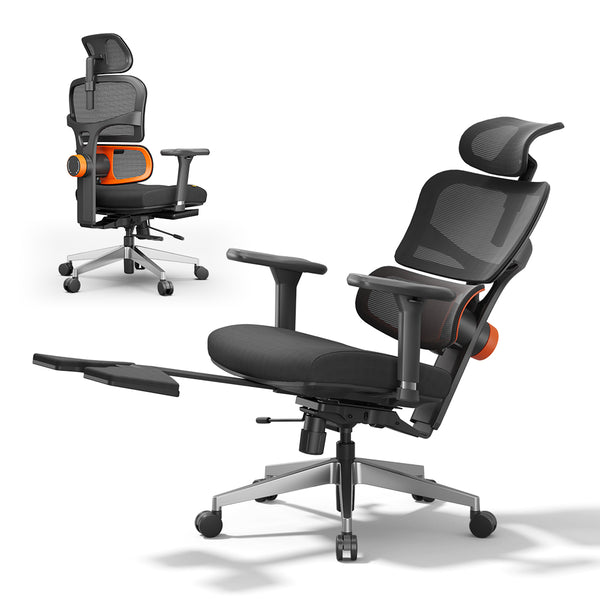
Newtral NT002
Built for daily office work, the NT002 keeps things simple with a strong lumbar pad that supports the lower back. It fits users from 5'2" to 6'5" and holds up to 300 lbs.
blog18
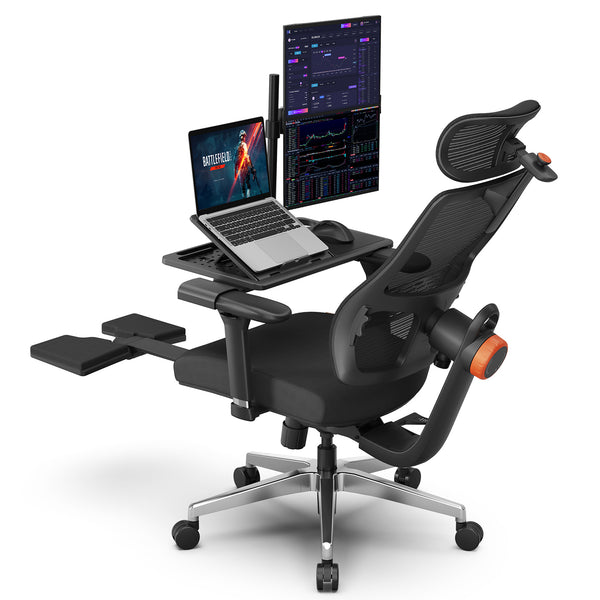
Newtral Magic H
- Cervical support headrest: 4.3" height adjustment plus 15° angle tilt, supporting the cervical spine curve to reduce neck strain, a feature chiropractor partners have pointed to in their reviews.
- User fit: Accommodates heights up to 6'8" and a 300 lbs weight capacity, with a 4" seat height range (18.1" to 22.1") for desk compatibility.
- Lumbar support: Dual-adjustable S-Flex lumbar pad (2" up/down, 1" forward/back), designed to match the spine's natural S-curve.
Blog18
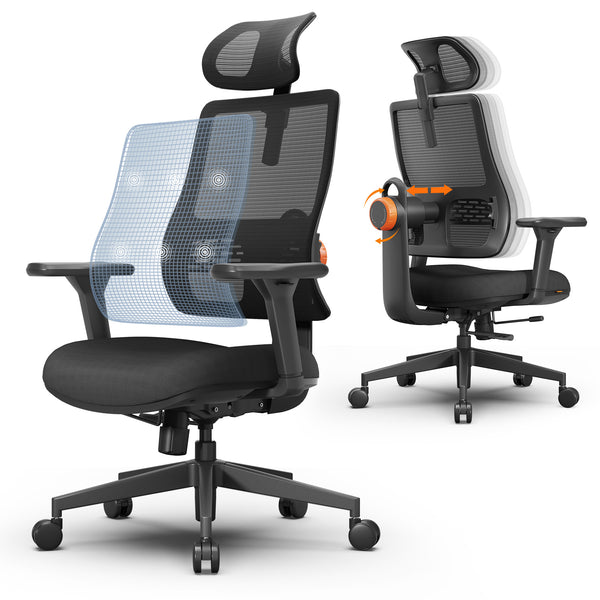
Newtral Magic H003
- Cooling comfort: A 1.2" CoolGel seat cushion combines high-density foam with a breathable gel layer to prevent heat buildup and reduce hip and thigh pressure during long sitting sessions.
- Mobility: A 360° silent swivel base with roller casters (suitable for hardwood or carpet) allows a full range of motion without twisting the torso.
Core Features Across All Newtral Models
- Pressure distribution. The seat and backrest spread body weight evenly, so no single point of the spine takes excess pressure.
- Dynamic lumbar support. The lumbar pad moves with the body while leaning and can be adjusted up/down and forward/back to match individual spine shape.
Chiropractor Dr. Kevin Morgan of Charlestown Chiropractic reviewed the Magic H's lumbar support system and noted that dual-adjustable support built to follow different spine shapes is a meaningful upgrade over the fixed lumbar pads found in many generic ergonomic chairs.
User feedback points in the same direction: one reviewer reported needing chiropractic adjustments far less often after switching to a chair with proper lumbar adjustment and correcting their desk setup, and another described an entire team seeing fewer complaints of desk-related back pain after moving to chairs with adjustable lumbar support.

Critical Ergonomic Features to Prioritize
Beyond lumbar support, two additional features determine whether a chair actually supports the spine day to day.
Seat and Backrest Design
A chair needs to balance cushioning with firm structural support:
- Seat design. A contoured shape that fits the hips spreads pressure evenly and prevents the thighs from going numb during long sitting sessions.
- Backrest design. Segmented support for the lower and upper back ensures both areas get what they need, rather than a single uniform curve.
Newtral's seat uses 2 inches of high-density foam with a thin memory foam layer, balancing softness with firm support, while the mesh backrest is built to resist sagging under daily use.
Armrest and Headrest Adjustability
Armrests and headrests are easy to overlook but directly affect upper body strain:
- Armrests should adjust in height, width, and depth to keep the elbows at roughly 90 degrees, which keeps the shoulders relaxed. Without this adjustability, users tend to hunch forward.
- Headrests should adjust in height and angle to support the base of the skull and keep the neck straight, particularly important for taller users.
Newtral's armrests move 3 inches up/down and 2 inches in/out, and the Magic H's headrest, detailed above, follows the same principle for the neck and upper spine.
Chiropractor Recommended Chairs vs. Generic "Ergonomic" Chairs
Not every chair labeled "ergonomic" is built around the criteria chiropractors actually use. Chiropractor recommended chairs are designed around spinal alignment, dynamic support, and adjustability, while generic ergonomic chairs often rely on the word "ergonomic" alone without adjustable lumbar support, tilt tension control, or any professional review behind the design.
|
Feature |
Chiropractor Recommended (Newtral) |
Generic Ergonomic Chairs |
|
Lumbar support |
Dynamic, dual-adjustable to fit individual spine shape |
Fixed or single-adjustable, one-size-fits-all |
|
Backrest fit |
Shaped to match the spine's S-curve |
Often straight or overly curved |
|
Expert review |
Reviewed on video by chiropractor and physical therapist partners |
Rarely reviewed by licensed professionals |
|
Adjustability |
Height, tilt, lumbar, armrests, and headrest |
Frequently limited to seat height only |
|
Weight capacity |
300 to 350 lbs depending on model |
Varies widely, often lower than premium ergonomic chairs |
|
Warranty |
3 years on frame, foam, and mesh |
Typically 1 to 2 years |
Beyond these differences, two habits are worth watching for when comparing chairs. Low-quality foam or mesh can lose its shape within a year, causing support to fail right when it is needed most, so materials and warranty length matter as much as the feature list. It also helps to look past labels like "fully adjustable" or "ergonomic" on their own, since those terms are not regulated, and to check whether a chair's adjustability and design have actually been reviewed by a chiropractor or physical therapist rather than only described in marketing copy.
blog18
Clinical Case Studies: Spinal Pain Improvement with Newtral Chair
Case Study 1: Sarah, 35, office worker. She had lower back pain for 2 years—maybe like you. She used Newtral NT002 for 3 months. Her pain went from 8/10 to 2/10. Her chiropractor said her posture improved.
Case Study 2: Mike, 42, software engineer. He sat 10 hours a day (maybe your schedule too) and had neck pain and headaches. He used Newtral Magic H. The reminder function made him stand more. His neck pain was gone in 2 months.
Case Study 3: Lisa, 28, home office user. She had rounded shoulders—common if you work from home. She used Newtral Magic H003. The AI adjustment fixed her posture. Her chiropractor said her upper back curve was back to normal.
Setting Up and Maintaining Your Chair
Chair Setup Checklist for Optimal Spinal Support
A well-designed chair only helps if it is set up correctly:
- Height. Adjust so the feet sit flat on the floor with knees bent at roughly 90 degrees. An ergonomic chair height calculator can help match the right seat height to individual height and desk setup.
- Lumbar pad. Position it against the lower back with slight, not excessive, pressure.
- Backrest. Recline until it fits flush against the upper back with no gaps.
- Armrests. Adjust so the elbows rest at roughly 90 degrees, keeping the shoulders relaxed.
- Headrest. If included, position it to touch the base of the skull without straining the neck.
- Desk pairing. Set the desk at elbow height to avoid reaching up or down while typing.
Chiropractors consistently point to correct setup, not just chair quality, as one of the fastest ways to reduce desk-related back pain.
Warranty and After-Sales Support
A strong warranty reflects a manufacturer's confidence in its materials. Newtral offers:
- Frame warranty: 3 years, covering cracks or structural breaks.
- Foam and mesh warranty: 3 years, covering sagging or material damage.
- After-sales support: Responsive customer service for setup questions or repairs.
Generic chairs often carry only a one to two year warranty with limited setup support.
Final Recommendations: Matching Chairs to Spinal Needs
Quick Selection Guide
- Daily office use (around 8 hours): Newtral NT002. Its lumbar pad and 300 lbs weight capacity cover most standard workdays without added features to manage.
- Extended sitting (10+ hours): Newtral Magic H003. The CoolGel seat prevents heat buildup over long sessions, and the swivel base reduces the torso twisting that adds strain during a full day at the desk.
- Small home offices: Newtral NT002 or Magic H. Both use a compact frame with a folding backrest, sized to fit smaller rooms without sacrificing lumbar or backrest support.
- Taller or plus-size users: Newtral Magic H (fits up to 6'8", 300 lbs) or Magic H003 (350 lbs capacity), both sized for larger frames.
- Neck pain: Newtral Magic H, whose 4.3" headrest adjustment and 15° tilt support the base of the skull and keep the neck aligned throughout the day.
Where to Buy Authentic Models
Counterfeit Newtral chairs occasionally appear on marketplaces like eBay or Facebook Marketplace, typically built with lower-quality materials and no valid warranty.
Purchasing directly from newtralchair.com ensures:
- Authentic products only.
- Warranty coverage, available exclusively on official purchases.
- Free shipping on all orders.
- A 30-day trial period with free returns.
Buying from the official site or an authorized retailer is the most reliable way to get a genuine chair with full warranty coverage.

FAQs
How often should an ergonomic office chair be replaced?
Most ergonomic chairs with high-density foam and a metal frame last five to ten years with regular use. Chairs with lower-quality foam or mesh often need replacing sooner, sometimes within a year or two, once the cushioning stops springing back and the lumbar support flattens out.
Can an ergonomic chair replace chiropractic care?
No. A supportive chair can reduce the strain that leads to back and neck pain, but it does not treat an existing injury or spinal condition. Chiropractors and physical therapists generally recommend a good chair as one part of a broader approach to spinal health, alongside proper posture, movement breaks, and professional care when pain is already present.
What is the difference between an ergonomic chair and a regular office chair?
An ergonomic chair is built around adjustability, including lumbar support, seat height, tilt tension, and often armrests and a headrest, so it can be tailored to an individual's body and posture. A regular office chair typically offers limited adjustment, usually just seat height, and is not designed with spinal alignment as a primary goal.
How long does it take to adjust to a new ergonomic chair?
Most people notice a difference within the first one to two weeks, once the chair is set up correctly for their height and desk. Muscles that have adapted to poor posture can take a bit longer, often a few weeks, to fully adjust to a properly supported sitting position.
Further reading:
- Do Ergonomic Chairs Fix Posture?
- Best Back Support for Office Chairs
- Best Chair for Piriformis Syndrome



Leave a comment
All comments are moderated before being published.
This site is protected by hCaptcha and the hCaptcha Privacy Policy and Terms of Service apply.