
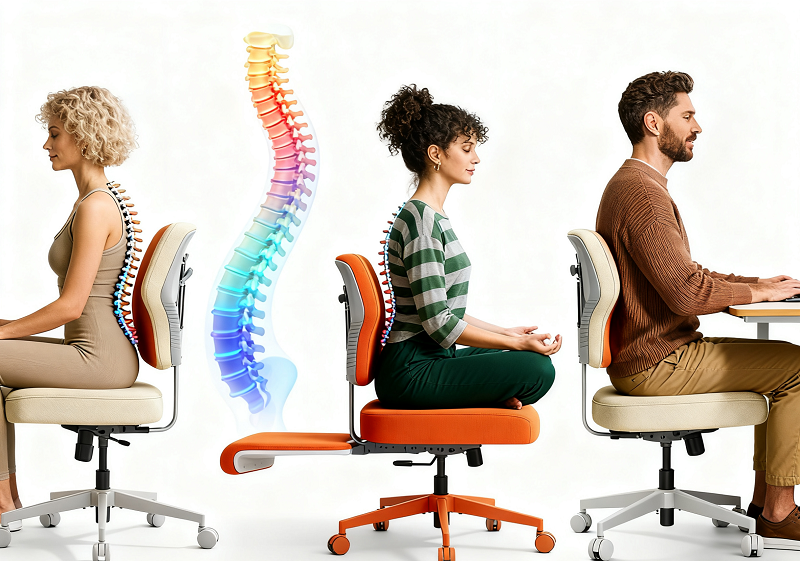
Sitting cross-legged on a chair is something almost all of us do: during work, gaming, studying, meetings, or even while relaxing. It feels natural, comfortable, and sometimes even necessary when our body searches for relief from stiffness. But the big question is: Is sitting cross-legged on a chair good for your back, or is it secretly causing harm?
As someone who spends long hours sitting, I’ve asked myself the same question. And here the truth: Sitting cross-legged is not automatically bad. It can even be helpful. But only when done correctly, in moderation, and with proper support.
In this article, I’ll give you the real answer backed by science, posture mechanics, real-life experience, and ergonomic design. I’ll show you when cross-legged sitting helps, when it hurts, and how to do it safely—especially if you sit for hours.
Let’s dive in.
Do People Sit Cross-Legged Because It’s Comfortable – or Because Something Is Wrong?
Many posture articles say cross-legged sitting is a “bad habit,” but they never ask the deeper question: Why do we do it in the first place? The answer matters because your posture is often a reaction to discomfort—not the cause of it.
You sit cross-legged because:
Your current position is uncomfortable.
You’re trying to relieve pressure from your lower back or tailbone.
Your hips want to move or rotate.
You’re bored or losing focus and your body seeks variety.
Your chair doesn’t support you properly.

In other words: crossing your legs is usually a compensation strategy. Your body is telling you, “I need a change.” And it’s right—staying in one position too long is the real problem.
Is Sitting Cross-Legged on a Chair Good or Bad for Your Back?
Here’s the real answer: It depends on how long, how often, and how well your chair supports you.
✅ It can be GOOD when:
You do it for short periods.
You maintain a relatively neutral spine.
You alternate sides to avoid imbalance.
Your chair supports your lower back and arms.
❌ It can be BAD when:
You hold it for 30+ minutes on the same side.
Your spine twists or slouches.
Your pelvis tilts unevenly.
Your chair is poorly designed and forces compensation.
Conclusion: The posture itself is not “good” or “bad.” The context, duration, and chair design determine the outcome.
The Science: What Actually Happens to Your Back and Hips
When you sit cross-legged, several things change in your body. Understanding them helps you sit smarter. Newtral ergonomic office chairs and lounge chair can meet these requirements
1. Pelvic Tilt and Lumbar Curve Change
Your pelvis rotates slightly when you cross your legs. This affects your lower spine:
Mild tilt = fine
Extreme tilt = strain
Unsupported tilt + long duration = pain
2. You Create Asymmetry
Crossing one leg over the other rotates your hips and shifts weight to one side. Over time, this can lead to muscle imbalance or sacroiliac (SI) joint irritation.
3. Nerve Compression Can Happen
The peroneal nerve (near the knee) and sciatic nerve (through the hip) can get compressed, causing numbness or tingling.
4. Circulation May Be Reduced
Deep knee flexion can restrict blood flow, leading to cold feet, swelling, or leg fatigue.
But here’s a key insight: Your body tolerates these changes if they are temporary. Problems occur when you stay stuck in the same posture for too long.
The Hidden Benefits of Sitting Cross-Legged (Yes, There Are Some!)
Most people expect this posture to be “bad,” but the truth is more nuanced. In the right circumstances, sitting cross-legged can actually help your back and body.
✅ 1. It Relieves Pressure from Your Tailbone
After sitting with feet flat for a long time, your weight compresses the same tissue. Crossing your legs redistributes pressure and gives your tailbone and lower back a break.
✅ 2. It Encourages Natural Movement
Movement is life. Sitting cross-legged forces small posture adjustments, which keeps your spine and joints active instead of stiff.
✅ 3. It Can Improve Hip Mobility
This posture involves external rotation of the hip—something most people lack. Gentle rotation can help maintain flexibility if done in moderation.
✅ 4. It Feels More Relaxed and Focused
When you’re physically comfortable, your mind can concentrate better. That’s why many people cross their legs when studying, gaming, or thinking deeply.
✅ 5. It’s Better Than “Perfect Posture” Held Too Long
A static “perfect” posture can cause just as much pain as a bad one. Cross-legged sitting at least brings variety, which your spine loves.
Key takeaway: Cross-legged sitting isn’t the enemy. Staying still is.
The Risks of Sitting Cross-Legged Too Long
Now let’s be fair. While there are benefits, there are also risks—especially if you hold this posture for a long time or always cross the same leg.
❌ 1. Pelvic Tilt and Spinal Imbalance
If your pelvis tilts too far, your spine compensates. Over time, this can lead to muscle imbalances and chronic tightness.
❌ 2. Pressure on Knees and Meniscus
Full cross-legged positions place stress on the inner knee. If you have knee pain or past injuries, this can aggravate symptoms.
❌ 3. Nerve Compression = Numbness or Tingling
When nerves get compressed, your leg may “fall asleep.” Frequent compression can irritate nerves like the sciatic or peroneal nerve.
❌ 4. Reduced Blood Flow
Bending your knee tightly can restrict circulation. This may cause swelling or cold feet.
❌ 5. Only Crossing One Way = Long-Term Imbalance
If you always cross one leg over the other, your pelvis and lower back adapt to that pattern. Over years, this may contribute to scoliosis-like posture or SI joint pain.
Comparison Table: Benefits vs Risks of Sitting Cross-Legged
|
Category |
Benefits |
Risks |
|
Comfort |
Relieves pressure points |
Can strain hips/knees if too deep |
|
Movement |
Adds variety and mobility |
Too static leads to imbalance |
|
Focus |
Increases relaxation and attention |
May become habit and hide poor posture |
|
Circulation |
Short-term relief |
Long-term compression reduces blood flow |
|
Spine |
Can reduce tailbone load |
Can tilt pelvis and twist spine |
Conclusion: The posture itself is neutral. How you use it decides if it helps or harms you.
Sitting Chair vs Floor vs Other Cross-Legged Positions
People often confuse cross-legged on a chair with cross-legged on the floor—but the two are very different.
Sitting Cross-Legged on a Chair
Pros:
Easier to keep spine neutral
Can use backrest and armrests
Easy to switch positions
Can recline slightly to reduce disc pressure
Cons:
Seat width may limit movement
Chair edge may press into legs
Sitting Cross-Legged on the Floor
Pros:
Promotes hip flexibility
Engages core muscles
Cons:
Hard to maintain upright posture
Loads knees and ankles heavily
Difficult to get up frequently
Which One Is Better?
For long sessions? Chair ✅
For short mobility work? Floor ✅
For back health overall? Variety ✅
Figure-4 vs Full Cross vs Knee-Over-Knee
Not all cross-legged styles are equal. Here’s the truth:
1. Figure-4 (Ankle over knee) – Best Option
Hip opens gently
Spine stays more neutral
Easy to switch sides
Less knee stress
2. Full Cross-Legged (Both feet on seat) – OK Short-Term
Requires more flexibility
Can strain hips if held too long
Harder to maintain neutral spine
3. Knee-Over-Knee (Leg twist) – Worst Option
Forces pelvis tilt
Twists spine
Places pressure on hip and SI joint
Causes long-term imbalance
If you only change ONE habit, do this: Switch from knee-over-knee to figure-4.
How Long Is Too Long?
Here’s a simple rule: 5–15 minutes per side.
After that:
✅ Uncross your legs
✅ Place both feet on the floor
✅ Stretch or stand
✅ Or switch to the other side
Longer durations are only safe if you are actively adjusting posture and supported by a good chair.
How to Sit Cross-Legged on a Chair Safely (Step-by-Step)
Most people do it wrong. Here’s how to do it right.
✅ Step 1: Start with a Neutral Setup
Feet flat on the floor
Hips slightly above knees
Head aligned over shoulders
✅ Step 2: Add a Light Recline (8–15°)
A slight recline reduces disc pressure and relaxes your spine.
✅ Step 3: Use Lumbar Support
A dynamic (auto-adjusting) lumbar support keeps your lower back supported even as you move.
✅ Step 4: Use Armrests Correctly
Arms should rest comfortably without lifting your shoulders. This prevents upper back tension.
✅ Step 5: Cross the Safer Way
Start with figure-4. Avoid deep full cross if your hips or knees feel tight.
✅ Step 6: Don’t Stay Too Long
Time it. 5–15 minutes per side is ideal.
✅ Step 7: Always Reset
Uncross → Feet flat → Small stretch → Continue.
This is the difference between healthy movement and painful posture.
Dynamic Posture Is Better Than “Perfect Posture”
You’ve been told to “sit up straight,” but that advice is outdated. The best posture is not a single position.
The best posture is the NEXT posture.
Why Movement Wins
Prevents stiffness
Boosts circulation
Reduces disc pressure
Activates stabilizing muscles
Keeps your brain alert

Try This Posture Cycle:
Feet flat on floor
Slight recline
Figure-4 (left)
One foot on footrest
Stand or walk for 1–2 minutes
Repeat
You don’t need to sit perfectly. You just need to keep moving.
How Chair Design Changes Everything
Your chair can make cross-legged sitting comfortable—or harmful. Most chairs are built for static sitting, not movement. But your body wants movement.
The Most Important Chair Features for Safe Cross-Legged Sitting
✅ 1. Seat Width and Depth
You need enough space to cross your legs without sliding off the edge or getting pinched.
✅ 2. Waterfall Edge
A rounded seat front prevents pressure behind your knees and improves circulation.
✅ 3. Lumbar Support (Dynamic > Static)
A fixed lumbar pillow only works in one posture. A dynamic or auto-following lumbar adapts as you move.
✅ 4. Recline with Tension Control
A slight recline with resistance allows natural spinal motion and reduces disc pressure.
✅ 5. 4D Armrests
You must adjust armrests to support your arms without hunching your shoulders.
✅ 6. Breathable, Supportive Materials
Mesh = cooler and firmer.
Fabric = softer with airflow.
High-density foam = long-term support.
✅ 7. Optional Footrest
If your legs don’t reach the floor after crossing, a footrest helps maintain spinal alignment.
Table: Chair Features That Support Healthy Cross-Legged Sitting
|
Feature |
Why It Matters |
|
Wide Seat |
Gives room to cross comfortably |
|
Waterfall Edge |
Prevents leg pressure |
|
Dynamic Lumbar |
Supports spine in all positions |
|
Recline + Tension |
Reduces disc stress |
|
4D Armrests |
Maintains shoulder alignment |
|
Breathable Materials |
Prevents heat and fatigue |
|
Footrest |
Helps shorter users maintain posture |
Why I Prefer Newtral Chairs for Cross-Legged Sitting
I’ve used many chairs, but most forced me into one rigid posture. That’s when I realized: human bodies aren’t static—so chairs shouldn’t be either.
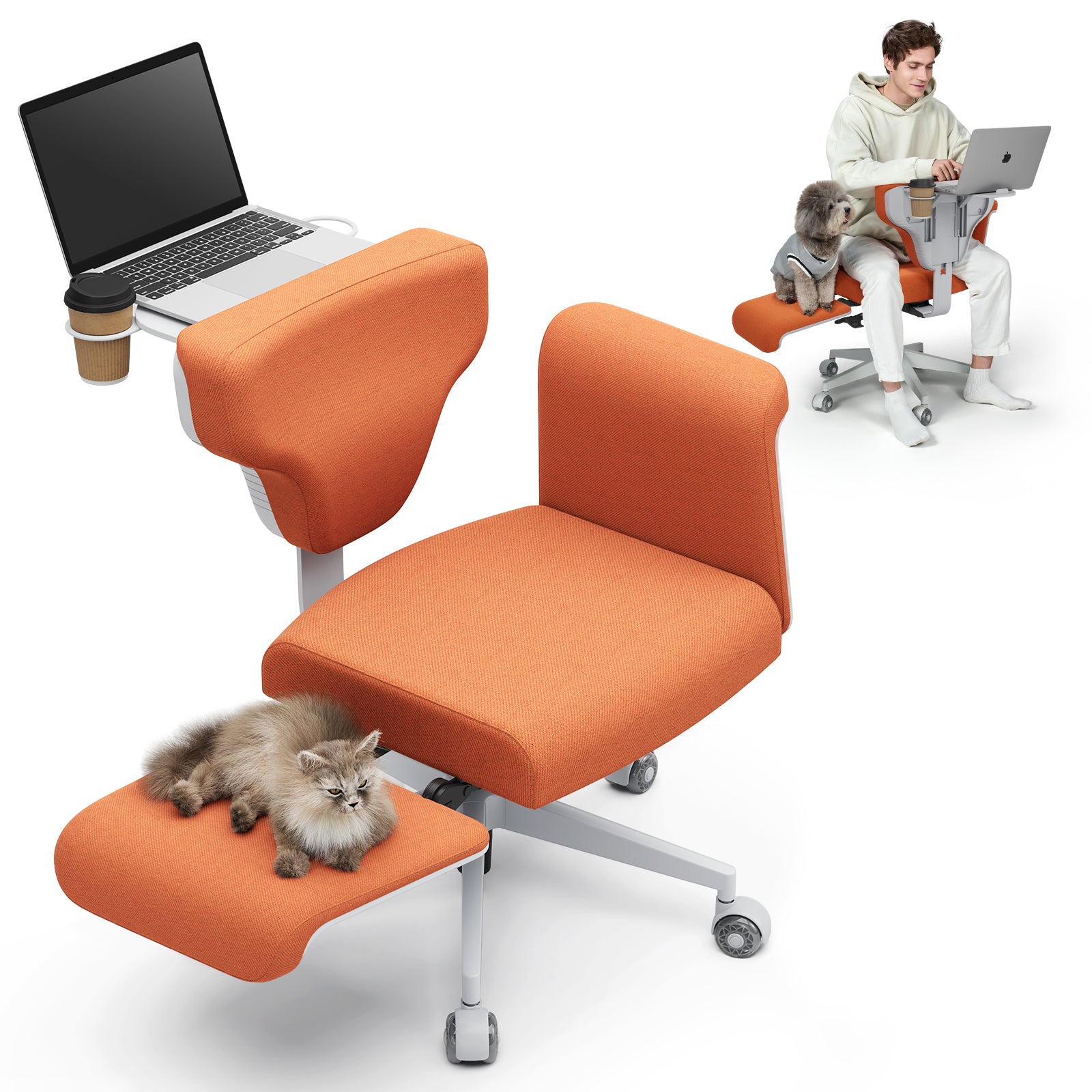
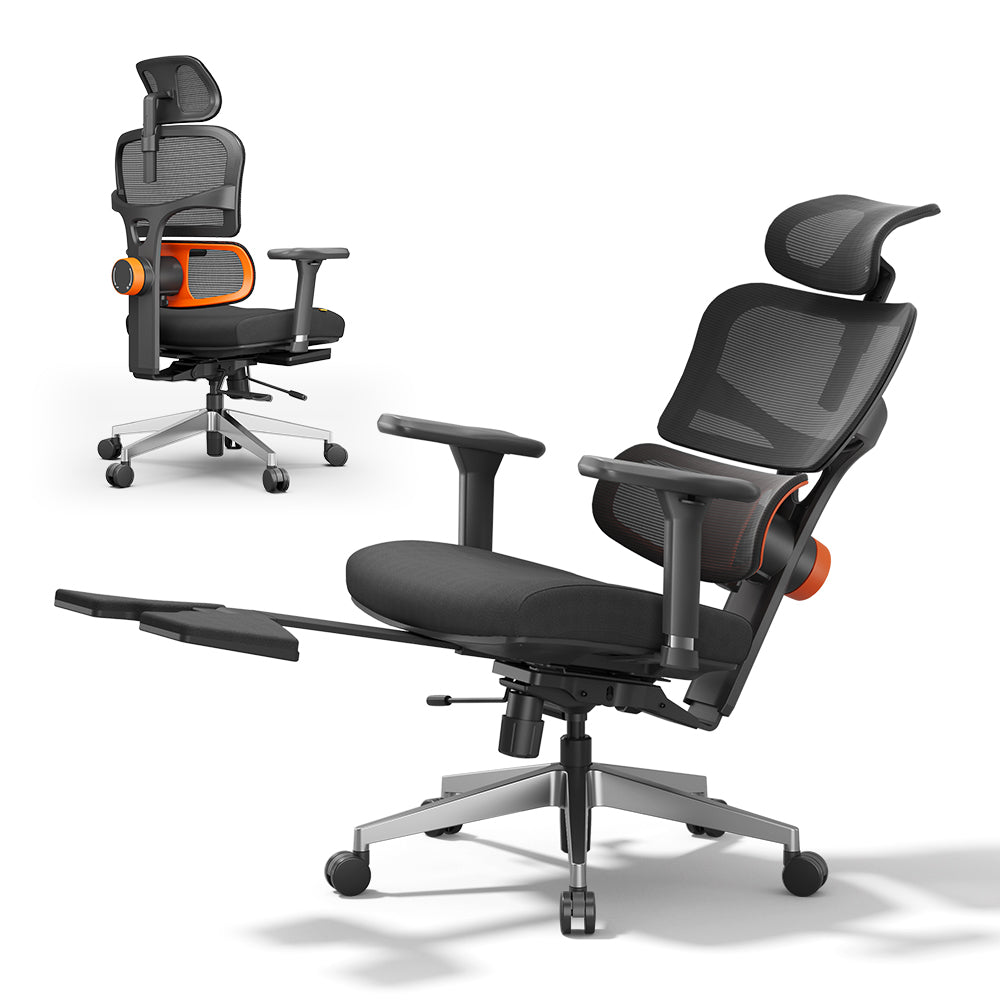
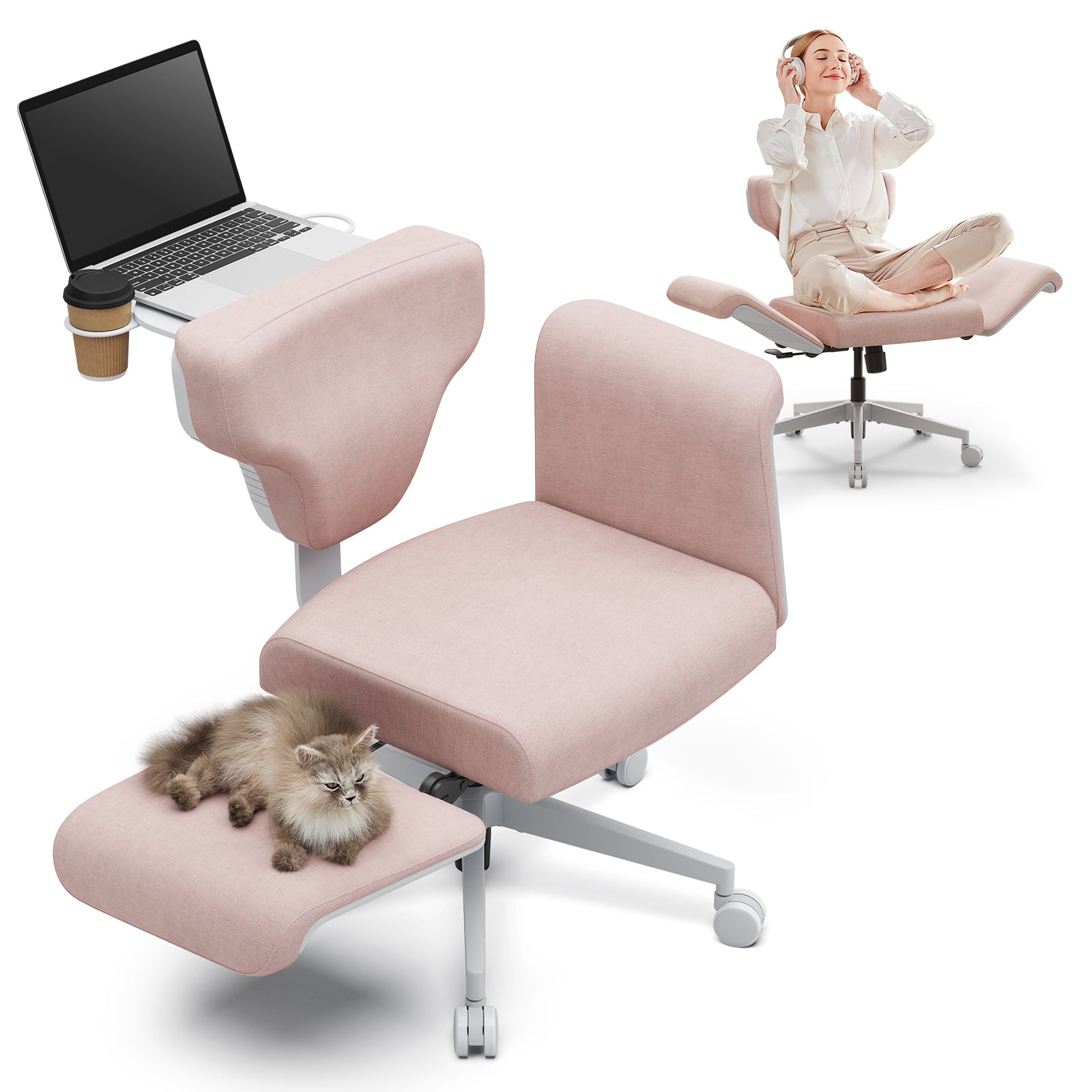
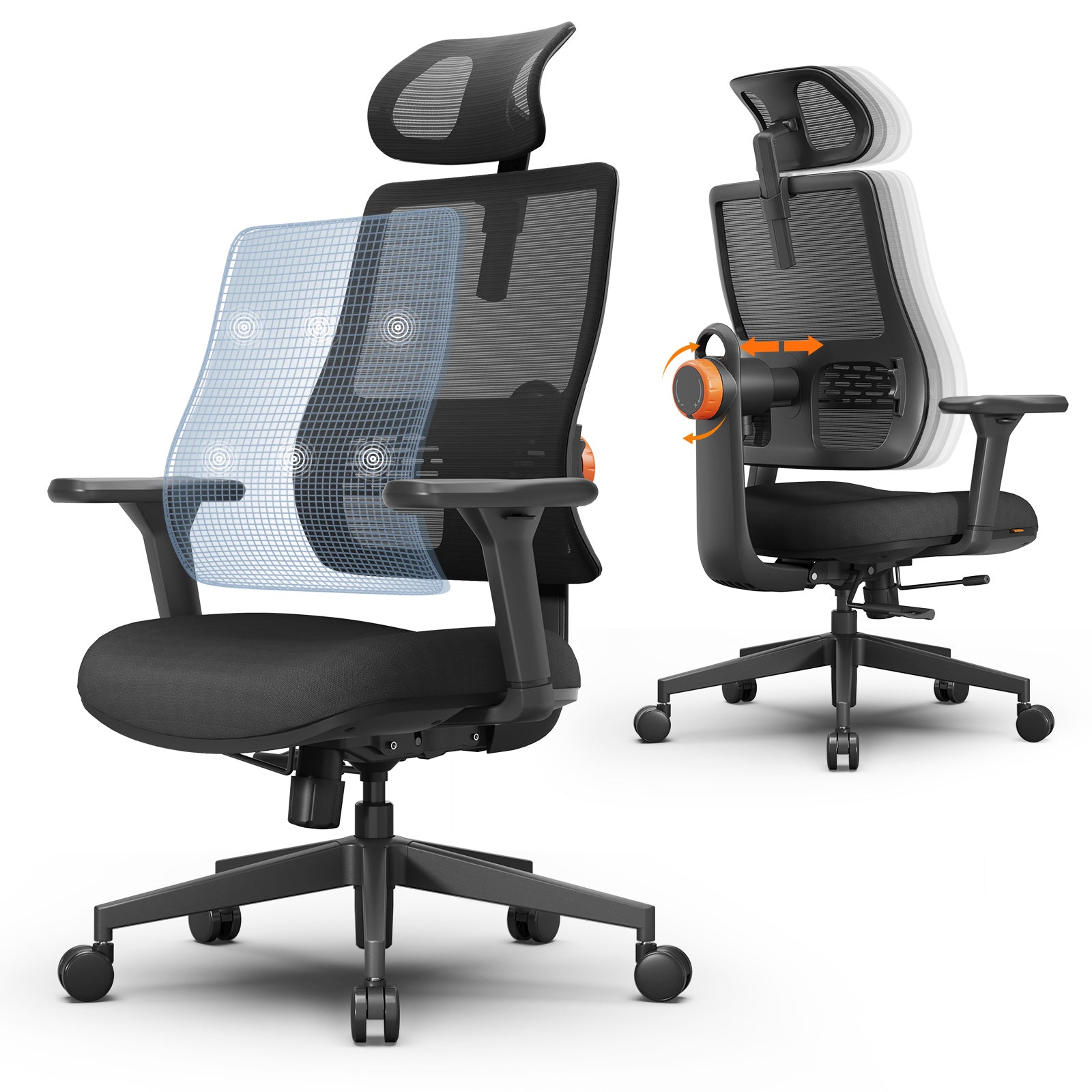
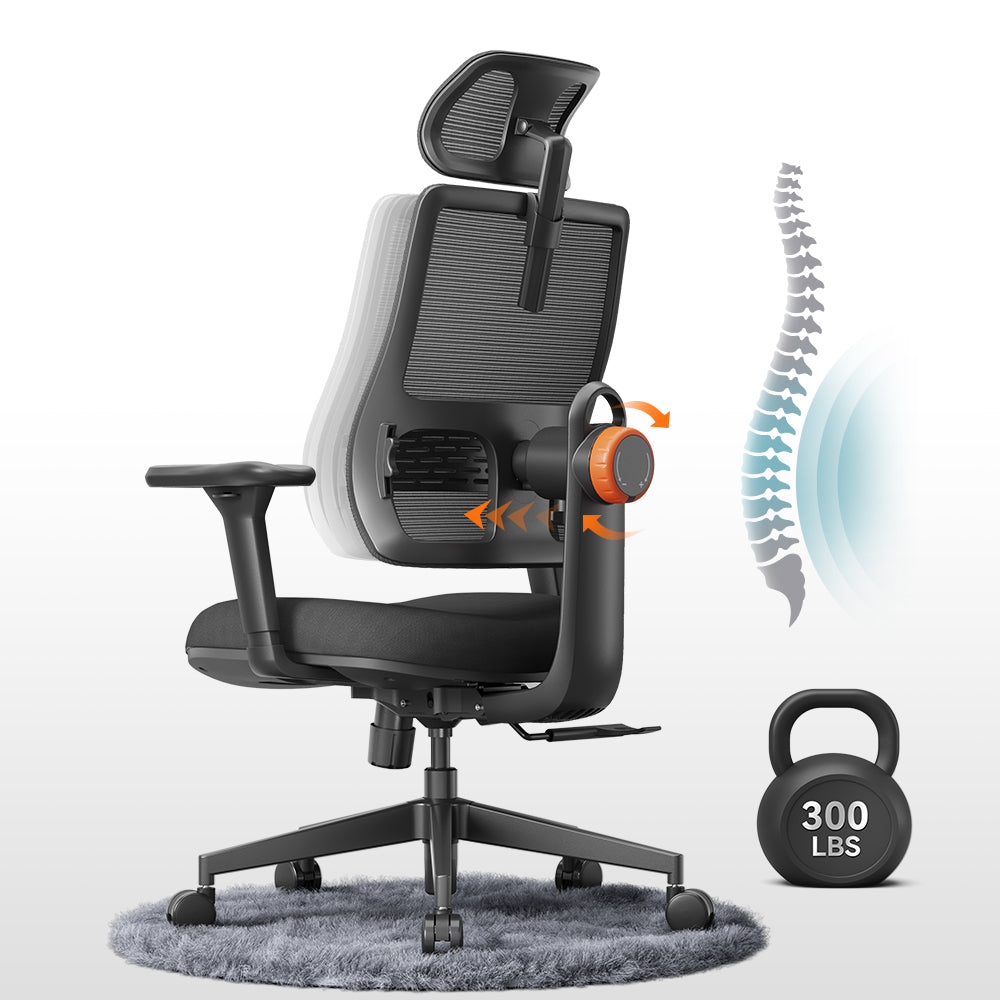
Newtral chairs are designed for movement, support, and flexibility. The Freedom-X Multi-Posture Chair with Armrest and the Freedom-X Multi-Posture Cross-Legged Chair (Without Armrest) are particularly suitable for those who prefer to sit cross-legged.
What Makes Newtral Different:
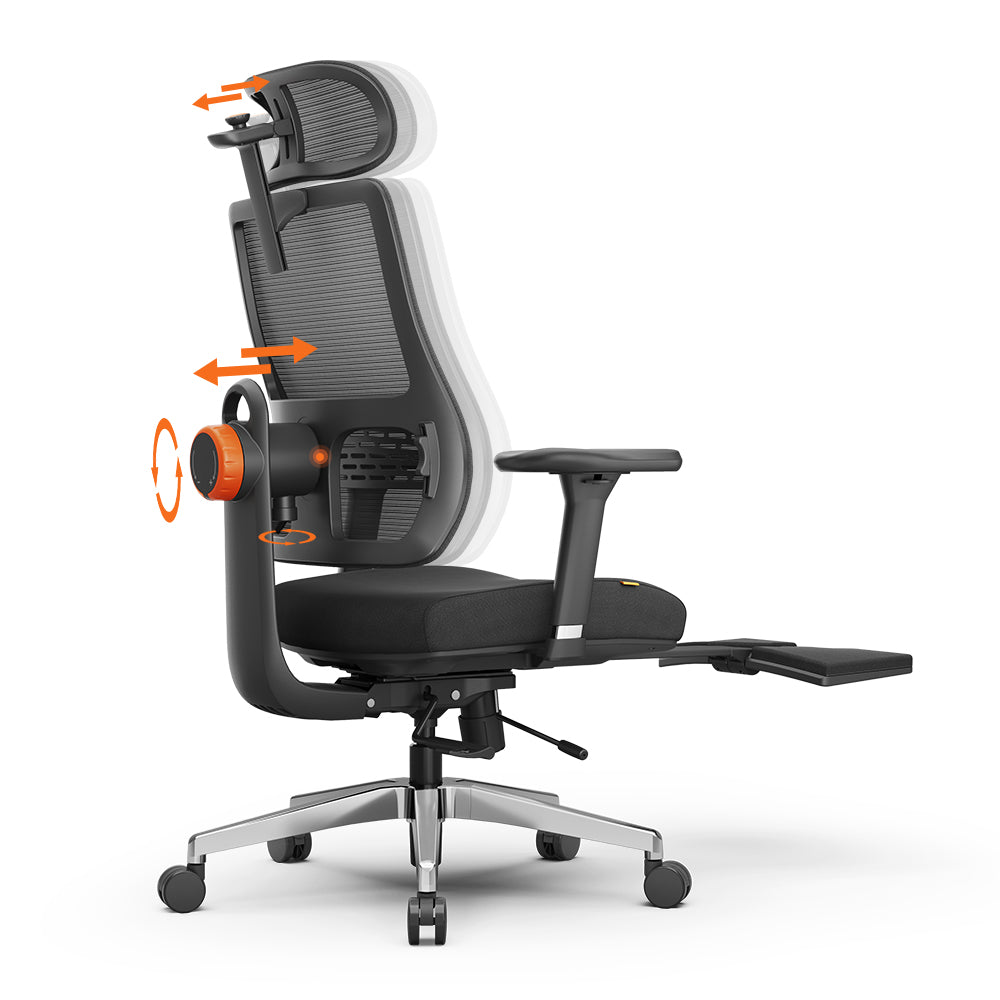
Auto-following lumbar that adapts as you shift.
4D armrests that align perfectly with your elbows.
Generous seat width so you can cross comfortably.
Synchro-tilt recline that keeps your body balanced.
High-density foam or mesh to prevent sinking.
It supports your posture—not by forcing you still, but by supporting you as you move.
Role-Based Advice: How YOU Should Sit
Different people sit differently. Here’s how to adapt cross-legged sitting based on your lifestyle.
Office / Remote Workers
Use figure-4 for 5–10 min every hour.
Pair sitting changes with task changes.
Stand or stretch on calls.
Gamers
Use recline + armrests for aim stability.
Switch legs during loading screens.
Avoid knee-over-knee (affects reaction time).
Students / Exam Prep
Pomodoro method: 25/5.
Cross legs only in the middle of study sessions.
Stand to review notes.
Medical / Rehab Users
Ask your PT which version is safest.
Avoid deep cross if you have hip/knee issues.
Focus on alignment and micro-movement.
Call Centers / BPO
Long sessions: use footrest + recline.
Cross only with lumbar support engaged.
Move during call transfers.
Creators / Studios / Makers
High mobility = great for alternating postures.
Use stools or height-adjustable chairs.
Cross only when seated low and back is supported.
Enterprise Procurement
Look for chairs with:
Wide seat
Dynamic lumbar
4D armrests
Weight capacity support
Adjustable recline with lock
Simple Stretches to Balance Out Cross-Legged Sitting
You don’t need a gym. Just do these 3 easy movements while seated or standing.
✅ 1. Seated Figure-4 Stretch
Cross ankle over knee.
Press knee gently downward.
Hold 20–30 seconds.
✅ 2. Standing Hip Flexor Stretch
Step one foot back.
Tuck pelvis slightly.
Hold 20–30 seconds each side.
✅ 3. Spinal Extension
Stand tall.
Place hands on hips.
Gently arch backward.
Reset posture.
These counteract pelvic tilt and hip tightness from crossing legs too long.
Final Answer: Is Sitting Cross-Legged on a Chair Good for Your Back?
Yes—IF you do it with awareness, limit your time, switch sides, and use a supportive chair.
No—IF you hold it for too long, twist your spine, or sit in an unsupportive chair.
The posture itself is not the problem. Staying locked in one posture is.
The Real Secret to a Healthy Back:
Move often.
Sit in different ways.
Supprt your spine.
Listen to your body.
And if you want a chair designed to support ALL of this—movement, alignment, flexibility—Newtral is built exactly for people like you and me who sit for hours but refuse to suffer.

Your body isn’t asking for perfect posture.
It’s asking for freedom to move—comfortably and safely.
FAQs: Quick Answers to Common Questions
Is sitting cross-legged on a chair good for your back?
Yes, in moderation with proper support and movement. No, if done too long or with poor posture.
Which version of cross-legged is safest?
Figure-4 (ankle over knee). It keeps the spine more neutral and is easy to switch.
Can sitting cross-legged cause back pain?
Only if you stay too long on one side or your chair doesn’t support you.
Is sitting cross-legged on the floor better than a chair?
Floor is good for mobility, but chair is better for back support in long sessions.
Does crossing legs cause scoliosis?
No, scoliosis is not caused by one posture. However, habitually crossing one side can create muscle imbalance over time.
Can ergonomic chairs help?
Absolutely. A chair with dynamic lumbar, 4D armrests, and proper seat design allows cross-legged sitting without losing spinal support.





Leave a comment
All comments are moderated before being published.
This site is protected by hCaptcha and the hCaptcha Privacy Policy and Terms of Service apply.