
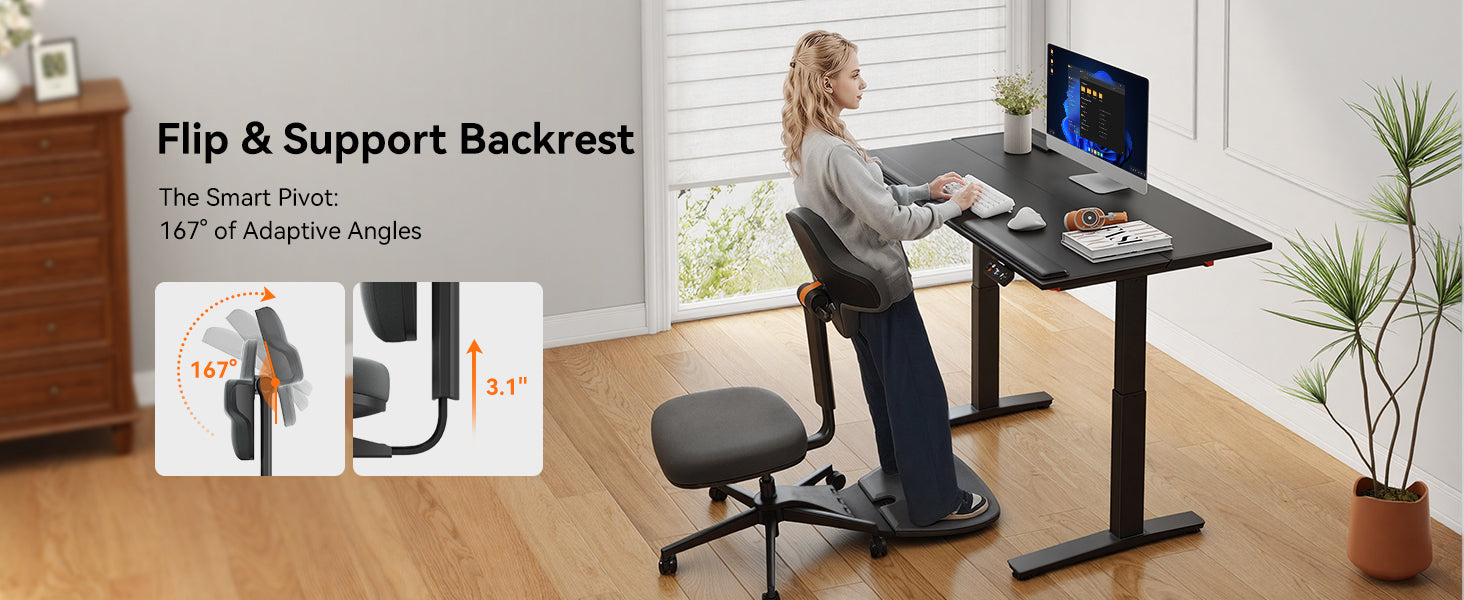
Standing desks have become a popular solution for office workers dealing with back pain. But do they actually deliver on that promise?
Yes, standing desks can help reduce back pain, particularly the lower back discomfort caused by prolonged sitting. Research shows that regularly alternating between sitting and standing reduces spinal compression and improves postural awareness. That said, the benefits depend heavily on using the desk correctly, and a standing desk alone is not a cure.
Why Desk Workers Develop Back Pain
The Impact of Prolonged Sitting
Most office workers sit for six to eight hours a day. Sustained compression on the intervertebral discs leads to stiffness, soreness, and over time, chronic lower back pain. Prolonged sitting also tightens the hip flexors, pulling the pelvis forward and adding strain to the lumbar region.
How Sedentary Posture Strains the Spine
It is not just the sitting itself that causes problems. It is how most people sit. Slouching toward a screen, rounding the shoulders, and letting the lower back flatten or curve excessively all place uneven stress on the spine and surrounding muscles. Poor ergonomic positioning is widely recognized as a leading contributor to work-related musculoskeletal discomfort, as noted in NIOSH ergonomics guidance. When this posture becomes a habit over months and years, the muscles that support the spine gradually weaken, compounding the problem.

What the Research Says
Evidence Supporting Standing Desks
Multiple studies have found that workers who use height-adjustable sit-stand desks report meaningful reductions in upper and lower back pain within just a few weeks of regular use. The mechanism is straightforward: alternating between sitting and standing reduces sustained spinal compression and introduces more postural variety throughout the day, both of which are key factors in preventing back discomfort.
Product quality also plays a role in these outcomes. Desks and seating that have been independently tested and certified to ergonomic standards are more likely to support correct posture than untested alternatives. Verified certification is a reliable indicator of whether a product has been built to meet those standards — you can review the certifications behind Newtral's standing desk and chair products for reference.
Where the Research Falls Short
The evidence is encouraging but comes with caveats. Many studies are short-term and rely on self-reported outcomes, making it difficult to draw firm long-term conclusions. Research also consistently shows that switching from sitting to standing does not automatically improve posture or relieve pain. If a person stands with poor alignment or stays in one position for too long, the benefits disappear quickly. The takeaway is not that standing desks cure back pain, but that they create better conditions when used correctly.
How Standing Desks Can Help
Reducing Lumbar Pressure
Alternating between sitting and standing throughout the day reduces the sustained compression placed on the lumbar discs. Even short standing intervals give the lower back a chance to decompress and reset, something that consecutive hours of sitting simply do not allow.
Encouraging Better Posture
Standing naturally encourages a more upright position. When you are on your feet, it is easier to align your ears over your shoulders, keep your chest open, and maintain the natural curve of your lower back. This does not happen automatically, but the standing position makes good alignment more achievable than a slumped seated posture.
Promoting More Movement
One of the less obvious benefits of a standing desk is that it encourages more incidental movement. When you are already on your feet, it becomes easier to shift your weight, take a short walk, or step away for a stretch. These small movements improve circulation and reduce the muscle tension that accumulates during sedentary work.
When a Standing Desk Won't Help
Standing with Poor Form
Standing is not a passive fix. If you stand with your weight on one hip, knees locked, and shoulders hunched toward the screen, you are swapping one set of problems for another. Poor standing posture places unnecessary strain on the lower back, hips, and knees, sometimes causing more discomfort than sitting did.
Standing Too Long Without Breaks
Static standing for extended periods creates its own problems. Research has linked prolonged standing to leg fatigue, lower limb discomfort, and increased risk of varicose veins. A standing desk only helps when it is part of a varied routine, not when it replaces one fixed position with another.
Ignoring Underlying Causes
A standing desk is a workplace tool, not a medical treatment. If back pain stems from a herniated disc, spinal stenosis, or significant muscle imbalance, adjusting desk height will provide limited relief. Anyone dealing with persistent or severe back pain should consult a healthcare professional before relying on a standing desk as a primary solution.
How to Use a Standing Desk Effectively
Setting the Right Desk Height
Desk height is the foundation of everything else. When standing, your elbows should rest at roughly 90 degrees with your wrists in a neutral position, and your monitor should sit at or just below eye level to keep your neck from tilting forward. When seated, the same principles apply. A height-adjustable standing desk with memory presets makes this effortless, letting you switch instantly between your saved sitting and standing heights without readjusting each time.

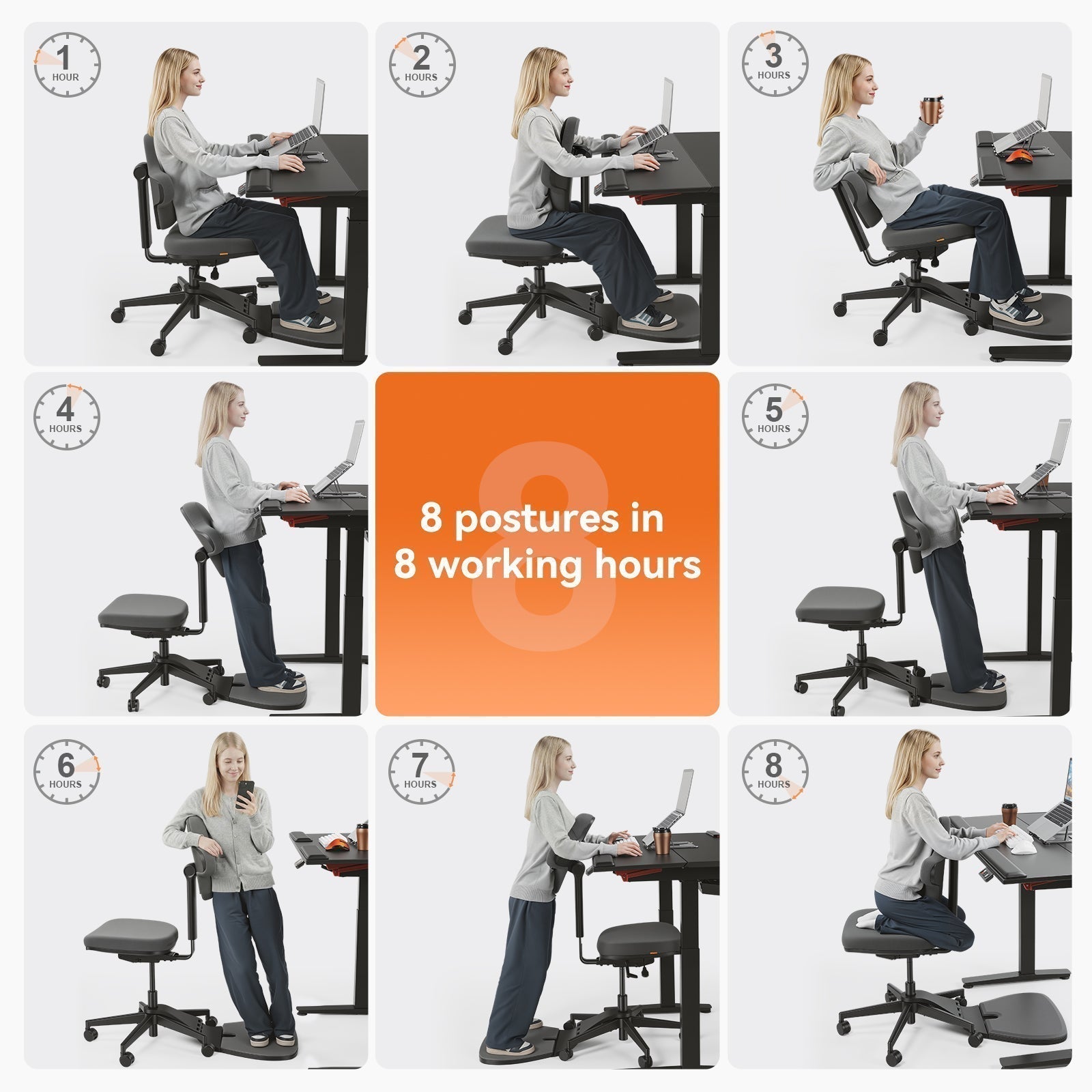
Building a Sit-Stand Routine
The goal is not to stand all day but to avoid staying in any one position for too long. A widely used framework is the 20-8-2 ratio, developed from research by ergonomics specialists:
|
Duration |
Position |
Purpose |
|
20 minutes |
Sitting |
Focused, low-fatigue work |
|
8 minutes |
Standing |
Spinal decompression, posture reset |
|
2 minutes |
Moving |
Light stretching or walking |
This is a starting point rather than a strict prescription. Some people find that 30-minute sitting blocks suit their workflow better. What matters most is that no single position dominates your day.
Anti-Fatigue Mats and Supportive Footwear
Standing on a hard floor without cushioning accelerates fatigue and places extra stress on the feet, knees, and lower back. An anti-fatigue mat makes a tangible difference during extended standing by reducing joint pressure. The Newtral Standing-Mate takes this further with a built-in high-density memory foam standing mat that folds out from the base, providing cushioned underfoot support while also serving as a leaning surface during partial-standing breaks.

Stretches to Complement Your Setup
Even with a good sit-stand routine, targeted movement helps counteract muscle tightening throughout the day. A few useful stretches to incorporate during movement breaks include:
- Hip flexor stretches to offset the shortening that occurs from prolonged sitting
- Chest opener stretches to counteract forward shoulder rounding
- Standing spinal rotations to restore mobility in the mid and upper back
Two to three minutes of these during each movement break is enough to make a meaningful difference over time.
Conclusion
A standing desk can genuinely help with back pain, but only as part of a broader ergonomic approach. Alternating positions, using proper form, and equipping your workspace correctly all matter just as much as the desk itself.
FAQs
How long should I stand each day?
A commonly referenced guideline is to spend roughly a third of your working day on your feet, distributed across several shorter intervals rather than one continuous block. If you are new to standing desks, begin with 15 to 20 minutes of standing per hour and gradually increase as your body adapts.
Can a standing desk make back pain worse?
Yes, if used incorrectly. Standing with poor posture, remaining on your feet for too long without breaks, or working at the wrong desk height can all aggravate back pain rather than relieve it. The desk itself is only as effective as the habits built around it.
Do I still need an ergonomic chair?
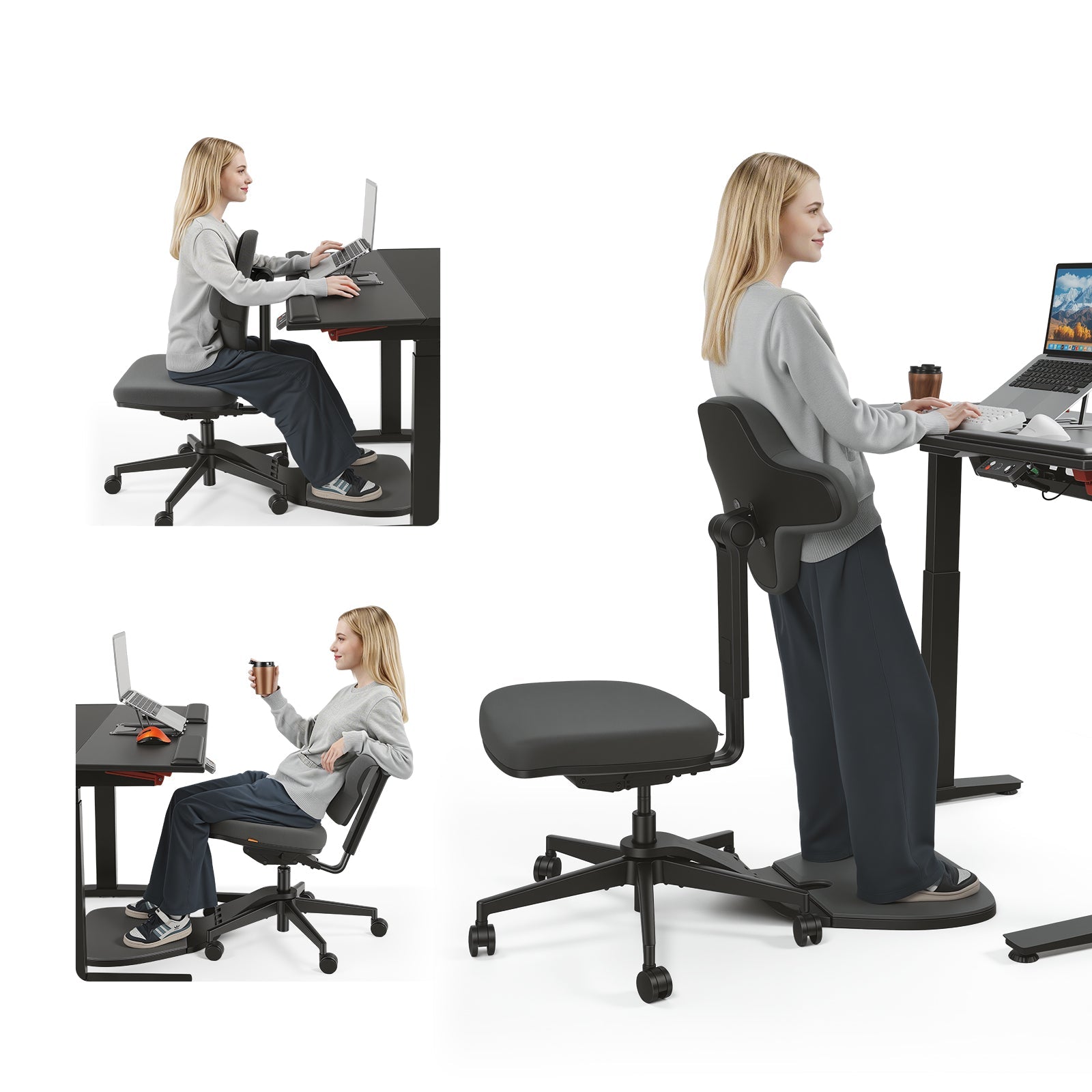
Yes. A standing desk does not replace the need for a quality chair, since most people still spend a significant portion of their day sitting. For seated work, an ergonomic chair such as the Newtral NT002 provides the lumbar support and adjustability the spine needs. For standing and leaning intervals, the Newtral Standing-Mate covers the postures a traditional chair cannot. Together, they support the full range of positions in a typical workday.
How soon can I expect relief?
Most people notice some improvement in comfort within two to four weeks of consistently alternating between sitting and standing. Meaningful reduction in chronic back pain typically takes longer, often one to three months of regular use alongside good posture habits. Results vary depending on the underlying cause of the pain and how consistently the routine is followed.

Leave a comment
All comments are moderated before being published.
This site is protected by hCaptcha and the hCaptcha Privacy Policy and Terms of Service apply.