
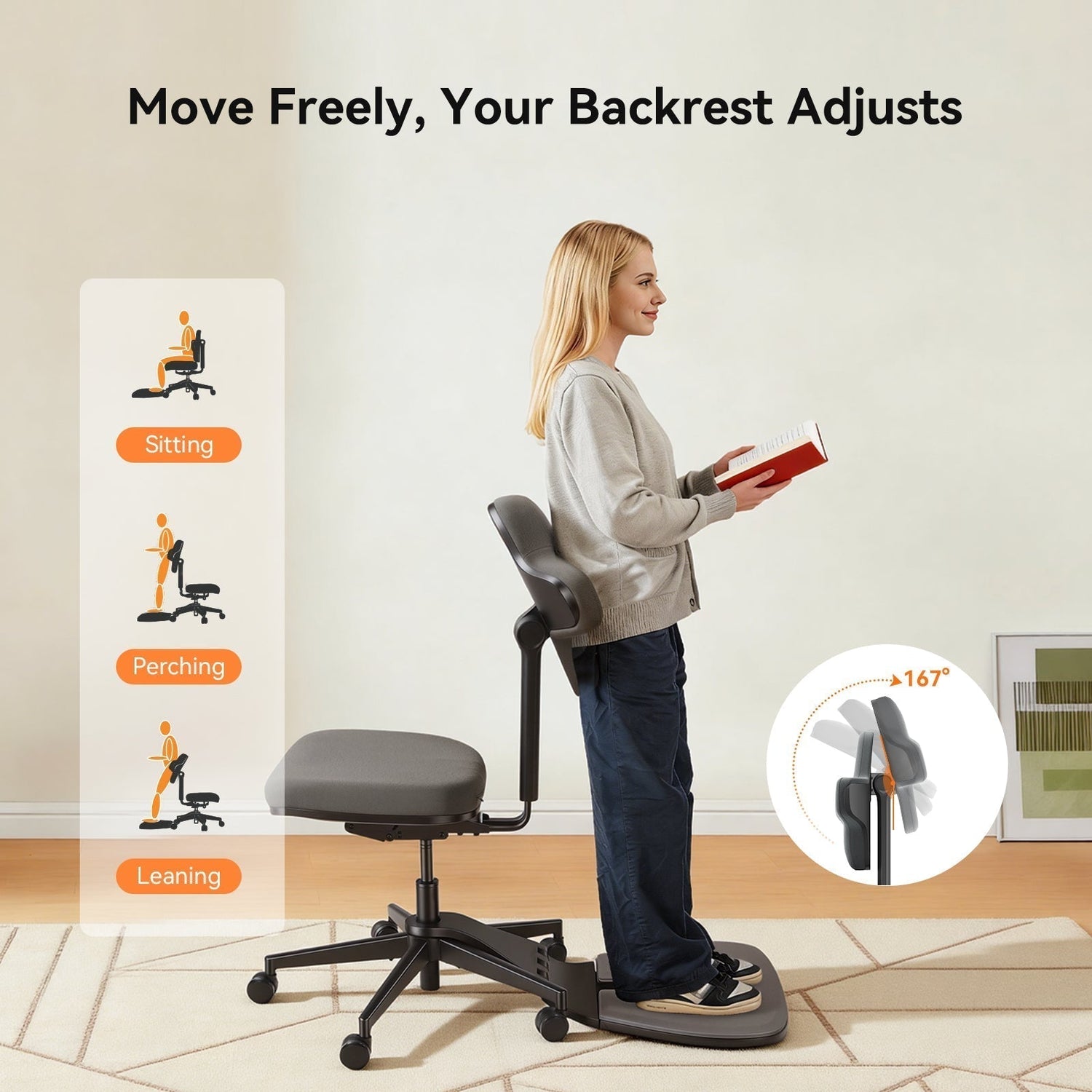
A perch stool positions you between sitting and standing, and the postural benefits it offers are grounded in body mechanics rather than comfort alone. Here is what it is, how it works, and how to use it correctly.
What Is a Perch Stool?
A perch stool is a height-adjustable seat designed to place you in a semi-standing position, with your hips slightly higher than your knees and your weight partially transferred to your feet. Rather than supporting a conventional seated posture, it encourages an open, upright position that promotes spinal alignment without the fatigue that comes from standing unsupported.
How It Differs from a Regular Stool
A regular bar or kitchen stool is built for occasional, short-term use at a fixed height. A perch stool is purpose-built for the ergonomic demands of a sit-stand workspace. The differences go beyond height:
|
Feature |
Regular Stool |
Perch Stool |
|
Height adjustability |
Fixed or limited |
Wide range, desk-height compatible |
|
Seat angle |
Flat |
Forward-tilting |
|
Intended use |
Casual, short-term |
Active work sessions |
|
Posture support |
Passive |
Actively promotes spinal alignment |
Where a regular stool keeps you passive, a perch stool keeps you engaged.
The Forward Tilt That Makes It Work
The defining feature of a perch stool is its forward-tilting seat. When the seat angles slightly downward at the front, your pelvis rotates forward into an anterior tilt, opening the angle between your torso and thighs beyond the 90 degrees typical of conventional sitting. That shift in hip angle is the mechanical basis for everything perching does for your posture, which the sections below cover in detail.
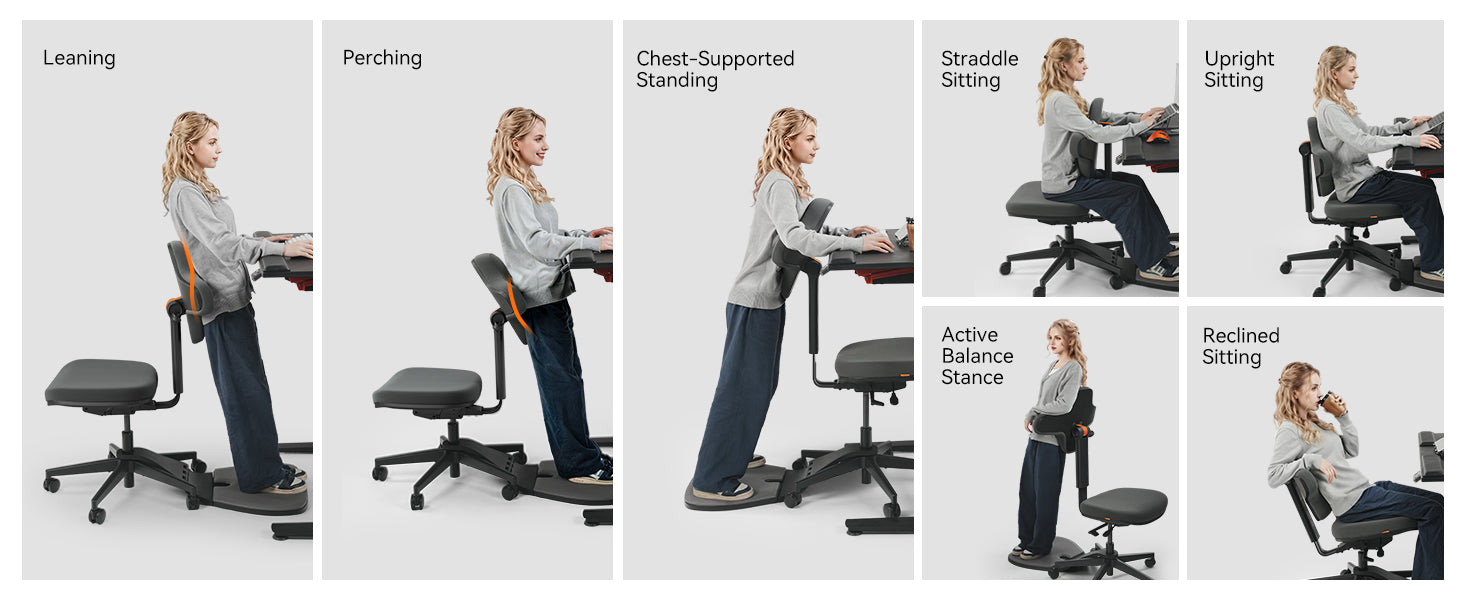
Some modern seating takes this principle further. The Newtral Standing-Mate applies it across eight supported postures, including perching and leaning, so you are not locked into a single position throughout the workday.

Neither Sitting Nor Standing Is Enough
Before looking at why perching helps, it is worth understanding why the two more common alternatives fall short on their own.
-
Prolonged sitting compresses the spine. Sustained sitting significantly increases pressure on the lumbar discs compared to standing. Over time it compresses the vertebral discs, weakens the postural muscles that support the spine, and shortens the hip flexors in ways that affect posture even away from the desk. OSHA's ergonomics guidance identifies prolonged static postures as a primary contributor to musculoskeletal disorders among office workers, and sitting is the most common of these.
-
Standing all day creates its own strain. Iris Sokol, a certified ergonomist with over 40 years in the health, wellness, and ergonomics industry, puts it plainly: static standing "can place tremendous stress on your hips, your knees, your feet, and your veins if you stand without support." It also leads to compensatory postures such as leaning into one hip or locking the knees, which introduce asymmetrical strain into the spine over time.
The underlying issue with both is the word static. Holding any posture too long is the problem, not the posture itself. Perching gives you a practical third position to rotate through across the workday.
How Perching Supports Your Posture
The Open Hip Angle and Spinal Alignment
Conventional sitting places the hips at roughly 90 degrees, which tends to flatten the lumbar curve and increase disc pressure, particularly as fatigue sets in and posture deteriorates. The forward tilt of a perch stool opens the hip angle to between 110 and 135 degrees, allowing the pelvis to tip forward and the lumbar spine to return to its natural inward curve. This is the spine's load-bearing alignment, and supporting it through seat angle reduces the muscular effort required to stay upright throughout the day.
How Perching Activates Your Core Passively
Because perching offers less full-body contact than a conventional seat, your stabilizing muscles, particularly those around the lumbar spine, hips, and inner thighs, remain lightly active. This is what ergonomists refer to as active sitting. You are not exercising in any meaningful sense, but your postural muscles maintain a low level of engagement rather than switching off the way they tend to during fully supported sitting, which helps reduce the stiffness that builds up over long static sessions.
Why the Forward Tilt Reduces Lumbar Load
Lumbar load, meaning the compressive and shear force placed on the lower spine, is highest during forward-flexed sitting and lowest during standing with good alignment. Perching sits between these two states. The anterior pelvic tilt created by the forward-tilting seat reduces flexion stress on the lumbar discs while keeping you at desk height and working productively. For people who experience lower back discomfort after long desk hours, this mechanical reduction in lumbar load is one of the primary reasons perching tends to provide relief.

How to Perch Correctly at a Standing Desk
Getting the Seat Height Right
Seat height is the most important variable to set correctly. When perching, your hips should sit slightly higher than your knees, your feet should rest flat on the floor, and your elbows should be roughly level with the work surface with your shoulders relaxed rather than raised.
A practical starting point: set your desk to your standing elbow height, then adjust the stool until your arm position feels natural without hunching or reaching. If your standing desk has memory height presets, saving your perch height as a dedicated preset makes switching positions quick and consistent.
Foot Position and Weight Distribution
When perching, your weight should be distributed across three contact points: both feet on the floor and the seat. Avoid perching with your feet raised or crossed, as this shifts load unevenly and encourages compensatory twisting through the hips and lower back. If your stool has a footrest ring, use it to keep your legs at a comfortable angle rather than letting them hang, which increases pressure under the thighs and can restrict circulation over time.
How Long to Perch Before Switching Positions
Perching is one position in a rotation, not a replacement for movement. Sokol recommends a clear rule for managing static posture: for every 50 minutes spent in one position, take five minutes of movement to break up the muscular tension that builds in your muscles and joints. A practical rotation for a sit-stand setup might look like this:
|
Position |
Suggested Duration |
|
Seated (standard height) |
25 to 35 minutes |
|
Perching |
20 to 30 minutes |
|
Standing |
15 to 20 minutes |
|
Short movement break |
2 to 5 minutes |
The specific durations matter less than building the habit of rotating. Any posture held without interruption for an extended period begins to accumulate the static load that position-switching is designed to prevent.
In Summary
Perching supports posture by opening the hip angle, encouraging the spine's natural curve, and keeping the core lightly active throughout the day. As part of a consistent sit-stand rotation, it is a practical and well-supported way to reduce postural strain across long working hours.
FAQs
Is perching good for lower back pain?
For many people, yes. Perching reduces compression on the lumbar discs by opening the hip angle beyond 90 degrees, placing less load on the lower spine than conventional sitting. It works best as part of a position rotation rather than a sustained posture held for hours. If you have an existing back condition, consult a physiotherapist before making significant changes to your seating setup.
What angle should a perch stool be set at?
Most perch stools offer a forward tilt of between 5 and 15 degrees. Starting at 5 to 10 degrees works well for most users: enough to open the hip angle and support the lumbar curve without feeling unstable. If the tilt is adjustable, begin at the lower end of the range and increase gradually until the position feels naturally upright rather than effortful to maintain.
How is perching different from sitting upright?
Conventional upright sitting places the hips at roughly 90 degrees, which tends to flatten the lumbar curve and sustain pressure on the lower spinal discs. Perching opens that angle to 110 degrees or more, allowing the pelvis to tilt forward and the lumbar spine to return to its natural inward curve. The result is less disc compression, more passive muscle engagement, and a posture that requires noticeably less active effort to hold over time.



Leave a comment
All comments are moderated before being published.
This site is protected by hCaptcha and the hCaptcha Privacy Policy and Terms of Service apply.