
Table of Contents
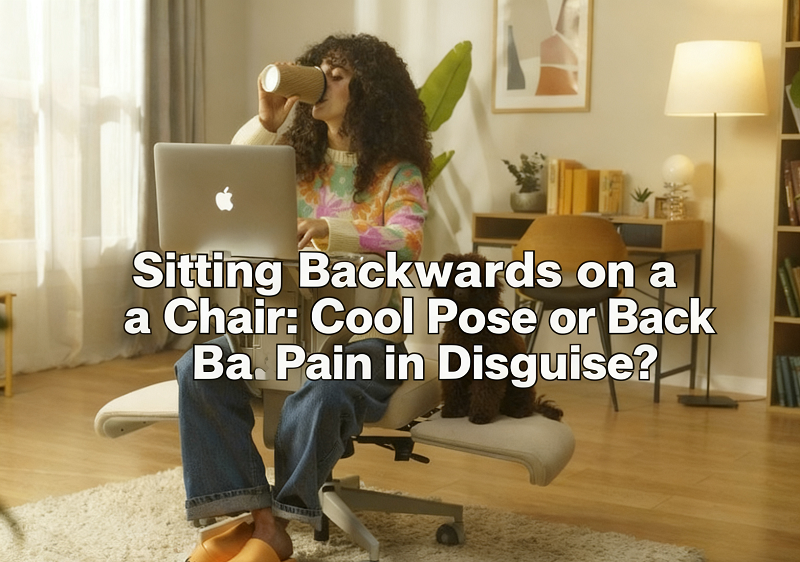
Have you ever flipped your chair around, straddled it like a movie rebel, and thought “This actually feels kinda good”?
You’re not alone.
“Sitting backwards on a chair,” also called reverse sitting or astride sitting, has become iconic. From 90s classrooms and YouTube interviews to gamer setups, the pose screams confidence and casual energy.
But here’s the question: is it really good for your body — or just another posture that feels fun until your back starts complaining?
As the Newtral team: creators of ergonomic designs like the Freedom-X Multi-Position Chair We’ve studied how posture, movement, and chair geometry affect your spine.
This guide breaks down the science, culture, and smarter alternatives so you can sit freely and stay healthy.
Blog18
Why People Sit Backwards
It’s not just a trend — it’s a cultural cue.
Think of the “cool teacher” in movies who turns their chair around to look more approachable, or the sitcom character who slides into a backwards seat mid-conversation. It’s confidence and connection rolled into one pose.

Social psychology tells us why it feels comfortable: you’re opening your body language, expanding your hips, and resting your arms naturally. Physically, you’re also giving your hips and chest a brief stretch, changing the pressure points that build up from long sitting sessions.
So yes — sitting backwards looks bold, and for a few minutes, it feels great. But underneath the attitude, your muscles are working harder than you think.
What Really Happens to Your Body
Flipping your chair feels liberating because it changes how your joints stack and how your weight distributes. Yet every shift brings trade-offs. Let’s break down what’s actually going on.
1. Your Pelvis and Spine: The Balance Game
Your pelvis is your body’s steering wheel for posture. When you straddle a chair, it often tilts backward flattening your lower spine. That may relieve immediate tension, but it reduces the lumbar curve that supports healthy disc pressure.
According to Cornell University Ergonomics, maintaining a soft inward curve protects your spine from fatigue.
That’s why the ergonomic home chairs uses adaptive lumbar support, it adjusts automatically as you shift, helping you stay balanced without conscious effort.
2. Your Hips and Thighs: Stretched but Stressed
Reverse sitting opens your hips wider than normal. That can feel freeing, but it also stresses the inner thighs and hip adductors, especially if the chair back is thick or hard.
Over time, this position can compress nerves or restrict blood flow.
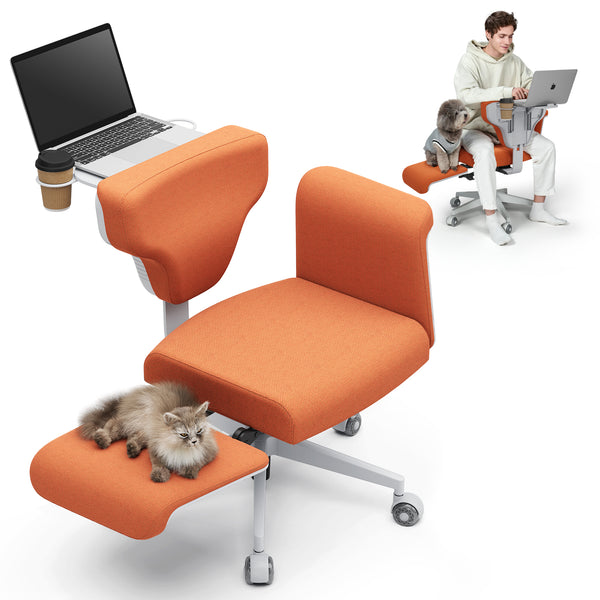
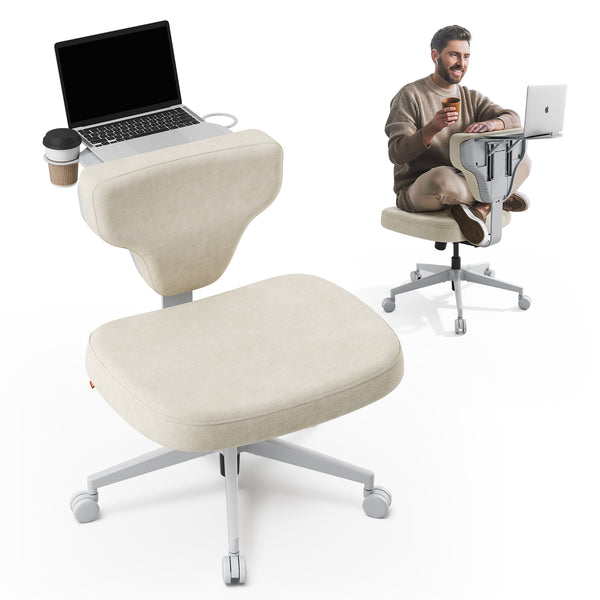
A smarter choice? Try the Freedom-X Multi-Position Chair (Without Armrest).
It’s engineered for open-hip postures, you can straddle, cross, or perch comfortably while keeping your pelvis in neutral. No strain, no pinching.
3. Your Chest and Breathing: Restricted Space
When you lean your chest onto the chair back, your ribs and diaphragm get compressed. That limits deep breathing and reduces oxygen exchange — not ideal for focus or stamina.
Within minutes, you may feel tightness around your shoulders or upper back.
The fix is simple: if you want chest support, use a backrest designed for it, not a reversed chair.
Short-Term Comfort vs. Long-Term Trouble
Reverse sitting feels like a mini-stretch, but stay there too long and it becomes a slow slump.
Here’s how the trade-off looks:
Table 1 | The Pros & Cons of Sitting Backwards on a Chair
| Situation | Short-Term Benefit | Long-Term Risk |
|---|---|---|
| Brainstorming or quick chats | Opens hips, boosts engagement | None if brief |
| Gaming breaks | Relieves thigh pressure | Neck & back fatigue if prolonged |
| Long typing sessions | Slight novelty | Slouching, disc pressure |
| High-back chairs | Easy forearm rest | Rib compression |
| Wide seats | Feels stable | Hip tension, inner-thigh stress |
The verdict: great for variety, risky for routine.
Time Beats Posture — Always
Posture myths die hard. The truth? No single posture stays healthy for long.
Your body thrives on movement. Even perfect posture becomes harmful when frozen. That’s why ergonomists focus on duration, not just angle.
Use the 20–8–2 rule:
- Sit well for 20 minutes
- Stand or stretch for 8 minutes
- Move around for 2 minutes
At Newtral, every chair is built for motion. The floating lumbar support follows you as you lean, recline, or shift — preserving your spine’s natural curve through every micro-movement.
How to Try Sitting Backwards Safely
Sometimes, flipping the chair helps break monotony — and that’s okay.
Here’s how to do it without regret later.
Smart Guidelines
- Keep sessions under 10 minutes.
- Sit tall — hinge at your hips, not your waist.
- Use a towel or cushion on the chair back.
- Keep both feet grounded.
- Skip rolling or tilting chairs.
- Return to neutral posture afterward.
 Table 2 | Ergonomic Quick Fixes
| Problem | Simple Fix | Result |
|---|---|---|
| Chest pressure | Add cushion between chest & chair | Freer breathing |
| Inner-thigh soreness | Pad the chair’s edge | Better circulation |
| Lower-back slump | Engage core, hinge at hips | Neutral spine |
| Rounded shoulders | Draw shoulder blades back | Opens chest |
| Numb legs | Adjust height, move legs often | Restored flow |
Use it like a stretch, not a seat.
The Chair Matters More Than the Trick
Your chair’s design determines whether sitting backwards feels freeing or painful.
Look for low or mid backs, rounded edges, and adjustable armrests that don’t block your legs. Avoid thick, high-back “throne” chairs that force rib compression.
That’s exactly why the Freedom-X Multi-Position Chair exists.
It gives you space to move, twist, cross your legs, or even perch sideways — all while the lumbar zone keeps its gentle support.
It’s not about sitting perfectly; it’s about sitting freely without punishment.
Table 3 | Comparing Sitting Styles
| Posture Type | Main Feel | Spine Health (1–5) | Best For |
|---|---|---|---|
| Traditional sitting | Balanced, neutral | ⭐⭐⭐⭐ | Long desk work |
| Sitting backwards | Open, casual | ⭐⭐ | Short creative breaks |
| Forward-tilt sitting | Active, alert | ⭐⭐⭐⭐ | Typing tasks |
| Saddle stool | Upright, open hips | ⭐⭐⭐⭐⭐ | Studios / clinics |
| Sit-stand combo | Dynamic, light | ⭐⭐⭐⭐ | Meetings / emails |
Better Alternatives That Feel Just as Free
Love that open-hip, relaxed feeling? You don’t have to sacrifice your spine to get it.
Try these options:
- Saddle chairs: Keep hips open while maintaining lumbar support.
- Forward-tilt seats: Slightly drop the front edge to encourage natural pelvic alignment.
- Sit-stand routines: Add movement variety every hour.
- Dynamic lumbar chairs: The Freedom-X Chair offers real-time lumbar tracking — it supports you whether you lean forward, recline, or cross your legs.
Each of these provides the same sense of freedom as reverse sitting, but with built-in protection.
Myth-Busting: What Most People Get Wrong
There’s a lot of chair folklore out there. Let’s set the record straight.
Myth 1: “Reverse sitting fixes posture.”
→ It shifts tension but doesn’t correct alignment.
Myth 2: “Leaning forward ruins your back.”
→ Not if your lumbar stays supported and you move often.
Myth 3: “One perfect posture exists.”
→ Science shows variation matters most.
Myth 4: “Ergonomic chairs are for offices only.”
→ They’re vital for gamers, students, artists, and rehab users too.
Who Should Care (Basically Everyone)
Every lifestyle benefits from smarter sitting. Here’s how.

Office and Enterprise Teams
Regular movement reduces fatigue and boosts focus. Provide staff with adjustable seating and brief micro-break training.
Remote and Freelance Workers
Your home setup is your health setup.
Choose adaptive chairs from the Newtral Criss Cross Chair Collection that encourage posture changes throughout the day.
Gamers
Skip the backwards sit during marathons.
Set monitor height correctly and rest forearms on the desk — not the chair back — between matches.
Students & Exam Prep
Study sprints work best with posture resets.
The Freedom-X Multi-Position Chair lets you shift positions quietly while keeping spinal alignment.
Sales & Managers
Use the backwards pose briefly for rapport, then return to a supportive posture for long conversations.
Medical, Rehab & Makers
Opt for saddle or split-seat designs to maintain pelvic health during hands-on tasks.
Final Thoughts Flip Less, Move More
Sitting backwards on a chair may look confident and feel freeing, but your spine deserves smarter support.
Short bouts? Fine.
Long sessions? You’re asking for stiffness.
Instead, choose motion-friendly designs that let you shift, cross, and perch without strain.
That’s what the Newtral Freedom-X Multi-Position Chair and the Freedom-X Chair deliver genuine ergonomic freedom with comfort engineered in.
So next time you feel the urge to flip your chair around, remember: confidence looks cooler when your posture supports it.
Blog18
FAQs About Sitting Backwards on a Chair
Why do people enjoy sitting backwards on a chair?
It feels casual and opens the hips for brief relief. But without proper lumbar support, your back quickly fatigues from poor alignment and uneven pressure.
Can sitting backwards improve flexibility or posture?
Not effectively. It momentarily stretches your hips but flattens your spine. The Freedom-X Multi-Position Chair maintains flexibility with correct lumbar support.
How long can I stay in a reverse sitting posture?
Limit it to around ten minutes. Longer sessions strain your lower back, reduce circulation, and make it harder to maintain a neutral pelvic position.
Does reverse sitting help with lower back or hip pain?
Relief is short-lived. Real improvement comes from dynamic lumbar support and movement-friendly designs like the Freedom-X Chair.
Which chair type best supports multi-posture sitting?
Choose adaptive chairs with floating lumbar systems. The Freedom-X Multi-Position Chair lets you cross, perch, or lean comfortably while protecting spinal balance.
What safety issues should I know about when sitting backwards?
Avoid chairs with wheels or tall backs. Use stable bases, keep both feet flat, and prevent pressure on ribs or inner thighs.
What are healthier alternatives to sitting backwards?
Forward-tilt sitting, saddle stools, or ergonomic designs like the Freedom-X Chair offer open-hip comfort with consistent spinal alignment.
More reading:



Leave a comment
All comments are moderated before being published.
This site is protected by hCaptcha and the hCaptcha Privacy Policy and Terms of Service apply.