
Table of Contents
For short individuals (4'11" - 5'3") with back pain, an office chair is a spine-protecting tool - not just furniture. Standard chairs (for 5'7" - 5'11" users) cause mismatches and worsening pain. This guide covers key questions, pitfalls, and the tailored Newtral NT002. The Newtral NT002 perfectly fits users between 4'11" and 6'3".
What Pitfalls to Avoid When Choosing Chairs for Back Pain?
Short users with back pain face unique risks: small mismatches (e.g., too-high seats) can trigger chronic discomfort. Below are critical traps to skip.
Pitfalls Related to Size Mismatch
Size is foundational—short users have shorter legs and smaller spinal curves. “One-size” chairs force bad posture, straining the back.
Avoid Chairs with Too-High Minimum Seat Height
Standard chairs have 45-50cm minimum height; short users need 40-43cm for flat feet. Too-high seats cause tiptoeing (pelvic tilt, lumbar strain). Prioritize minimum height over maximum.

Steer Clear of Fixed Seat Depth
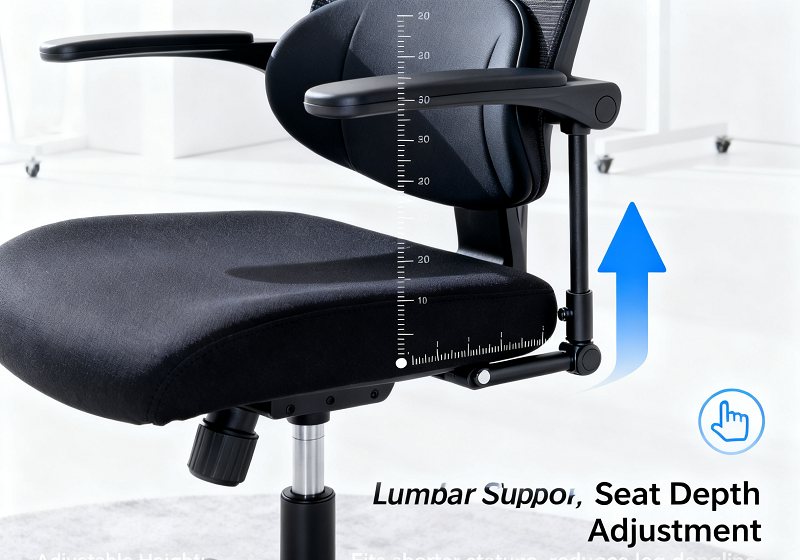
Short users need 42-45cm seat depth. Fixed-depth chairs (50cm+) leave backs unsupported (leaning forward) or press thigh nerves (numbness). Choose adjustable depth.
Pitfalls About Lumbar Support
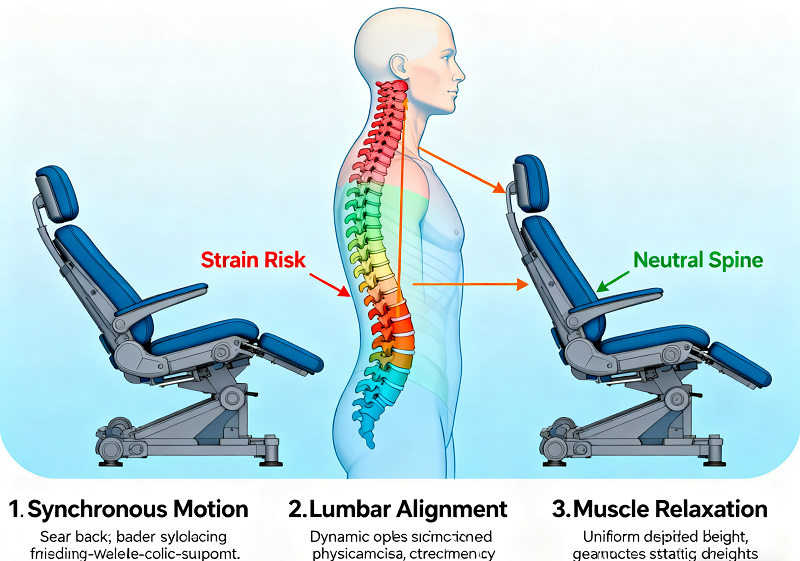
Lumbar support is vital, but wrong placement/firmness harms short users - their curve sits lower than average.
Don’t Choose Non-Adjustable Lumbar Intensity
Budget chairs have fixed pads: too firm (tension) or soft (no support). Adjustable intensity (dial/lever) suits varying pain levels.
Avoid Misaligned Lumbar Support
Short spines need support 10-15cm below shoulders; standard chairs place it 20cm+ higher (causing slouching). Opt for up-down adjustable lumbar (10-18cm range).
Pitfalls of Material and Comfort
Materials impact back health - short users sit closer to seat edges, so poor fabrics cause pressure points.
Skip Hard, Non-Breathable Cushions
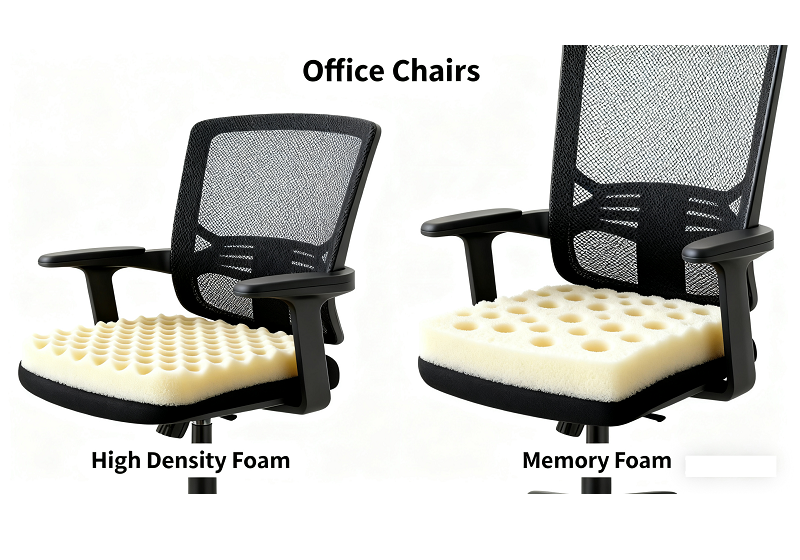
Vinyl/dense foam traps heat and creates pressure. Choose breathable mesh or high-density memory foam.
Avoid Sharp Seat Edges
Square edges cut thigh circulation (numbness) and force posture shifts. Pick rounded “waterfall edges.”
Is the Chair Easy for Short People with Back Pain to Assemble?
Assembly strains backs - heavy parts or confusing instructions trigger pain. Evaluate difficulty alongside other features.
Assembly Difficulty Factors
Part weight and tool availability matter - short users often have less upper-body strength.
Whether Tools Are Included
Budget chairs lack tools (extra store trips strain backs). Look for included Allen wrenches/screws.
Weight of Chair Parts
Backrests: 5-8kg; bases: 6-7kg (aluminum, not 10kg+ steel). Over 10kg? Ask for help.

Assembly Guidance Clarity
Confusing instructions prolong strain. Clear guidance speeds assembly.
Are Instructions Visual?
Text-only guides are hard. Look for step-by-step photos or QR-linked videos (watch while sitting).
Time Required for Assembly
Aim for 20-30 minutes. 60+ minute assembly means complex parts (tiring backs). Check reviews.
Does Seat Edge Cause Thigh Numbness?
Thigh numbness signals poor blood flow and posture shifts (worsening back pain). Short users sit closer to edges, so design matters.
Seat Edge Design Features
Shape/height prevents strain - sharp edges or even height cause numbness.
Rounded/Softened Edge
Rounded (waterfall) edges spread pressure, avoiding numbness. Sharp edges dig into thighs.
Stepped Edge Height
Edges 1-2cm lower than cushions reduce knee-artery pressure (prevents numbness). Worth it for frequent discomfort.
Cushion Support Distribution
Uneven pressure worsens issues - cushions need balance.
Even Pressure
Pressure-mapped or memory foam spreads weight. Avoid edge/center concentration.
Ideal Cushion Thickness
4-6cm balances padding/stability. <3cm (no support) or >8cm (too high) worsen posture.
Table 1: Seat Edge & Cushion Checklist
|
Feature |
Ideal |
Red Flag |
|
Seat Edge Design |
Rounded (waterfall) |
Sharp square |
|
Edge Height |
1-2cm lower than cushion |
Same height |
|
Cushion Pressure |
Evenly distributed |
Concentrated on edge |
|
Cushion Thickness |
4-6cm (foam/mesh) |
<3cm or >8cm |
Do Casters Roll Smoothly?
Casters impact movement - poor ones force pushing/twisting (straining backs).
Caster Adaptability to Floors
Casters must match floors to avoid strain.
Smooth Rolling on Carpet
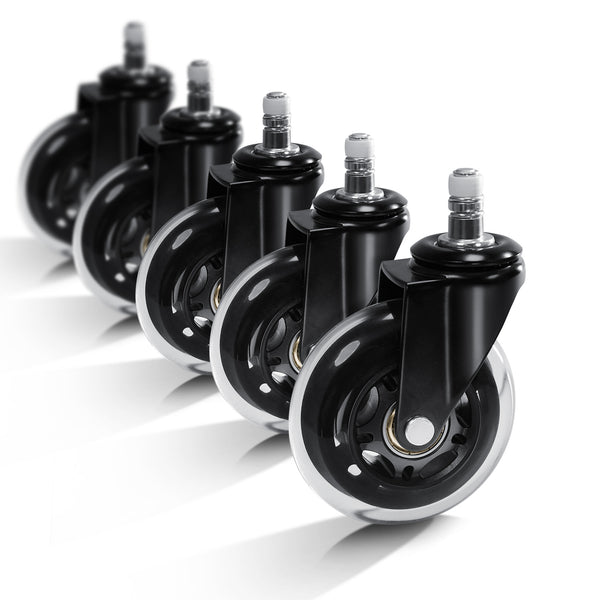
High-pile carpet needs 50mm+ rubber-tread casters (no stuck issues). Low-pile works with 38-45mm rubber casters.
Hardwood-Safe Casters
Soft rubber casters prevent scratches (no lifting to move).
Caster Control
Easy maneuvering and brakes keep stability.
Easy to Push/Pull
Casters need <10 pounds of force (avoids twisting torsos).
Brake Function
Easy-to-reach brakes (front of base) keep chairs stable when standing/stretching.
Table 2: Caster Recommendations by Floor
|
Floor Type |
Best Caster Type |
Back Pain Benefit |
|
High-Pile Carpet |
50mm+ rubber-tread |
Less pushing strain |
|
Low-Pile Carpet |
38-45mm rubber |
Smooth rolling |
|
Hardwood/Tile |
Soft rubber |
No lifting strain |
Do Short People Need Extra Lumbar Cushions?
Cushions fix built-in support gaps - use only if needed, and choose carefully.
When Extra Cushions Are Necessary
Use if built-in support is too soft (slouching, 30-minute aches) or misaligned (hits mid-back).
How to Choose Extra Cushions
- Hardness: Medium-density foam (flexible, supportive). Avoid ultra-soft/hard.
- Size: 15-20cm (width) x 10-15cm (height) x 3-5cm (thickness).
- Anti-Slip: Straps/non-slip bottom (prevents shifting).
Table 3: Extra Lumbar Cushion Guide
|
Feature |
Ideal |
Red Flag |
|
Hardness |
Medium-density foam |
Ultra-soft/hard |
|
Size |
15-20x10-15x3-5cm |
<15cm wide or >5cm thick |
|
Anti-Slip |
Straps/non-slip |
No straps |
Does Cross-Legged Posture Fit?
Cross-legged sitting needs proper seat size - wrong dimensions strain backs.
Seat Size for Cross-Legged Sitting
- Width: 50-55cm (standard 45cm is too narrow; avoids knee strain).
- Depth: 42-45cm (prevents knee-back pressure).
Posture Impact on Back Pain
Cross-legged sitting strains spines if >20 minutes. Take 2-minute breaks. Avoid with chronic sciatica.
Does the Chair Have Adjustable Lumbar Support?
Adjustable support targets short spines - critical for pain relief.
Lumbar Adjustment Directions
- Up-Down: 10-18cm range (aligns with short spines).
- Forward-Backward: Adjusts intensity (suits mild/chronic pain).
Lumbar Support Type
Spring/foam pads work best. Memory function (retains settings) saves adjustments. Avoid plastic pads.
blog18

Is the Seat Height Suitable?
Proper height maintains posture - wrong height strains backs.
Seat Height Adjustment Range
Minimum 40-43cm (flat feet); maximum 48-50cm (no tiptoeing for armrests).
Height Impact on Back
Knees bend 90° (reduces waist pressure). Misaligned hips/knees cause pelvic tilt - adjust until aligned.
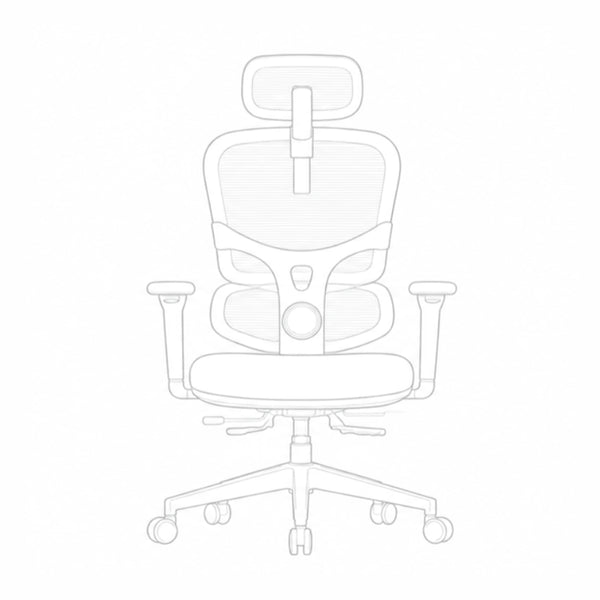
Newtral NT002 Ergonomic for Short Stature
Key Features for Short Users with Back Pain
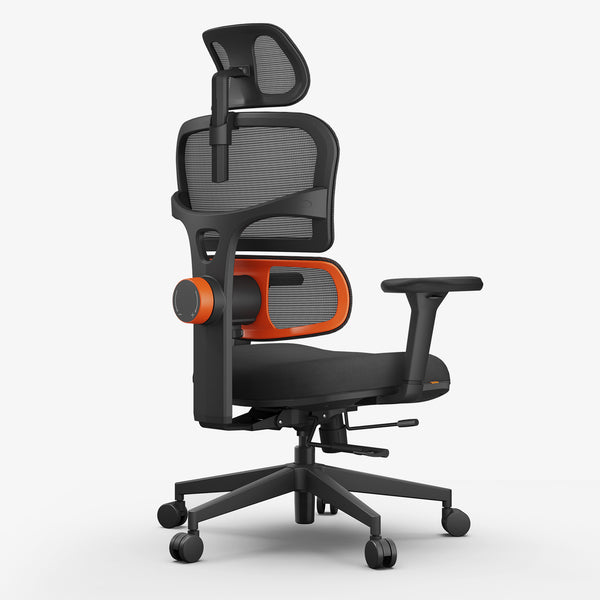
- Size: 40-43cm min height, 42-45cm adjustable depth.
- Lumbar: 10-18cm up-down + 3-level intensity.
- Comfort: 5cm foam cushion, waterfall edge.
- Practicality: 7kg aluminum base (easy to move), anti-tipping, 25-minute assembly (tools included).


Leave a comment
All comments are moderated before being published.
This site is protected by hCaptcha and the hCaptcha Privacy Policy and Terms of Service apply.