
Table of Contents
Desk height affects more than just comfort. A surface that is even slightly off can lead to shoulder tension, wrist strain, and back pain over time. Understanding the standard helps you set up your workspace the right way from the start.
What Is Standard Desk Height?
The 29-inch rule
The widely accepted standard desk height is 29 inches, or approximately 74 cm. This figure applies to most conventional seated office desks and serves as the baseline used by furniture manufacturers, office designers, and ergonomic researchers alike.
While 29 inches is not a universal fit for every person, it represents the height that works reasonably well for the broadest range of adult users during seated tasks like typing, writing, and other desk-based work.
Where this number comes from
The 29-inch standard is grounded in decades of ergonomic research. It is derived from anthropometric data, the study of human body dimensions, which establishes comfortable working positions across a population of varying heights. Organizations such as OSHA and BIFMA have each contributed guidelines that inform how office furniture is designed and tested.
The goal is to allow most seated users to work with their elbows at roughly a 90-degree angle, shoulders relaxed, and wrists in a neutral position. The 29-inch figure strikes a practical balance across that range.
Standard heights by desk type
The 29-inch figure applies specifically to standard seated desks. Other desk types serve different purposes and follow different height conventions.
|
Desk Type |
Typical Height Range |
|
Standard (fixed) office desk |
28–30 in (71–76 cm) |
|
Height-adjustable desk – seated position |
22–33 in (56–84 cm) |
|
Height-adjustable desk – standing position |
35–49 in (89–124 cm) |
|
Kids' desk |
20–26 in (51–66 cm) |
|
Counter-height desk |
34–36 in (86–91 cm) |

Is 29 Inches Right for You?
The standard desk height is a useful starting point, but it does not fit every body equally. The best way to know whether your desk is working for you is to pay attention to how your body feels after a few hours of use.
Signs your desk is too high
When a desk sits too high relative to your seated position, your shoulders tend to creep upward to compensate. Other common signs include:
- Tension or aching in the neck and upper back
- Wrist discomfort from typing at an upward angle
- A tendency to lean away from the desk in search of a more comfortable position
Signs your desk is too low
A desk that sits too low pulls you into a hunched posture. Common signs include:
- Rounding in the lower back during extended sessions
- Head and neck pushed forward toward the screen
- Mid-back fatigue that gradually builds throughout the day
These patterns place sustained strain on the spine and can develop into chronic discomfort if left unaddressed.
How body height affects the fit
The 29-inch standard was built around average adult body proportions, which roughly corresponds to users between 5'8" and 5'10". For people outside that range, the desk will likely be off in one direction or the other. Taller users tend to find the surface too low, while shorter users often end up with a desk that sits above a comfortable elbow position.
Rather than guessing, the most reliable approach is to calculate the desk and chair heights suited to your specific body. The Newtral Ergonomic Chair and Desk Height Calculator provides personalized recommendations for seat height, armrest position, lumbar support, and desk height based on your measurements, covering both seated and standing setups.
How to Adjust a Fixed-Height Desk?
If you work with a fixed-height desk that does not perfectly match your build, there are several effective adjustments to make before considering a new desk entirely.
Adjusting your chair height
The most impactful change you can make is to your chair. Raising or lowering the seat directly changes how your arms align with the desk surface. The target is elbows at roughly a 90-degree angle with forearms resting lightly on the desk, and shoulders staying relaxed throughout.
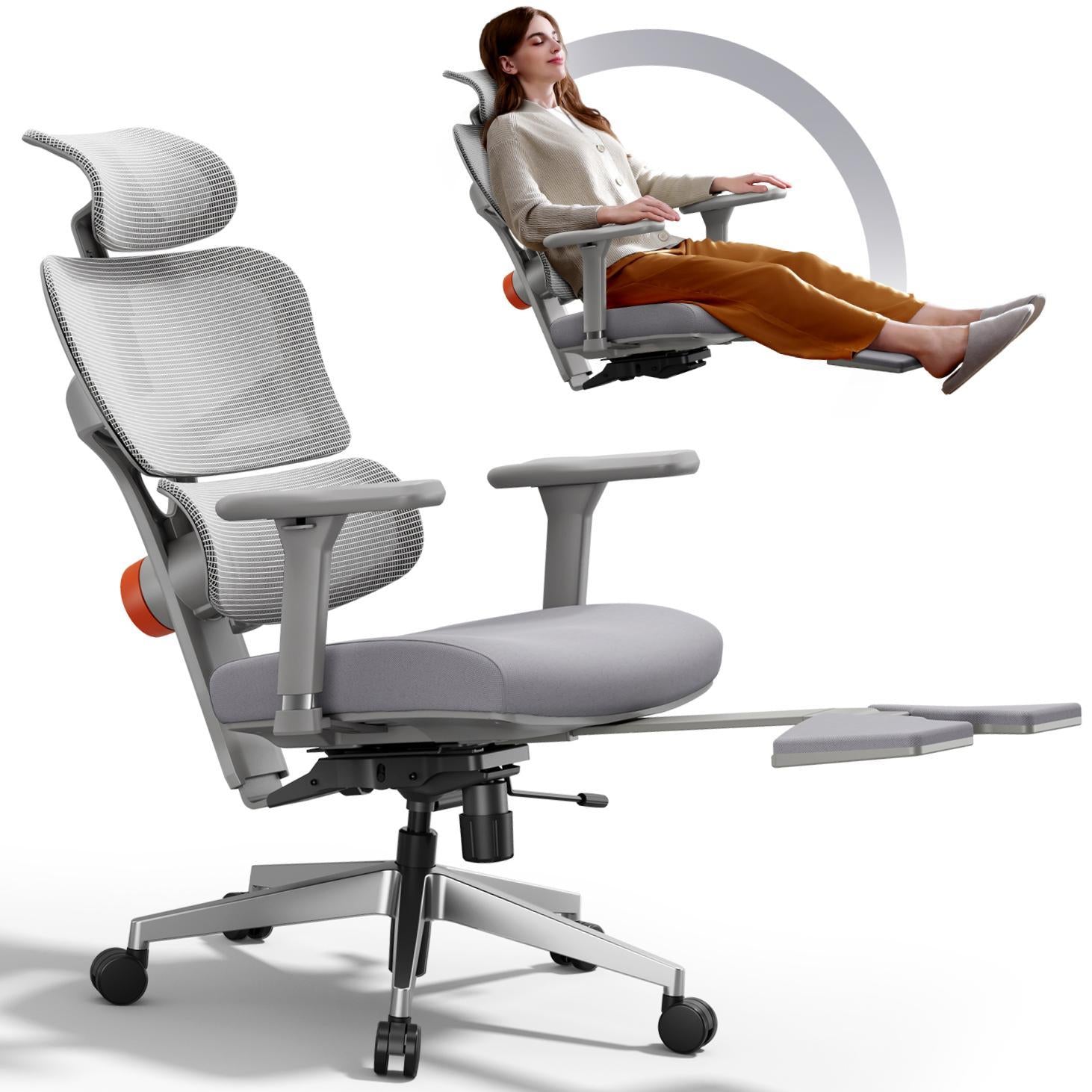
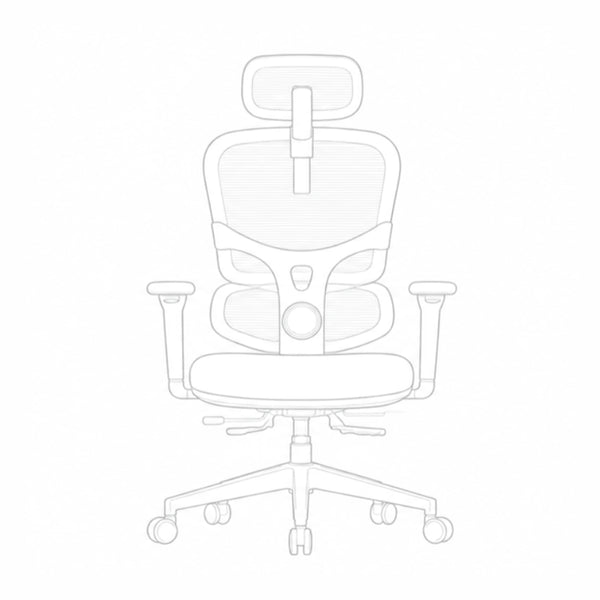
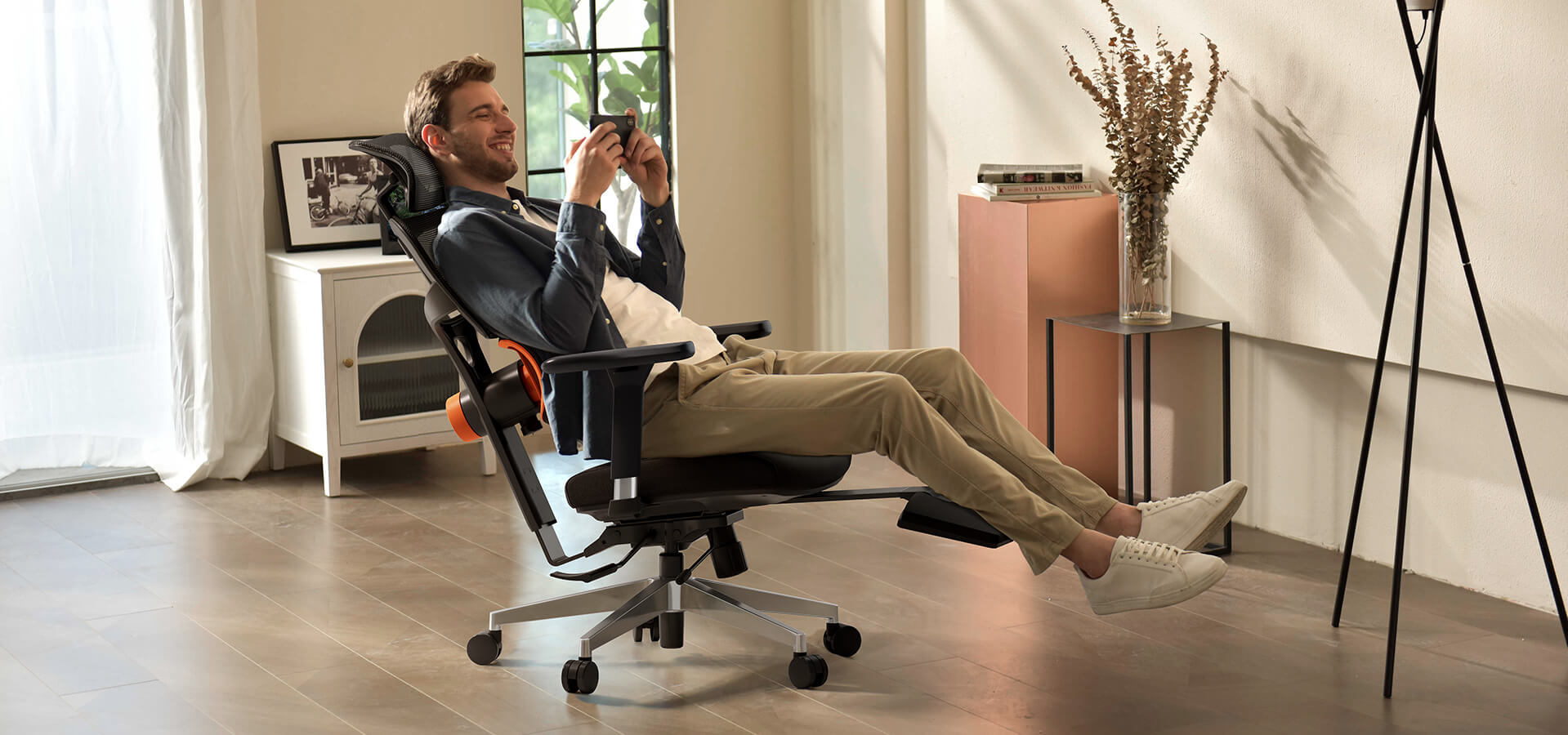
When a chair carries the ergonomic load for a fixed desk, seat height range and lumbar support matter most. The Newtral NT001 and NT002 are both fully height-adjustable, with auto-following lumbar support that actively tracks your back as you change position, keeping the natural spinal curve supported at any seat height setting. Both hold BIFMA and SGS certifications, confirming that their adjustability mechanisms and structural performance meet independent safety and durability standards.
Using a footrest
Raising your chair to match a higher desk can leave your feet without proper floor contact. When your feet no longer rest flat, circulation is restricted and fatigue builds faster. A footrest restores proper leg support and maintains postural alignment throughout the lower body.
Monitor and keyboard positioning
With chair height dialed in, the next priority is positioning your monitor and keyboard correctly. Key points to follow:
-
Monitor height: Position the screen so the top edge sits at or just below eye level, at a viewing distance of 20 to 28 inches from your face. Consistently looking up or craning forward are signs the screen needs to move.
-
Keyboard placement: The keyboard should sit directly in front of you at desk level, close enough that your upper arms stay near your body while typing.
-
Mouse position: Keep the mouse at the same height as the keyboard and within easy reach, so you are not extending your arm or raising your shoulder to use it.

When a Fixed Desk No Longer Works
For many users, a well-adjusted chair and a few positioning changes are enough to make a standard desk comfortable. There are situations, however, where a fixed-height surface becomes a persistent limitation.
Limitations of a fixed-height desk
A fixed desk can only be optimized for one user at one height. The following users are most likely to find this limiting:
- Those who are significantly taller or shorter than average
- People who share a workstation with someone of a different build
- Anyone dealing with recurring discomfort despite making the correct posture adjustments
Beyond the fit issue, a fixed desk also locks you into a single posture for the entire workday. Prolonged static sitting, even with a well-configured setup, places continuous load on the spine and limits circulation in the lower body.
Who benefits from a height-adjustable desk
A height-adjustable desk eliminates the constraints of a fixed surface and delivers two practical advantages: a precise ergonomic fit for any body type, and the ability to alternate between sitting and standing throughout the day. That variation in posture reduces spinal load and the fatigue that comes from staying in one position for too long.
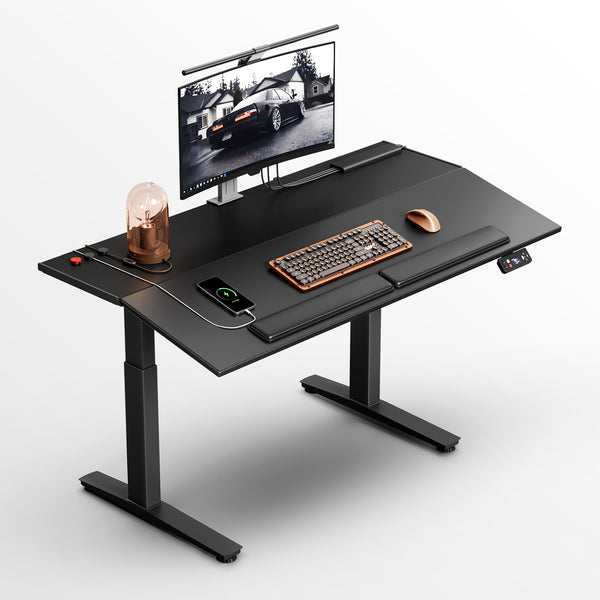
The Newtral DE-A Smart Electric Tilt Standing Desk adjusts from 29.5 to 48 inches, a range that begins close to the standard 29-inch seated desk height and extends to accommodate standing positions for users up to around 6'3". Three memory presets save your preferred sitting and standing heights for instant one-touch switching, and the motor runs quietly at under 50 dB, making transitions unobtrusive in shared spaces. A tilting desktop at 8° for active work or 15° for reading and document review adds further flexibility beyond basic sit-stand switching.
Once you have a height-adjustable desk, getting the height dialed in correctly is the next step. How Tall Should Your Standing Desk Be? covers the full setup process, from elbow-height reference points to monitor alignment and building a sit-stand routine that actually works.

Conclusion
The 29-inch desk height standard is a practical baseline, but the right fit depends on your body. Getting chair height, footrest support, and monitor positioning right makes a genuine difference in how you feel across a full workday.
Blog12
Blog18
FAQs
What is the standard height for an office desk?
The standard height for a conventional seated office desk is 29 inches, or approximately 74 cm. This figure is based on ergonomic research designed to suit a broad range of adult users in a seated working position.
What is standard computer desk height?
Computer desks follow the same 29-inch convention as standard office desks. That said, computer work introduces ergonomic variables beyond desk height alone. Monitor placement, keyboard angle, and viewing distance all affect comfort at this height. If the desk fits but screen positioning still causes neck or eye strain, adjusting monitor height or distance is the logical next step.
What is standard desk chair height?
Ergonomic chair seat height typically ranges from 16 to 21 inches from the floor. The right setting depends on both your body proportions and your desk height. As a practical reference, your knees should sit at roughly a 90-degree angle and your feet should rest flat on the floor when seated. If your desk is fixed at 29 inches and your chair cannot adjust low enough to keep your feet flat, a footrest is the most practical fix.
What is standard desk height for ergonomics?
From an ergonomic standpoint, a desk height of around 29 inches works best when your elbows can rest at a 90-degree angle, your shoulders stay relaxed, and your wrists remain neutral while typing. Since the ideal height varies by individual, using a tool like the Newtral Ergonomic Height Calculator helps find the precise settings suited to your measurements.







Laisser un commentaire
Tous les commentaires sont modérés avant d'être publiés.
Ce site est protégé par hCaptcha, et la Politique de confidentialité et les Conditions de service de hCaptcha s’appliquent.