
Table of Contents
Many people assume ergonomic chairs are a comfort expense that HSA and FSA plans simply do not cover. That assumption costs them. With a diagnosed medical condition and a doctor's letter, an ergonomic chair can qualify as a reimbursable medical expense, and the approval rate is higher than most people expect.
This guide covers exactly what makes a chair eligible, how to get the documentation you need, and what to do if a claim gets denied.
HSA and FSA Basics
Before getting into ergonomic chairs specifically, it helps to understand how these accounts work and what kinds of expenses they cover.
What Is an HSA?
A Health Savings Account (HSA) is a tax-advantaged account available to people enrolled in a High-Deductible Health Plan (HDHP). Contributions are tax-deductible, funds grow tax-free, and withdrawals used for qualified medical expenses are also tax-free. Unused funds roll over from year to year with no requirement to spend the balance by year-end, making an HSA a flexible long-term health savings tool.
What Is an FSA?
A Flexible Spending Account (FSA) is an employer-sponsored benefit that lets you set aside pre-tax dollars for eligible health expenses. Unlike an HSA, most FSA plans operate on a "use it or lose it" basis, meaning unspent funds typically expire at the end of the plan year. Some employers offer a short grace period or allow a limited rollover amount, so it is worth reviewing your specific plan terms.

Are Ergonomic Chairs Covered?
The General Rule
Under IRS Publication 502, a medical expense qualifies for HSA or FSA reimbursement when it is primarily for the "diagnosis, cure, mitigation, treatment, or prevention of disease," or for treatments that affect a body structure or function. General comfort or productivity items, including most furniture, do not meet this standard on their own, so an ergonomic chair purchased simply for comfort or better posture will not qualify.
When They Can Qualify
An ergonomic chair can become an eligible expense when a licensed healthcare provider determines it is medically necessary for treating a specific, diagnosed condition. If sitting for extended periods worsens your symptoms and a doctor recommends an ergonomic chair as part of your treatment or management plan, it can shift from a comfort purchase to a qualifying medical expense in the eyes of your HSA or FSA administrator. Without documented medical necessity, approval is unlikely regardless of how well-designed the chair is.
Conditions That May Support Eligibility
The following conditions are commonly cited in successful HSA/FSA claims for ergonomic seating:
- Chronic lower back pain
- Herniated or bulging discs
- Sciatica
- Scoliosis
- Post-surgical recovery (back, hip, or spinal surgery)
- Degenerative disc disease
- Cervical or thoracic spine disorders
- Lumbar spinal stenosis
This list is not exhaustive. Any diagnosed condition in which prolonged sitting significantly worsens symptoms may support a claim, provided your doctor is willing to document that recommendation.

Letter of Medical Necessity (LMN)
What Is an LMN?
A Letter of Medical Necessity (LMN) is a written statement from a licensed healthcare provider explaining why a specific product or service is required for your medical treatment. For ergonomic chairs, an LMN is often the deciding factor in whether your claim is approved. Based on available claim data, roughly 60 to 70 percent of ergonomic chair claims are approved without issue. Of the remainder, around 20 to 25 percent are approved once an LMN is provided, and only 5 to 15 percent are fully denied. Not every plan requires an LMN, but having one on file significantly improves your odds, especially for items that fall in a gray area like ergonomic furniture.
How to Get One from Your Doctor
Schedule an appointment with your primary care physician, orthopedist, physical therapist, or any licensed provider who manages your condition. Explain that you are purchasing an ergonomic chair and would like a letter documenting its medical necessity. Most providers are familiar with this type of request, particularly for patients with musculoskeletal diagnoses.
Before the appointment, prepare to describe your specific symptoms, how they worsen with sitting, and how an ergonomic chair fits into your treatment plan. The more clinical detail your doctor can include, the stronger your claim will be.
What to Include in the Request
Ask your doctor to address the following points in the letter:
- Your full name and date of birth
- Your diagnosis or condition being treated
- A clear statement that an ergonomic chair is medically necessary for managing or treating this condition
- An explanation of how the chair addresses the condition (for example, reducing lumbar pressure or supporting spinal alignment)
- The provider's name, credentials, signature, and contact information
- The date the letter was written
Some HSA and FSA administrators have their own LMN templates or standardized forms. Check your provider's portal before the appointment so your doctor can complete the correct format from the start, avoiding delays during claim review.

How to Use HSA/FSA Funds for an Ergonomic Chair?
Step-by-Step Reimbursement Process
Most ergonomic chair purchases involve a reimbursement process rather than a direct point-of-sale payment. You pay upfront with any card, then file a claim to recover the funds. The HSA/FSA reimbursement guide provides additional detail on each step.
1. Purchase the chair using any credit or debit card. You do not need to use your HSA or FSA card at checkout.
2. Save your order confirmation email as your purchase receipt.
3. Gather supporting materials: a printout or screenshot of the product page showing its ergonomic and health-related features, and your LMN if your plan requires it. The product page documentation helps your administrator confirm the item serves a health-related function rather than being standard furniture.
4. Log in to your HSA or FSA provider's portal (such as Fidelity, Optum, or Cigna). Some administrators accept claims entirely online; others require mailed documentation, so confirm your plan's preferred method before filing.
5. Submit your claim with all supporting documents attached. FSA plans often have a submission deadline after the plan year ends, so check your specific cutoff date.
6. Wait for the review to complete. Once approved, funds are returned to your linked bank account or HSA/FSA balance.
Hold onto all documentation for at least three years. The IRS recommends keeping records related to HSA distributions in the event of an audit, as outlined in IRS Publication 969.
Submitting Your Claim
Your submission should include your order receipt, product page documentation showing the chair's lumbar support and ergonomic features, and your LMN where applicable. The product page printout helps your administrator confirm that the item serves a health-related function rather than being standard furniture.
Some administrators accept claims entirely through their online portal; others may require mailed documentation. FSA plans often require claims to be submitted within a set window after the plan year ends, so confirm your plan's submission method and deadline before filing.
Keeping Records for Your Claim
Hold onto all documentation related to the purchase for at least three years. The IRS recommends keeping records related to HSA distributions in the event of an audit, as outlined in IRS Publication 969.

Ergonomic Chairs That May Qualify for HSA/FSA
The three models below each address different spinal and musculoskeletal needs, and all hold independent safety certifications that can serve as supporting documentation when filing a claim.
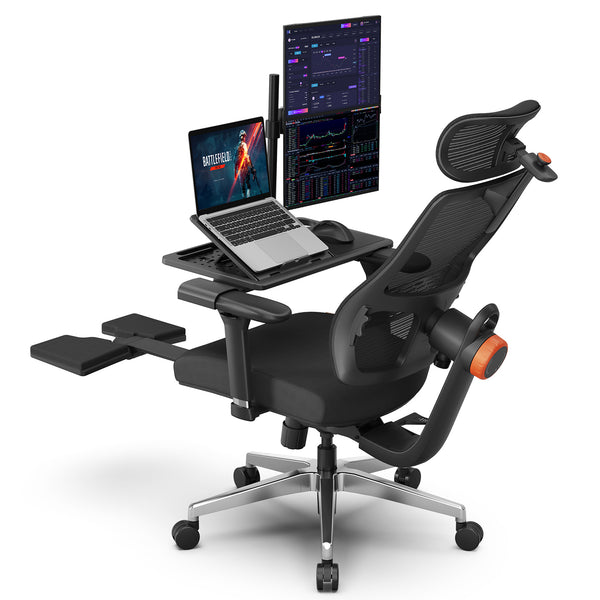
Newtral NT002 Ergonomic Office Chair
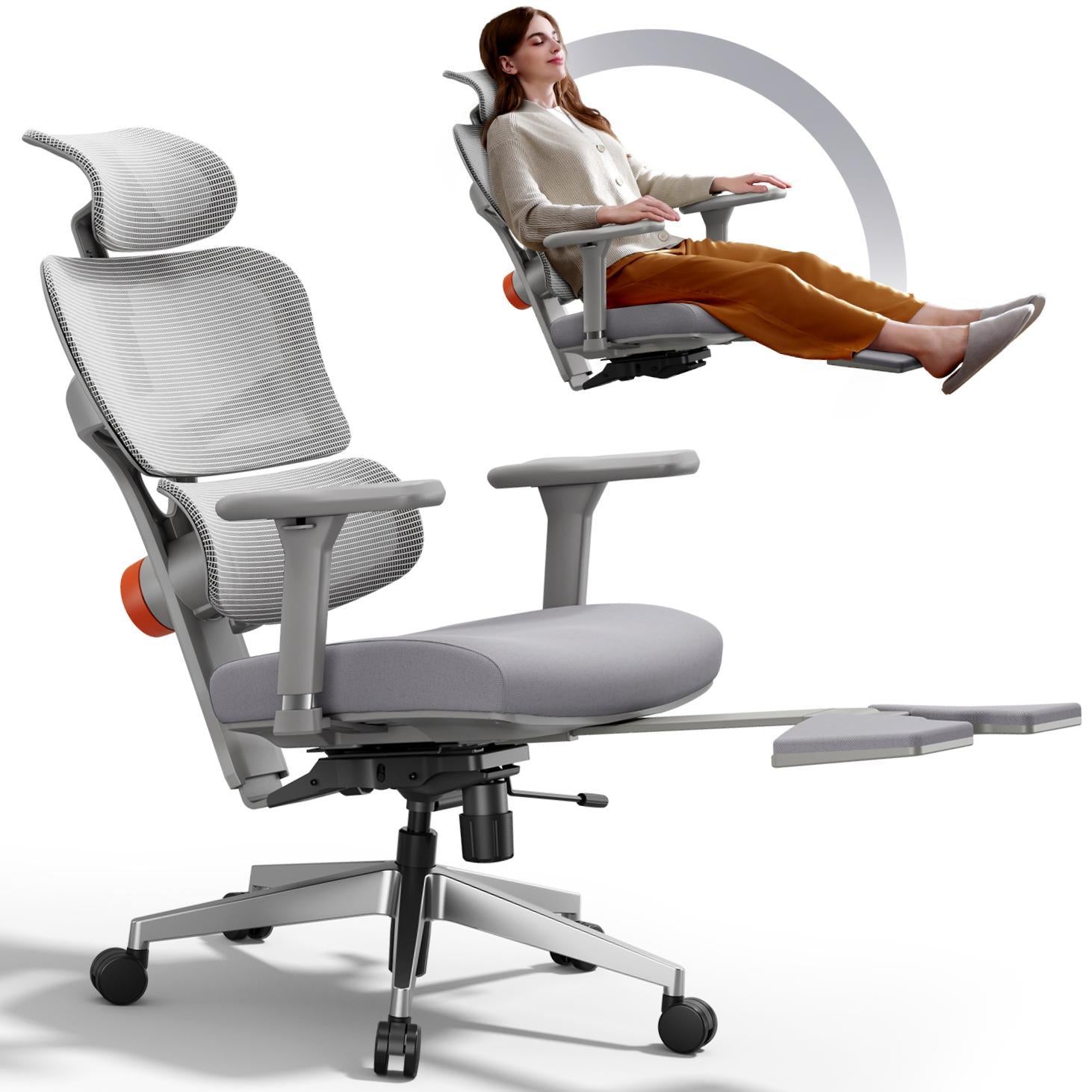
The Newtral NT002 is built around a patented auto-following lumbar support system that moves with your body to maintain continuous lower back contact throughout the day. Beyond the lumbar mechanism, it offers adjustable backrest height, seat depth adjustment, and an extendable footrest, giving users a high degree of customization to match their specific ergonomic needs.
For individuals whose doctors recommend a precisely fitted seating setup to manage lower back or disc conditions, the NT002's range of adjustability makes it easier to document a medically tailored configuration.
Newtral Magic H-BPRO Ergonomic Office Chair
The Newtral Magic H-BPRO features an auto-following backrest that adapts to full-spine movement rather than the lumbar region alone, and is designed to reduce spinal pressure by up to 50%. It also includes a 5D auto-following headrest that supports cervical alignment.
For users managing thoracic spine disorders, cervical conditions, or post-surgical recovery requiring both upper and lower back support, the H-BPRO's full-spine contact and measurable pressure reduction offer the most clinically relevant feature set of the three models.
Blog18
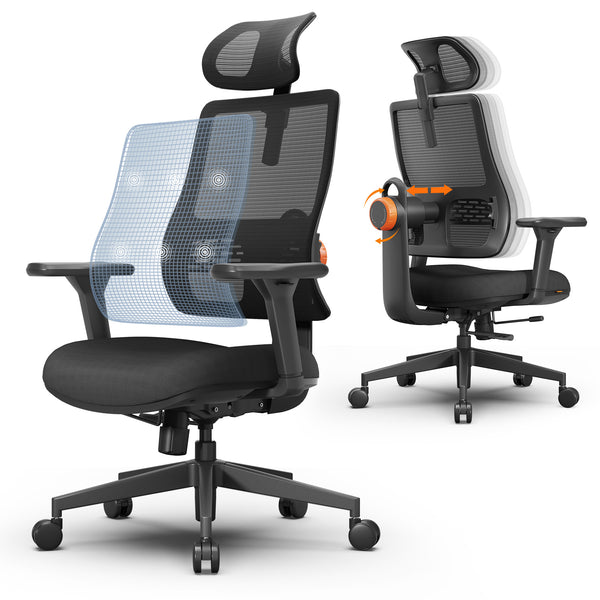
Newtral Magic H002 with Auto-Following Lumbar Support
The Newtral Magic H002 shares the auto-following lumbar support mechanism with the NT002 but in a streamlined form factor suited to users who want active lumbar support without the extended footrest and full range of manual adjustments.
It is a practical option for those whose medical necessity documentation focuses specifically on lumbar support, and who prefer a simpler, more compact chair profile.
Why Certifications Strengthen Your Claim
Independent certifications serve as third-party evidence of a chair's design and material standards, which can be useful supporting documentation when filing a claim. Newtral chairs hold several recognized certifications, including BIFMA compliance (the primary safety and durability benchmark for office furniture in the U.S.), SGS testing, and ISO 9001 quality management certification.
Downloadable reports for individual models are available on the Certification page and can be submitted alongside your claim to demonstrate that the product meets established safety and ergonomic benchmarks.
What If Your Claim Gets Denied?
Common Reasons for Denial
Denials happen, and they are not always final. Understanding the specific reason is the first step toward resolving it.
|
Reason for Denial |
How Common |
Recommended Next Step |
|
Plan does not cover ergonomic furniture |
Varies by employer |
Review plan documents; an appeal may not be viable |
|
No LMN submitted, but plan requires one |
20–25% of cases |
Obtain an LMN and resubmit |
|
Insufficient documentation of medical need |
Common |
Ask your doctor to add more clinical detail to the LMN |
|
Account balance is less than the purchase amount |
Situational |
Partial reimbursement up to your available balance may still apply |
|
Plan-specific product category exclusions |
Varies |
Contact your administrator to confirm the exclusion scope |
How to Appeal?
If your claim is denied, here is a practical path forward:
- Review the denial notice carefully in your administrator's portal. The stated reason will guide your next step.
- Contact your HSA or FSA administrator directly to ask what additional documentation would support a successful appeal.
- Return to your doctor if the LMN was the issue. Request a revised letter with more specific clinical language tied to your diagnosis and treatment plan.
- Resubmit your appeal through the formal process outlined in your plan documents. Most administrators have a defined appeals window, so act promptly.
- If the appeal is not successful, the standard return policy still applies, so you are not left without options if the reimbursement route does not work out.
Other HSA/FSA-Eligible Office and Health Items
If you have remaining HSA or FSA funds to spend, other health-related products may also qualify depending on your plan and whether you have documentation to support their medical use. Common examples include:
- Orthopedic seat cushions (when prescribed for a back or tailbone condition)
- Ergonomic keyboards and wrist rests (with medical necessity documentation)
- Blue light blocking glasses (if prescribed for eye strain or migraines)
- Standing desk converters (with an LMN)
- Heating pads and TENS units (often eligible without an LMN)
- Prescription eyewear and contact lenses
Always verify eligibility directly with your plan administrator before purchasing, as coverage rules vary by employer and plan design.

FAQs
Can I use my FSA card directly to buy an ergonomic chair?
In most cases, no. The standard approach is to pay with any credit or debit card at the time of purchase, then submit a reimbursement claim through your FSA provider's portal. Some large FSA-eligible online marketplaces may allow direct card use, but this is not typical for specialty ergonomic chair brands.
Does Medicare or insurance affect HSA/FSA eligibility?
Medicare and private insurance are entirely separate from HSA and FSA accounts. If you are enrolled in Medicare, you can no longer contribute to a new HSA, though you can still use any existing HSA balance on qualified expenses. Private health insurance coverage has no bearing on your ability to use FSA funds. Neither Medicare nor private insurance approval is required to file an HSA/FSA reimbursement claim for an ergonomic chair.
Are standing desks HSA or FSA eligible?
Standing desks follow the same rules as ergonomic chairs. They are not automatically eligible, but they can qualify with a Letter of Medical Necessity from a licensed healthcare provider. Conditions such as chronic back pain, circulation issues, or post-surgical recovery that are worsened by prolonged sitting may support a claim. Check with your plan administrator to understand how your specific plan treats this category.
What happens if I use HSA/FSA funds on an ineligible item?
Using HSA funds on a non-qualified expense has real tax consequences. The amount becomes subject to ordinary income tax plus a 20 percent penalty, as defined by the IRS. One exception: if you are 65 or older, the 20 percent penalty no longer applies, though the amount is still taxed as ordinary income. For FSA funds, using money on an ineligible expense may require repayment to the plan, depending on your employer's policies. Confirming eligibility and securing proper documentation before submitting a claim is always the safest approach.
Can I use HSA/FSA for a chair if I work from home?
Working from home does not change the eligibility rules. The deciding factor is always whether the chair is purchased for a documented medical condition, not where you use it. If your doctor has recommended an ergonomic chair to help manage a specific health condition and you have the documentation to support that, you can file a reimbursement claim whether you work from home, in a traditional office, or a combination of both.




Laisser un commentaire
Tous les commentaires sont modérés avant d'être publiés.
Ce site est protégé par hCaptcha, et la Politique de confidentialité et les Conditions de service de hCaptcha s’appliquent.