
Table of Contents
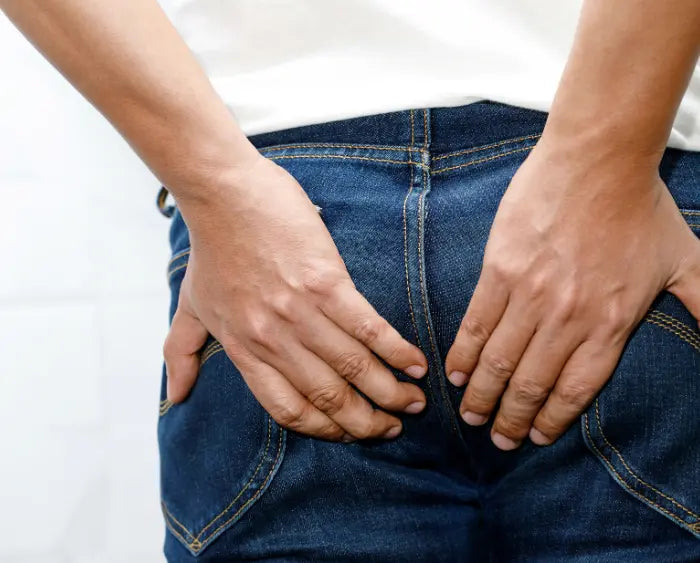
That stiff, flattened feeling after a long day at your desk is not just in your head. Sitting can genuinely change how your glutes look and feel over time, but the full picture is more nuanced than a simple yes or no. Below, we break down what really happens to your muscles when you sit for hours, separate fact from social media myth, and share practical ways to keep your glutes strong and toned.
Why People Think Sitting Flattens Your Butt
The dead butt syndrome theory
The term "dead butt syndrome" started as a nickname used by physical therapists and later spread widely online. It refers to a real condition called gluteal amnesia, where the gluteus medius becomes inhibited after long periods of inactivity. The nickname sounds dramatic, which is part of why it caught on so quickly on social media, but the underlying mechanism is simpler than it sounds: the muscles temporarily lose efficiency after extended sitting, rather than shutting down entirely.
What social media gets wrong
Many viral posts treat this as an instant, permanent transformation, as if a single day at a desk will visibly reshape your body. In reality, the process is gradual and depends on how much you sit, how you sit, and what you do the rest of the day. Short clips rarely have room for that nuance, so the message that reaches most viewers ends up oversimplified and, at times, needlessly alarming.

What Happens to Your Glutes When You Sit?
Muscle compression and blood flow
When you sit, your body weight compresses the gluteal muscles against the chair surface. This temporarily reduces blood flow to the area and can make the muscles feel flatter or less firm right after you stand up. This response is normal and short-lived, similar to how your arm might feel different after you have been leaning on it for a while.
Gluteal fold and skin changes
Prolonged sitting can also affect the skin and connective tissue around the glutes, sometimes making the fold beneath the buttocks appear more pronounced. Posture, chair design, and the amount of cushioning support you have while seated all influence how noticeable this becomes.
Temporary vs permanent changes
It helps to separate what bounces back quickly from what may need more deliberate effort to reverse.
|
Change |
Typically temporary |
May become longer lasting |
|
Reduced blood flow |
Yes |
No |
|
Muscle fatigue after sitting |
Yes |
No |
|
Reduced muscle activation over months |
Sometimes |
Yes, without intervention |
|
Loss of muscle tone from prolonged inactivity |
No |
Yes |
Can Sitting Cause Muscle Atrophy?
Gluteal amnesia explained
Gluteal amnesia occurs when the connection between your brain and your glute muscles weakens from underuse. The muscles do not disappear, but they become less responsive, which can lead to reduced strength and a flatter appearance over time if the pattern continues unaddressed. This ties into broader research on the effects of prolonged sitting, and the World Health Organization recommends regular movement throughout the day to help counter these effects.

How much sitting is too much
There is no single magic number, but most researchers agree that sitting for more than six to eight hours a day without breaks increases the risk of muscle deactivation, along with other health concerns. What matters most is not just total sitting time, but how often that time is interrupted with movement.
Signs your glutes are weakening
A few common indicators that gluteal amnesia may be setting in include:
- Lower back discomfort during exercise, especially squats or deadlifts
- Difficulty engaging your glutes during lunges or step-ups
- A feeling of instability when standing on one leg
- Hip or knee discomfort during everyday movement, like climbing stairs
Other Factors That Affect Butt Shape
Genetics and fat distribution
Where your body stores fat, including around the glutes, is largely determined by genetics. Two people with identical sitting habits can end up with very different butt shapes simply because of how their bodies are built.
Age related changes
As we age, natural collagen and muscle mass gradually decline, which can contribute to a flatter or less firm appearance regardless of how much time is spent sitting. This process affects everyone differently and unfolds over years, not weeks.
Diet and activity level
Overall body composition, shaped by diet and general activity level, plays a significant role in glute shape. Sitting is only one factor among several, alongside nutrition, strength training, and cardiovascular activity.
How to Prevent a Flat Butt From Sitting?
Deskercises and movement breaks
Small, consistent habits make a meaningful difference over time:
- Stand up and move for a minute or two every 30 to 60 minutes
- Do a few glute squeezes while seated to keep the muscles active
- Take short walks during calls or between tasks
- Set a reminder if you tend to lose track of time while working
Strengthening exercises for glutes
Exercises such as squats, hip thrusts, glute bridges, and lunges directly target the muscles most affected by prolonged sitting. Two to three sessions a week is often enough to notice improved tone and activation within a few weeks.
Posture and ergonomic tips
Sitting with even weight distribution, avoiding slouching, and keeping your hips level all help reduce unnecessary pressure on your glutes throughout the day.
Chairs that reduce pressure points
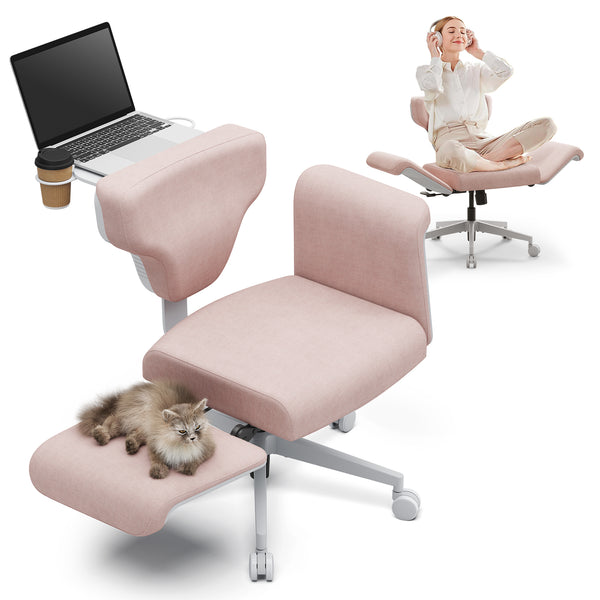
A chair that lets you shift positions regularly reduces the amount of time any single muscle group spends compressed against a seat. The Freedom-X Multi-Posture Pro Chair has a lockable 90 to 117 degree recline and adjustable seat depth, and supports upright, cross-legged, and reclined sitting, so weight is not held in the same position for hours at a stretch.
Blog18

Cushioning that eases pelvic pressure
Beyond posture, the seat cushion itself affects how much pressure builds up under the hips during long sessions. The NT002 Ergonomic Office Chair combines auto-following lumbar support with a high-density foam cushion designed to ease pelvic pressure, while its extendable footrest supports circulation when reclined.
Alternating sitting and standing
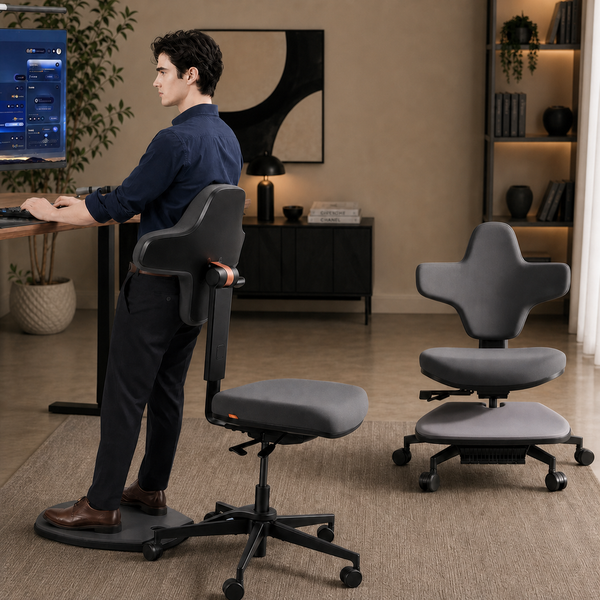
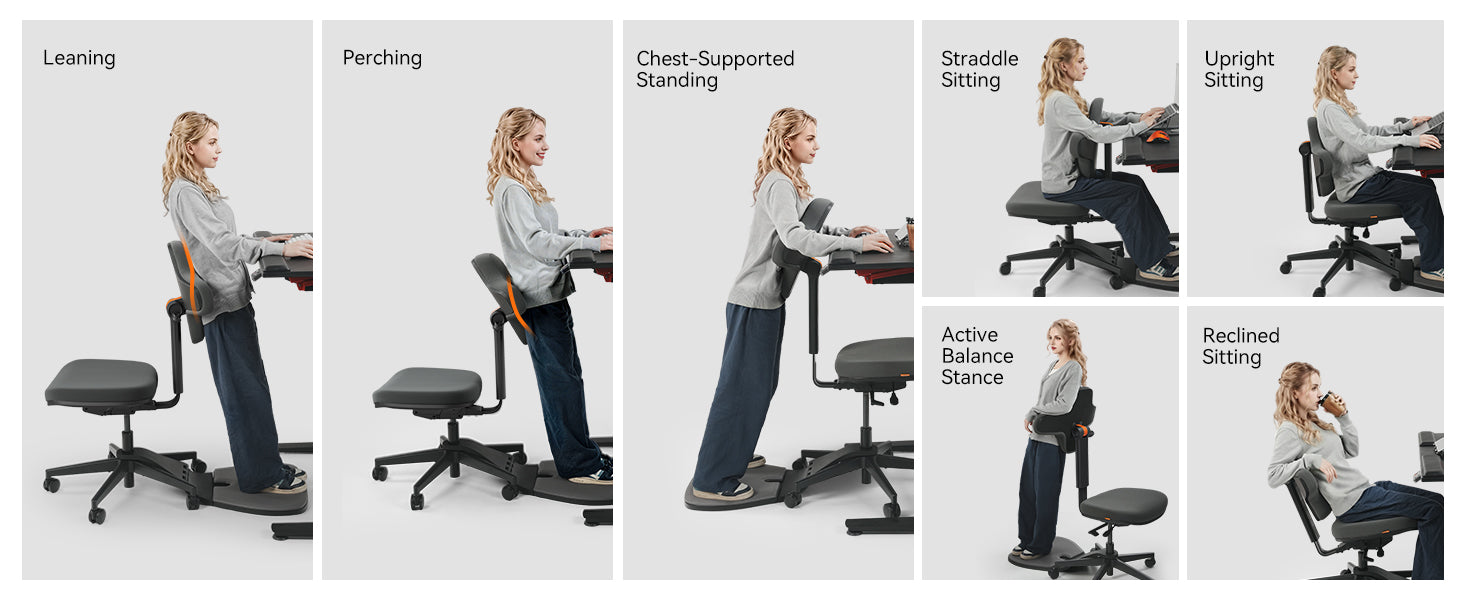
Switching between sitting and standing throughout the day reduces prolonged compression on the glutes and tailbone. The Standing-Mate Ergonomic Chair is built specifically for sit-stand desks, offering multiple postures such as perching and leaning along with cushioned support aimed at relieving tailbone pressure during long stretches at a desk.
Sit-stand desks for movement
Pairing a chair with a height-adjustable desk makes those position changes easier to build into a normal workday. The DE-A Smart Standing Desk adjusts electrically between about 29.5 and 48 inches, so switching from sitting to standing takes one touch instead of a conscious effort to get up.
Blog12

When to See a Doctor?
Signs of nerve compression
Tingling, sharp pain, or a burning sensation that radiates down the leg while sitting can indicate nerve compression and should not be ignored.
Chronic pain or numbness
Persistent numbness, ongoing lower back pain, or discomfort that does not improve with movement and stretching are worth having evaluated by a doctor or physical therapist to rule out underlying issues.
Final Thought
Sitting does play a role in how your glutes look and feel, but it is rarely the whole story. Genetics, age, diet, and overall activity level all contribute alongside how much time is spent in a chair. The encouraging part is that small, consistent changes, such as taking movement breaks, strengthening the glutes, and choosing seating that reduces prolonged pressure, can make a real difference. The body adapts to what it is consistently asked to do, so a few intentional habits today can help keep your glutes strong and healthy for years to come.
FAQs
Can sitting permanently flatten your butt
Sitting alone rarely causes permanent changes. Most flattening from sitting comes from temporary compression or reduced muscle activation, both of which typically improve with movement and targeted exercise.
How long before sitting affects glute shape
Noticeable changes usually develop over months of consistently prolonged sitting with little movement, not after a few days or weeks.
Does standing more fix a flat butt
Standing more helps reduce compression and encourages better circulation. It works best when paired with regular glute-strengthening exercises rather than used on its own.
Can exercise reverse sitting related changes
Yes. Consistent strength training targeting the glutes can restore muscle activation and improve tone, even after months of prolonged sitting.




Laisser un commentaire
Tous les commentaires sont modérés avant d'être publiés.
Ce site est protégé par hCaptcha, et la Politique de confidentialité et les Conditions de service de hCaptcha s’appliquent.