
Table of Contents
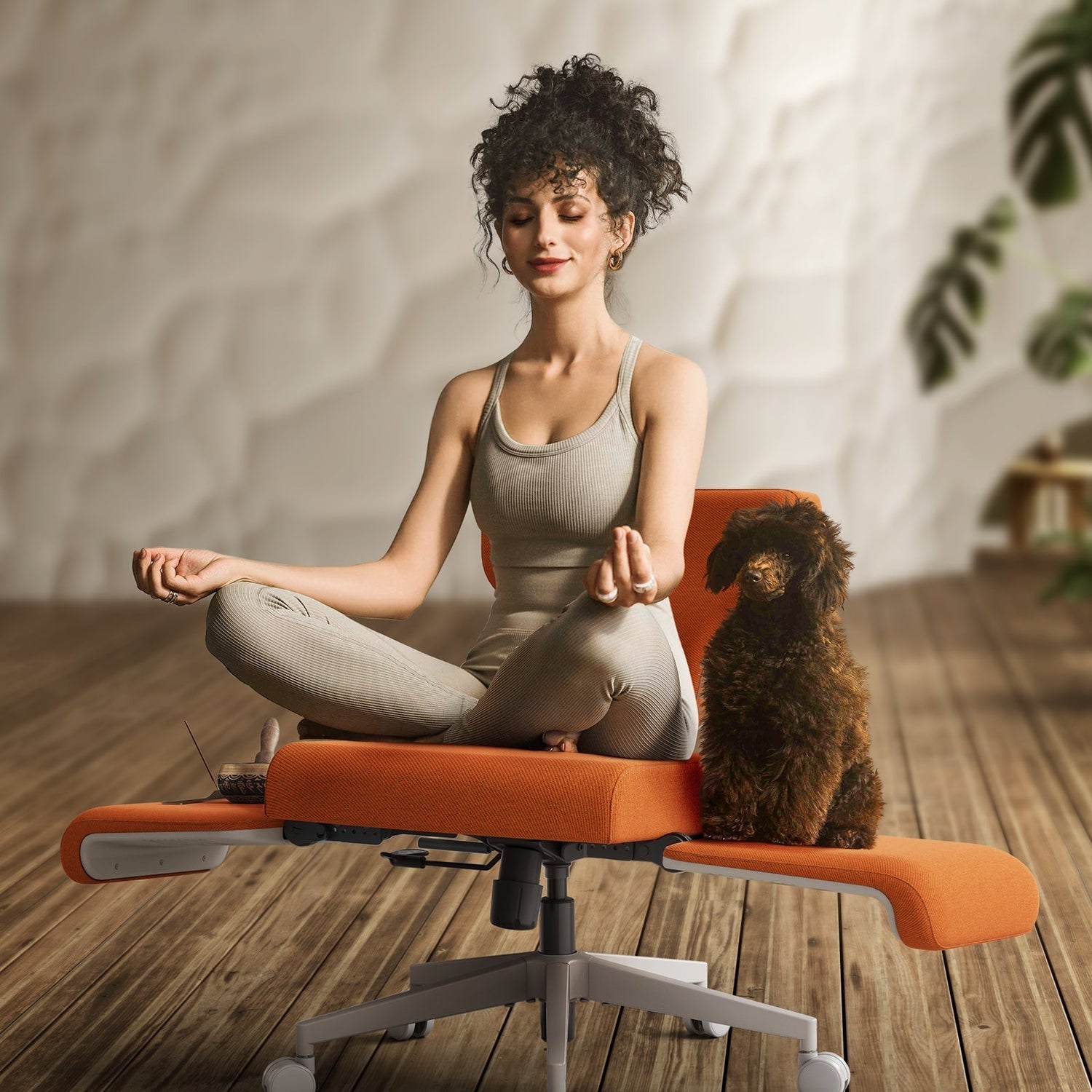
Sitting cross-legged at your desk feels completely natural. Millions of people do it every single day, especially at home, without giving it a second thought. But what is it actually doing to your spine, and is your home chair part of the problem?
Why So Many People Sit Cross-Legged
It Feels Natural — But Why?
Your body is always looking for comfort. When you've been sitting upright for an hour and your lower back starts to tighten, crossing one leg over the other gives you something to lean into. Literally. The tension from the crossed leg creates a kind of mechanical brace against the back of your chair, which lets your back muscles relax for a moment. It feels like relief because, in the short term, it is relief.
There's also a sensory side to it. Sitting cross-legged mimics the "criss-cross applesauce" posture most of us learned as kids, and for many people it's associated with focus and calm. Some research links this position to improved concentration, particularly for those who struggle to sit still. So your instinct to cross your legs isn't irrational. Your body is making a smart, if imperfect, trade-off.
Why the Habit Is Harder to Break at Home
In an office, environmental pressure keeps posture in check. You're visible to colleagues. Your desk and monitor are set up for upright sitting. There's a subtle social contract around looking professional.
At home, that structure disappears. Your sofa is nearby. Your chair might be lower, softer, or pushed at an awkward angle from your monitor. You're more relaxed, which means your body gravitates even faster toward the most comfortable default position it knows. And for most people, that default is cross-legged.
This isn't a willpower problem. It's a chair design problem. Most home chairs are either repurposed office chairs that weren't built for the way people actually relax and work at home, or they're soft, unsupportive seats that offer comfort at the expense of any real spinal structure. Neither gives your body what it needs to stay neutral. So your body compensates, and that compensation almost always looks like crossed legs.

What It Does to Your Body
Short-Term Relief, Long-Term Risk
The first five minutes of sitting cross-legged feel fine. Good, even. But somewhere around the 20-minute mark, things start to shift. Your pelvis tilts unevenly. One hip sits higher than the other. Your lumbar curve flattens or exaggerates depending on how you're leaning. Your core muscles, which are supposed to stabilize your spine, quietly check out.
None of this is dramatic at first. But done repeatedly, across years of daily sitting, these small imbalances compound. You end up with chronic tightness in one hip, a nagging ache in the lower back, or tension that creeps up into the shoulders and neck. The short-term relief turns into a long-term bill.
Blood Flow, Nerve Pressure, and Spinal Strain
The physical consequences are well-documented. Crossing your legs compresses veins in the thigh, restricting blood flow back to the heart. It puts direct pressure on the peroneal nerve, the branch of the sciatic nerve that runs along the outer knee, which is why your foot sometimes goes numb after sitting this way. Research published in the Journal of Clinical Nursing found that crossing the legs at the knee causes a measurable, statistically significant rise in blood pressure.
Spinal strain is the other concern. When your pelvis tilts, your lumbar spine compensates. The discs between your vertebrae absorb uneven loads. Over time, this pattern contributes to the same lower back pain that sends millions of people to physiotherapists every year.
Occasional cross-legged sitting won't hurt you. Spending most of your workday that way, in a chair that wasn't built to handle it, will.
Blog18
Are Cross-Legged Chairs the Answer?
What They're Designed to Do
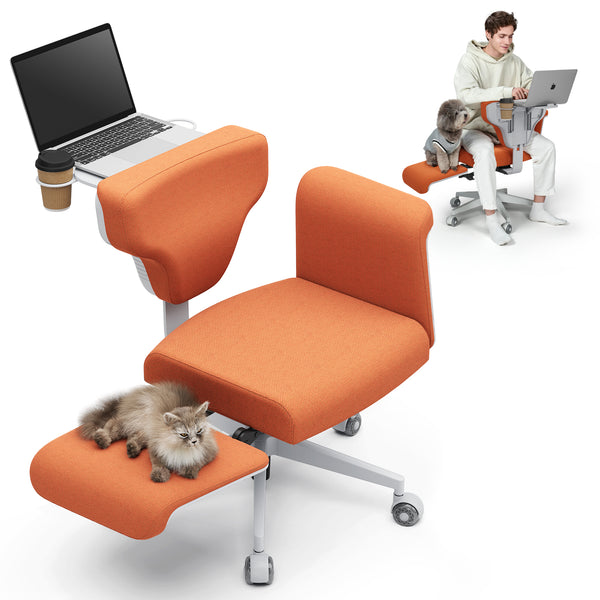
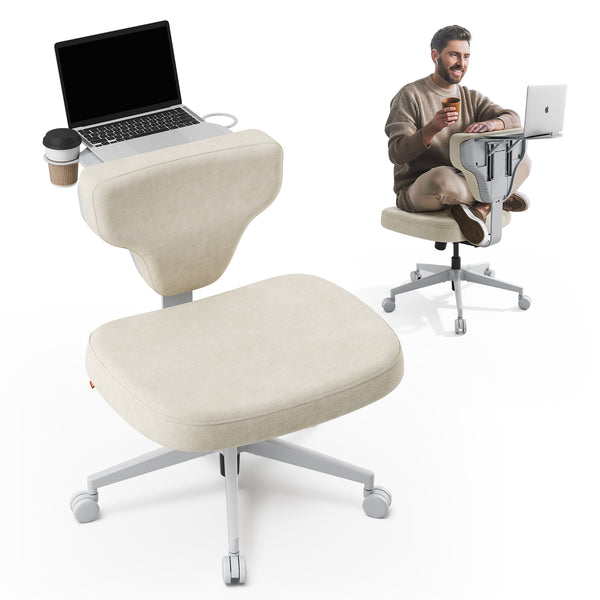
Cross-legged chairs, also called criss-cross chairs or wide-seat meditation chairs, are purpose-built for this posture. They feature a broad, flat seat with minimal contouring, no armrests or flip-up arms, and a compact backrest. The idea is simple: if people are going to sit cross-legged anyway, give them a seat that accommodates it comfortably.
For short sessions, they work. The wide seat removes the pressure from the chair edge cutting into your thighs. The open design gives your hips room to rotate. If you're using one for 30-minute reading sessions or video calls, a cross-legged chair does the job.
Where They Fall Short
The problem starts when you try to use one for a full workday. Cross-legged chairs are designed around one posture. They offer little or no adjustable lumbar support, which means your lower back is largely on its own. The absence of armrests, while freeing for crossed-leg sitting, leaves your shoulders unsupported during typing. And since the seat is fixed and wide, you can't fine-tune depth, height, or tilt to suit your body.
You also can't easily transition out of the cross-legged position. Want to sit upright with both feet flat on the floor? The wide, flat seat works against you. Need to recline slightly to reduce disc pressure during a long call? Most cross-legged chairs don't have that range.
A purpose-built cross-legged chair solves one problem and quietly creates several others. Neither it nor a standard office chair is actually designed around how people sit at home, moving through multiple positions across a long day. That's a different brief entirely, and it calls for an ergonomic criss cross chair built for posture flexibility from the start.

Chairs That Adapt to How You Actually Sit
What Multi-Posture Support Really Means
Multi-posture support isn't a marketing phrase. It describes a chair that keeps you comfortable and properly supported across a range of positions, not just one "correct" posture. Cross-legged, reclined, upright, leaning forward, and everything in between. Because that's how people actually sit.
The BIFMA ergonomics standard for seating products tests durability and safety across dynamic use, recognizing that real-world sitting involves constant micro-adjustments. A chair built for multi-posture support is designed with that reality in mind.
How Auto-Following Lumbar Changes the Game
Most chairs have a fixed lumbar pad. It supports your lower back in one specific position, and the moment you shift, lean, or cross your legs, that support vanishes. Gone. You're on your own.
Auto-following lumbar technology changes this completely. The lumbar component tracks the movement of your lower back as you shift through different positions. Lean forward to type? It follows. Lean back for a call? It adjusts. Cross your legs and redistribute your weight? It stays engaged. Your spine stays supported through posture changes rather than only at rest.
Features to Look for in a Home Chair
Not all ergonomic chairs are built for home use or multi-posture flexibility. Here's what actually matters:
|
Feature |
Why It Matters |
|
Auto-following lumbar support |
Keeps your lower back supported as you move, not just when you sit still |
|
Wide padded seat with depth adjustment |
Accommodates cross-legged sitting without creating pressure points |
|
4D adjustable armrests |
Supports your arms in every position, reducing shoulder and neck strain |
|
Tilt mechanism with lockable recline |
Allows spinal decompression during long sessions |
|
Breathable mesh or quality fabric |
Prevents heat buildup during extended sitting |
Newtral Freedom-X: Built for Every Way You Sit at Home
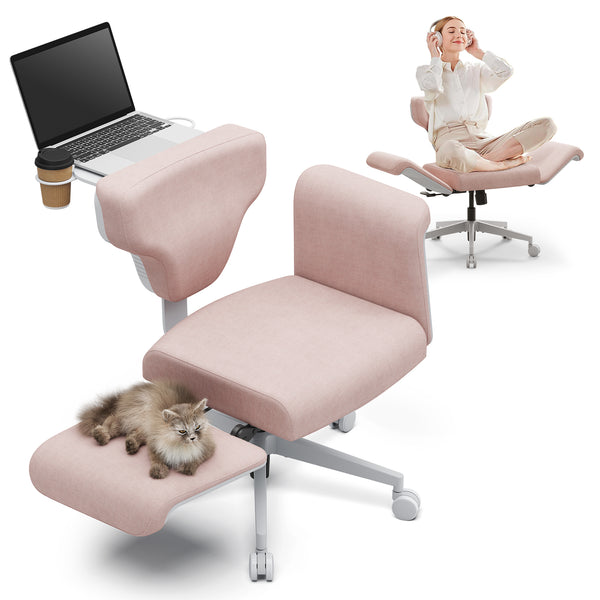
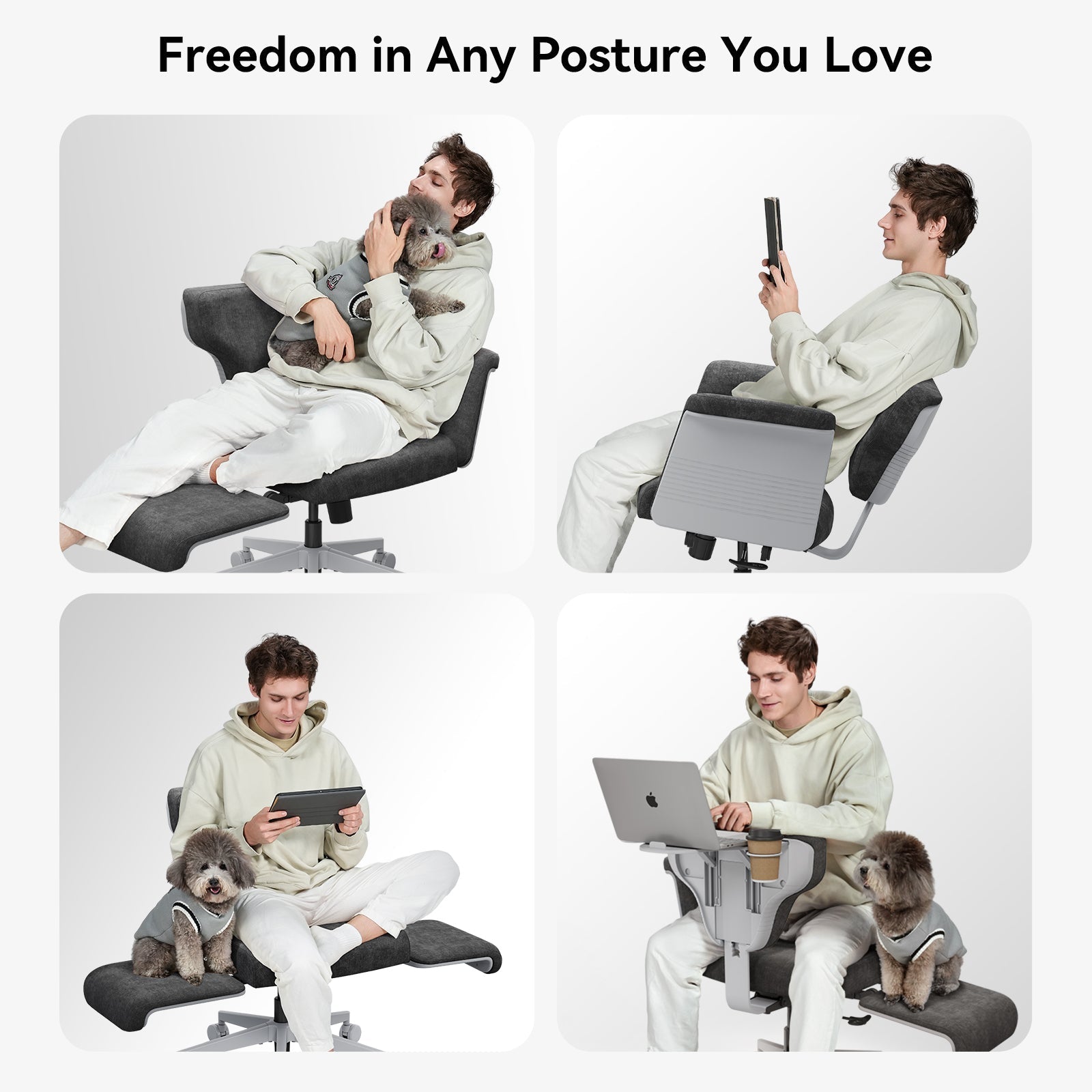
The Freedom-X line was designed around the reality that home sitting doesn't follow office rules. People move more. They shift postures. They sit cross-legged, reclined, sideways, and occasionally all three in the same afternoon. Both versions of the Freedom-X support this without making you choose between comfort and spinal health.
Freedom-X Pro with Armrest: Full Support, Full Freedom
The Freedom-X Pro with Armrest is the version for people who want maximum adaptability. The adjustable armrests move with you whether you're typing upright or sitting cross-legged, providing elbow and shoulder support in positions that most chairs simply abandon you in. Auto-following lumbar tracks your lower back through every posture change. The seat is wide enough for cross-legged sitting but structured enough to keep you aligned when you shift back to an upright position.
If you work long hours from home and want a chair that covers every way you sit, this is it.
Freedom-X Standard with Armrest: Everyday Comfort at Home
The Freedom-X Standard with Armrest is built around the same multi-posture philosophy with a cleaner, lighter profile that fits easily into a home office or living space. It still offers the wide seat, lumbar support, and adjustable armrests. The design leans toward everyday relaxed use, making it a strong fit if you split your time between focused work and casual home computing.
Compact and comfortable, without cutting corners on the features that actually matter.
Which One Is Right for You?
|
Freedom-X Pro with Armrest |
Freedom-X Standard with Armrest |
|
|
Best for |
Long daily work sessions, full-day flexibility |
Mixed use, lighter workloads, home aesthetics |
|
Lumbar support |
Auto-following |
Auto-following |
|
Armrests |
Fully adjustable |
Adjustable |
|
Cross-legged support |
Yes |
Yes |
|
Ideal user |
Heavy home office users, remote workers |
Students, hybrid workers, casual home users |
Both chairs meet BIFMA and SGS safety standards, meaning the gas lift, base, and structural components are tested for long-term durability and stability.
Conclusion
Sitting cross-legged isn't the enemy. Doing it all day in a chair that wasn't built for it is. The right home chair handles every posture you actually use, not just the one you're supposed to have. Explore Newtral ergonomic home chairs and find the fit for how you really sit.
Blog18
Blog18
Blog18
Recommended reading:



Hinterlasse einen Kommentar
Alle Kommentare werden vor der Veröffentlichung geprüft.
Diese Website ist durch hCaptcha geschützt und es gelten die allgemeinen Geschäftsbedingungen und Datenschutzbestimmungen von hCaptcha.