
Table of Contents
Sitting down and feeling a chair wobble, creak, or dig into your hips within the first hour is a common experience for larger users, and it is rarely a comfort problem that a cushion can fix. It usually comes down to three factors: how much weight the chair is genuinely rated to hold, how wide the seat actually is, and how stable the base and mechanism stay under daily, real-world pressure.
This guide covers what matters most when shopping for a heavy-duty office chair, so the decision comes down to real specifications instead of guesswork.
Why Standard Office Chairs Fall Short for Heavy Users
Two design gaps show up again and again in chairs that were not built with larger bodies in mind:
- Weak weight ratings. Most mass-market office chairs are rated for roughly 220 to 250 pounds, and that figure is usually a tested maximum rather than a comfortable working capacity. Sitting near that limit every day puts constant stress on the gas lift, base, and frame welds, which is exactly where budget chairs tend to fail first.
- Narrow seats. A seat pan sized for an average adult typically measures around 17 to 18 inches wide. For a larger frame, that leaves little room to spare, which creates pressure points on the outer thighs and hips, causes numbness during long sitting sessions, and wears out the cushion unevenly over time.
Understanding why these gaps exist makes it easier to know what to check before buying.

What Weight Capacity Actually Means
How manufacturers test and rate capacity
A chair's weight rating is not a marketing estimate. Reputable manufacturers test their seating against structural and durability standards published by BIFMA, the Business and Institutional Furniture Manufacturers Association, which sets performance testing guidelines for office seating across North America, and against EN 1335, the European standard for office chair dimensions and stability testing. A chair with a specific weight rating and a recognized certification has been cycle-tested under sustained load, not simply estimated from materials on paper. Actual BIFMA and SGS test reports for individual models are worth checking before buying, since they confirm the rating was independently verified rather than self-reported.
Why you should buy above your actual weight
A reliable rule of thumb is to choose a chair rated for at least 20 to 30 percent more than actual body weight. That buffer accounts for daily movement, leaning, shifting posture, and general wear over the chair's lifespan. A chair used at or near its stated maximum will still technically hold that weight, but the gas lift and mechanism will wear out considerably faster.
Seat Width, Depth, and Body Support
Finding the right seat dimensions
A seat width of at least 19.5 to 21 inches is a reasonable starting point for larger body types. The extra room across the hips prevents the pinching and pressure points that come from sitting on a narrow pan for hours at a time. Seat depth matters just as much: the front edge of the seat should sit a couple of inches behind the knees, so the thighs are fully supported without cutting off circulation.
To check fit before buying, take two quick measurements:
- Sit on a firm, flat surface and measure the width across the widest seated point, usually the hips.
- Measure from the lower back to the back of the knee while seated upright.
Compare both numbers against the chair's listed seat width and seat depth range rather than relying on product photos alone.

Lumbar and armrest support under higher body weight
Extra body weight places more strain on the lower back over a workday, which makes real lumbar support more important, not less. Look for a lumbar system that adjusts to the spine rather than a fixed pad that only works in one position. Armrests matter too: wider, sturdier armrests that adjust in height and width give the shoulders somewhere to rest and take pressure off the lower back and neck.
Features That Matter
A chair can have the right weight rating on paper and still feel unstable if these components are undersized:
- Base material and diameter. The five-point base keeps the chair upright, and under higher loads, material choice matters. Aluminum alloy bases tend to outlast lower-grade steel or reinforced nylon, especially when paired with a wider base diameter, which spreads weight more evenly and reduces tipping risk.
- Gas lift class. The gas cylinder is one of the most overlooked parts of a chair and often the first to fail under heavy daily use. Gas lifts are graded by class, with Class 4 the standard for higher weight capacity seating and Class 3 typically reserved for lighter-duty chairs. Independently tested and certified gas lifts hold up more reliably than uncertified ones under repeated daily load.
- Caster wheels. Wheels take a beating under extra weight, particularly on hard flooring. PU casters roll more smoothly and last longer under load than basic plastic wheels, and they are gentler on hardwood or tile over time.
|
Feature |
What to look for |
Why it matters |
|
Weight capacity |
At least 20 to 30 percent above body weight |
Reduces strain on the gas lift and frame, extends chair lifespan |
|
Seat width |
19.5 to 21 inches or more |
Prevents hip and thigh pressure points |
|
Base material |
Aluminum alloy, wide diameter |
Improves stability and resists tipping |
|
Gas lift |
Class 4, third-party certified |
Handles higher loads without premature failure |
|
Casters |
PU wheels |
Smoother rolling, less floor wear under load |
Top Picks for Heavy People
The three chairs below stand out for weight capacity, seat width, and build quality, each suited to a slightly different priority.
|
Model |
Weight capacity |
Seat width |
Recline range |
Starting price |
Best for |
|
NT002 |
300 lbs (136 kg) |
19.6 in |
96° to 136° |
$499 |
Overall ergonomic support with a built-in footrest |
|
NT001 |
300 lbs (136 kg) |
19.6 in |
Up to 136° |
$349 |
Back pain relief on a lower budget |
|
Magic H003 |
300 lbs (136 kg) |
20.47 in |
Up to 126° |
$279 |
Budget-friendly option with the widest seat |
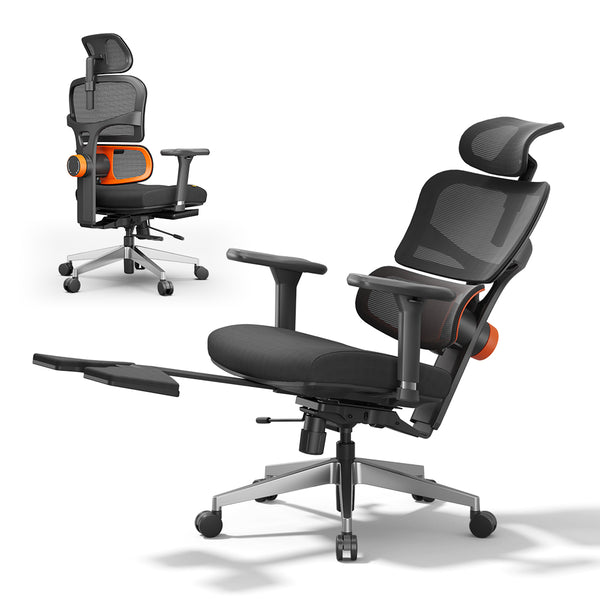
NT002, best overall pick, starting at $499 Built for users who want strong ergonomic support without compromise, the NT002 pairs its 300-pound capacity with an auto-following lumbar system that tracks the spine as posture shifts throughout the day. It runs on an aluminum alloy five-star base and a Class 4 gas lift, the same stability combination described earlier, and a built-in footrest with a lockable recline of up to 136 degrees makes it easy to move from focused work to a proper break without leaving the seat. Chair height adjusts from 43.37 to 54 inches, and taller users can add height-increasing casters to raise seat height further for a better fit over 6 feet.
blog18
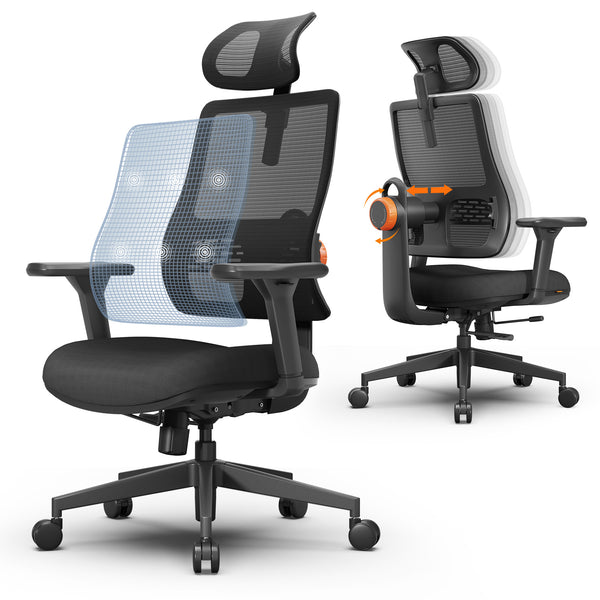
NT001, best for back pain relief, starting at $349 The NT001 offers the same auto-following lumbar technology as the NT002 at a lower price point, with dynamic support that continuously adjusts as the user leans forward, sits upright, or reclines. It also runs on a Class 4 gas lift, though its five-star base is steel rather than aluminum, a reasonable trade-off for the lower price. That constant lumbar adjustment helps reduce the slouching that tends to make lower back pain worse over a long workday.
Magic H003, best budget option, starting at $279 The most affordable of the three, the Magic H003 does not cut corners on the numbers that matter most for heavier users. Its 20.47-inch seat is the widest of the group, and it still includes an adjustable lumbar dial, 3D armrests, a steel five-star base, and a Class 4 gas lift, making it a solid entry point for heavy-duty basics without paying for extra features.
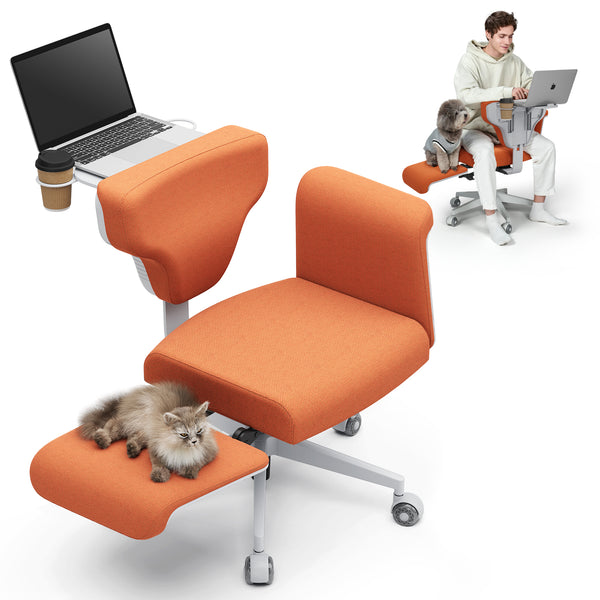
For anyone who needs more than 300 pounds of capacity, the Freedom-X Multi-Posture Pro Chair is rated for 330 pounds (149 kg) with a 19.68-inch seat, starting at $399. It is worth noting this is a multi-posture, cross-legged style chair rather than a standard upright desk chair, so it suits users who want the extra weight rating but do not need a traditional office chair silhouette.
Blog18
Chair Care Tips to Extend Lifespan
A heavy-duty chair is still a mechanical product, and a small amount of maintenance goes a long way toward protecting the investment:
- Tighten base bolts periodically, since higher daily loads can gradually work fasteners loose.
- Wipe down mesh and fabric surfaces regularly to prevent oil and sweat buildup from breaking down the material over time.
- Avoid rocking or leaning full body weight onto the armrests when standing up, which puts uneven stress on the frame.
- Follow the manufacturer's maintenance instructions for the specific model, since recommended cleaning products and torque settings vary by chair.
FAQs
What weight capacity should a heavy person look for?
Choose a chair rated at least 20 to 30 percent above actual body weight. A 250-pound user, for example, is better matched to a chair rated for 300 to 330 pounds, which provides a safety margin and helps the mechanism last longer under daily use.
What seat width is comfortable for wider hips?
A seat width of 19.5 to 21 inches or wider suits most people who need extra room. Measuring seated hip width before buying is the most reliable way to confirm fit rather than relying on general size labels.
Do heavier users need a different gas lift?
Yes. A Class 4 gas lift is generally recommended for higher weight capacity chairs, since it is built to handle more load cycles without losing height stability over time.
Can a regular office chair be upgraded for more weight support?
Not really. Weight capacity depends on the entire structure, including the frame, base, and gas lift, not just the cushion or upholstery. If a chair's rated capacity falls short, it makes more sense to choose a chair built for a higher load from the start than to try reinforcing an existing one.
How do I know if a chair base is stable enough?
Check the base diameter and material. A wider base spreads weight more evenly, and aluminum alloy generally outlasts basic steel or plastic. A chair that feels wobbly even when sitting still is usually a sign that the base is undersized for its stated weight capacity.





Laisser un commentaire
Tous les commentaires sont modérés avant d'être publiés.
Ce site est protégé par hCaptcha, et la Politique de confidentialité et les Conditions de service de hCaptcha s’appliquent.