
Table of Contents
Choosing a cross-legged chair is not really about following a trend. It is about fit. The right chair gives you room to fold your legs, support when you sit upright again, and enough stability to handle constant posture changes without feeling awkward or loose.
What Makes a Chair Truly Cross-Leg Friendly?
A cross-legged chair should do more than offer a wide seat. It needs to give you enough room to move, enough support to return upright, and enough structure to stay comfortable through different sitting positions.
- Enough space for folded-leg sitting
The seat should feel open from the start, not cramped the moment you pull a leg up. Width matters, but usable depth and seat shape matter too, especially if you want your legs to rest naturally without pressure.
- Support during posture changes
Most people shift between upright work, relaxed sitting, and cross-legged positions throughout the day. A good chair should stay supportive through those changes instead of feeling comfortable in only one pose.
- Freedom with real structure
A chair should let you move without feeling unstable or overly rigid. The best designs create a balance between openness and support, so the chair feels practical for daily use rather than just different in appearance.
The Design Features That Matter Most
Seat Width and Usable Depth
Seat size is the first thing most buyers notice, and for good reason. If the seat is too narrow, cross-legged sitting will never feel natural. Still, a wide seat can be misleading if the depth is wrong.
A shallow seat may make your legs feel crowded. One that is too deep can pull you away from the backrest when you sit upright. The better option is a seat that gives you enough room for folded-leg sitting while still allowing proper back contact during normal desk use.
Seat Shape and Cushion Support
Seat shape often has more impact than people expect. A flat or gently contoured seat usually works better for mixed sitting positions than a heavily sculpted one. It leaves more room for movement and creates fewer pressure points when your legs shift.
Cushioning matters too. Very soft padding may feel inviting at first, but it often loses support over time. A more supportive cushion usually does a better job of distributing pressure and staying comfortable through longer sessions.
If open seating space is your top priority, the Freedom-X Pro Cross Legged Chair is a natural fit to mention here because it is built around a wider cushion and an armrest-free layout.

Armrest Clearance and Adjustability
Armrests can either improve comfort or get in the way. It depends on how you sit.
If you spend most of your time with both legs on the seat, fixed arms often feel restrictive. They limit knee movement and make the chair feel tighter than it actually is. If you move between upright typing and relaxed postures, adjustable armrests can be more useful because they support your shoulders and forearms when you need them.
For mixed desk work, a model like the Freedom-X Multi-Posture Pro Chair with Armrest makes more sense than a fully open chair. It keeps the setup adaptable without giving up task support.
Backrest Shape and Lumbar Support
A wide seat may attract attention, but back support determines whether the chair still feels good after a week of real use.
The backrest should be present when you need it, especially when you return to an upright posture. If lumbar support is too weak, your body starts looking for relief by slouching, twisting, or shifting forward. If it is too aggressive, it can feel intrusive.
The best backrest does not force you into a fixed posture. It supports you when needed and stays out of the way when you move.
Types of Cross-Legged Chairs
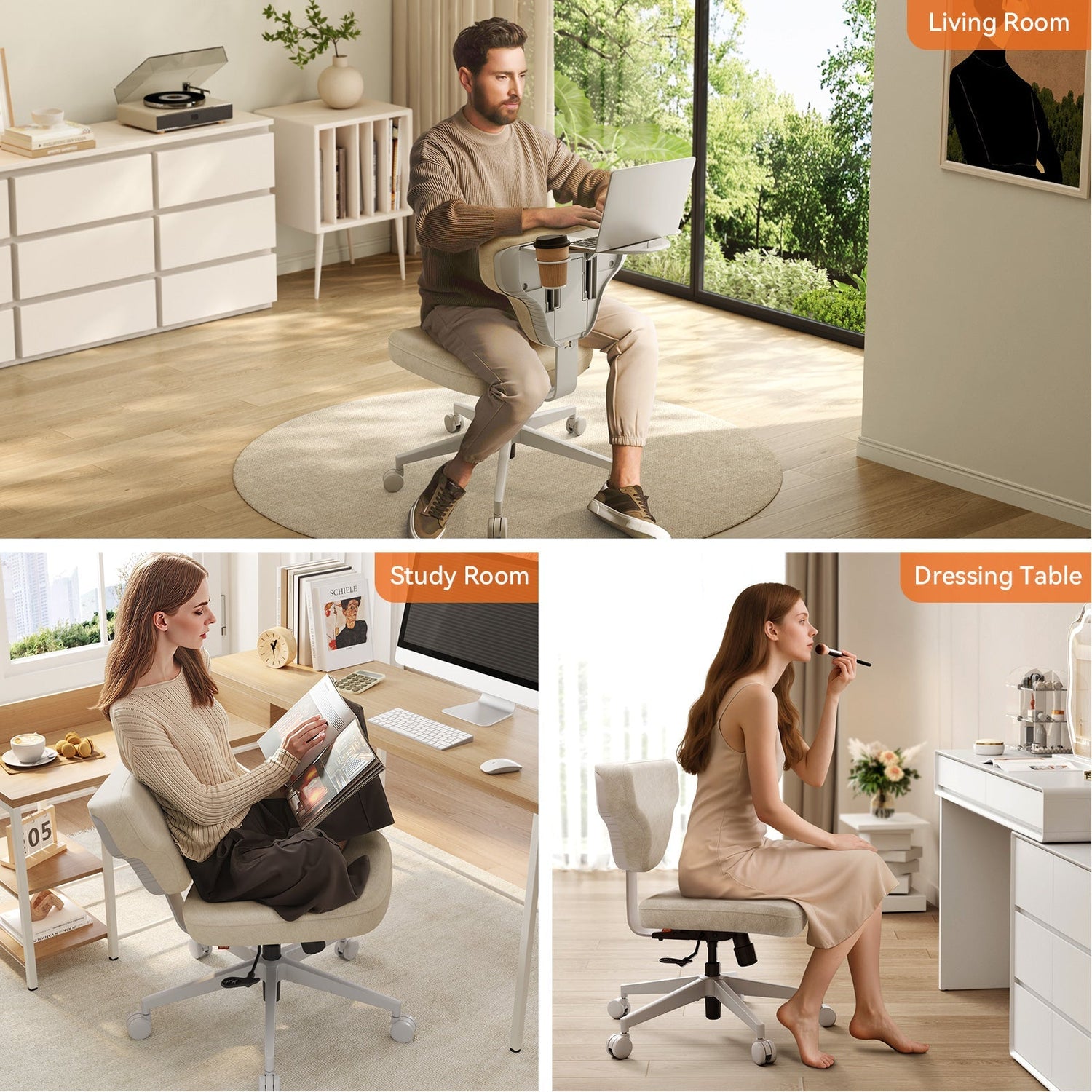
Not every chair in this category is solving the same problem. Some are built for open movement. Others are better for long desk sessions. Some work best in small spaces, while others are closer to lounge seating.
|
Chair type |
Best for |
Main tradeoff |
|
Armrest-free cross-legged chair |
Frequent folded-leg sitting and open movement |
Less forearm support during long typing sessions |
|
Adjustable multi-posture chair with armrests |
Mixed work, posture changes, longer sessions |
Less open than a fully armrest-free design |
|
Compact home chair |
Small rooms and flexible use |
Often less supportive for long work blocks |
|
Lounge-style chair |
Reading, calls, and casual use |
Usually not ideal for focused desk work |
Armrest-Free Chairs for Frequent Cross-Legged Sitting
If you regularly sit with both legs on the seat, an armrest-free design is often the cleanest match. It gives you more room to move, fewer restrictions around the knees, and a more open feel overall.
That makes this style a strong choice for people who use cross-legged sitting as their default posture rather than an occasional change.
Adjustable Chairs for Mixed Posture Work
Some people need more than openness. They need a chair that can handle upright work, casual leaning, posture changes, and longer desk sessions without losing support.
That is where adjustable multi-posture chairs stand out. They are usually the better pick for remote work, longer writing sessions, and setups where typing still takes up a large part of the day.
How Different Chair Types Fit Different Routines
The best chair depends on routine, not marketing language.
A student doing short study blocks may value seat openness most. A remote worker with six or eight hours of computer time usually needs more structure. Someone in a studio apartment may care just as much about footprint and visual bulk as posture features.
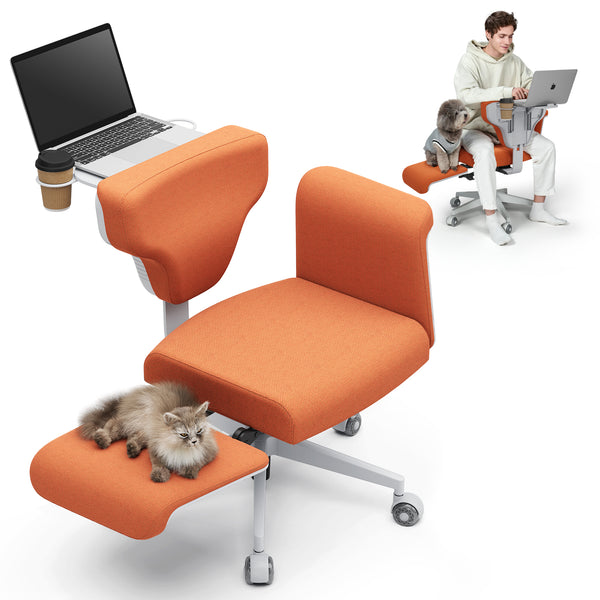
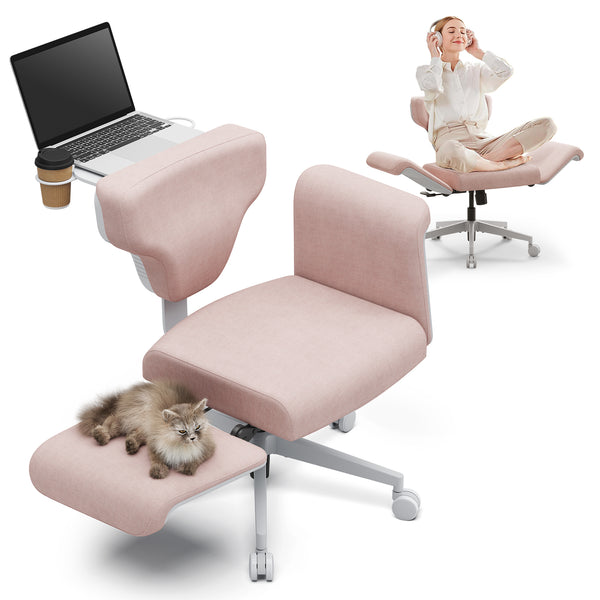
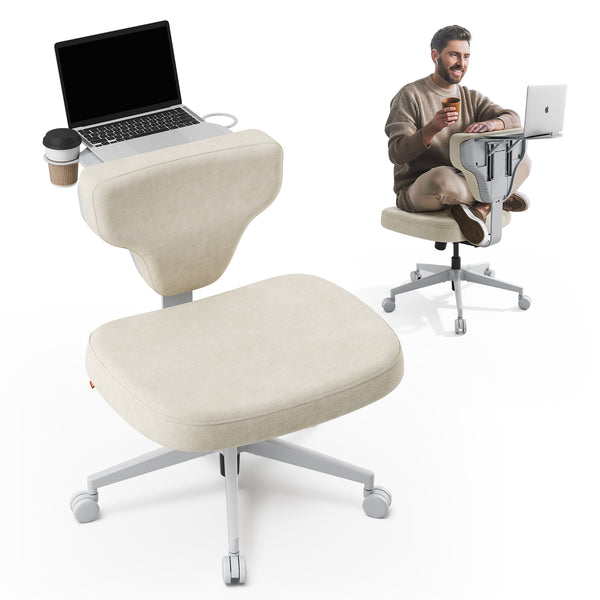
If you want to compare these options in one place, the Freedom-X Multi-Posture Chair collection is a useful internal reference because it groups the main directions clearly.

Blog18
Blog18
Blog18
How to Match the Chair to Your Use?
Short Desk Sessions
For shorter sessions, openness and comfort often matter more than advanced adjustment. If the chair is mainly used for reading emails, light laptop work, creative tasks, or quick study blocks, you may not need a heavily engineered task chair.
In that situation, a simpler cross-legged chair can work very well.
Long Workdays
Long workdays demand more discipline when choosing a chair. A seat that feels great for twenty minutes can become frustrating by hour three.
If your day includes typing, meetings, focused computer work, or repetitive desk tasks, support becomes more important than novelty. Seat space still matters, but back contact, stability, and useful adjustment matter more.
This is where buyers often make the wrong call. They shop for freedom first and support second, when the order should usually be reversed for all-day work.
Small Rooms and Apartments
In tighter spaces, the best chair is not always the widest or the most padded. It is the one that fits the room without making the whole setup feel crowded.
A cleaner silhouette, controlled footprint, and manageable base can make a major difference in a bedroom office, apartment corner, or shared space. Comfort still matters, of course, but scale matters too.
Reading, Calls, and Casual Use
For softer routines, the priorities shift. You may care less about typing support and more about comfort, movement, and how the chair feels during relaxed use.
That is where more open designs often shine. They are better suited to position changes, lighter tasks, and home use that does not revolve around a keyboard all day.
When a Cross-Legged Chair Is Not the Best Choice?
When You Need Stronger Task Support
Some users need more structured ergonomic support than this category typically offers. If most of your day is spent in focused computer work and you rely heavily on arm support, head support, or detailed adjustments, a traditional task chair may still be the better tool.
That is not a failure of the category. It is simply a better match between product and use case.
When Your Desk Setup Limits Movement
A cross-legged chair works best when the rest of the setup gives you enough room to move. If your desk is cramped, your keyboard tray is restrictive, or your legroom is limited, even a good chair may feel compromised.
Sometimes the seat is not the problem. The workspace is.
When a Standard Ergonomic Chair Makes More Sense
If you rarely sit with your legs folded and mainly want consistent upright support, a standard ergonomic chair is usually the smarter buy. There is no reason to choose a more specialized design if your actual habits do not call for it.
Final Thoughts
A good cross-legged chair should fit your real routine, not an idealized version of it. If open seating space matters most, an armrest-free model may be the right choice. If your day combines focused desk work with frequent posture changes, a more adjustable multi-posture chair is usually the safer option.
It is also worth reviewing the brand’s after-sales policy before you buy. Comfort matters, but support after delivery matters too.
FAQs
What Seat Width Works Best for Cross-Legged Sitting?
There is no single number that works for everyone. The better measure is usable space. You need enough room to fold your legs naturally without pushing your knees too high or forcing your hips into an awkward position.
Are Armrests Helpful or Restrictive?
They can be either. Armrests help during typing and focused desk work, but they can feel restrictive if you sit cross-legged most of the time. People who switch positions often usually do best with adjustable arms or a more open design.
Can a Cross-Legged Chair Work for Full Workdays?
Yes, but only if it supports more than one posture well. For long workdays, seat width alone is not enough. Back support, stability, and useful adjustment matter more.
Which Chair Type Is Best for Small Spaces?
A compact chair with a clean footprint is usually the best fit for smaller rooms. It should still provide enough seat space for movement without overwhelming the desk area or making the room feel crowded.
More reading:



Laisser un commentaire
Tous les commentaires sont modérés avant d'être publiés.
Ce site est protégé par hCaptcha, et la Politique de confidentialité et les Conditions de service de hCaptcha s’appliquent.