
Table of Contents
Long hours at a desk take a real toll on your body. If you use or are considering a sit-stand setup, here's what you need to know about standing desk chairs and whether they're worth the investment.
What Is a Standing Desk Chair?
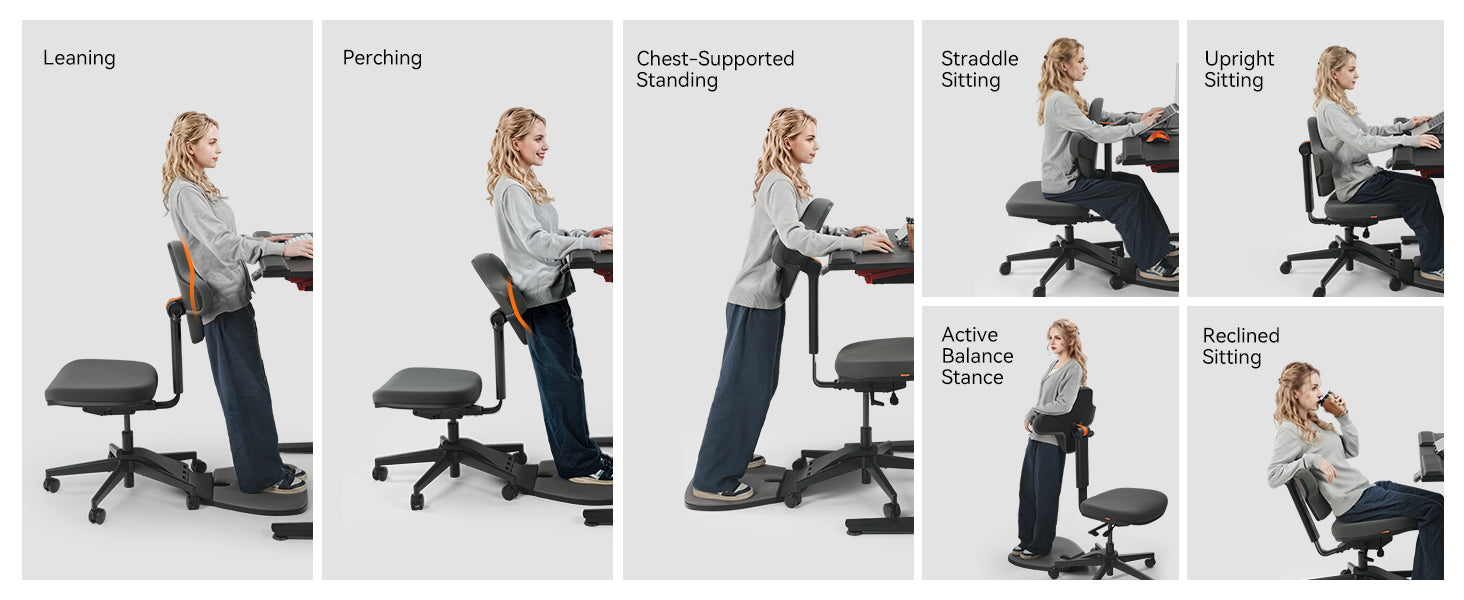
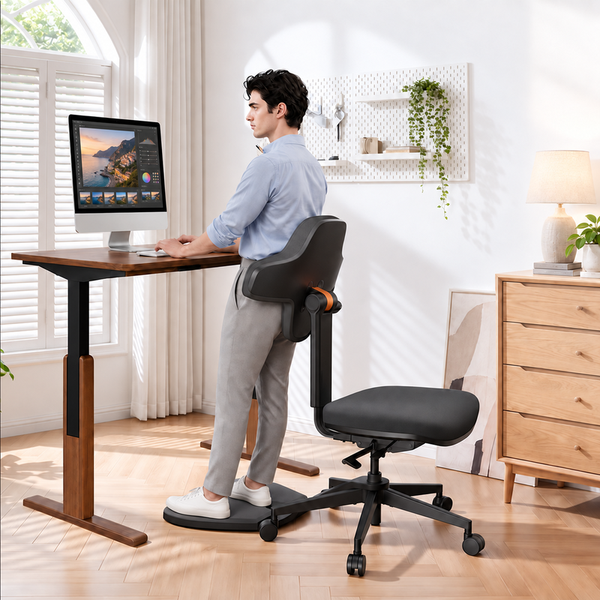
A standing desk chair is a specialized seat designed to support you at heights between a typical sitting and standing position. Rather than replacing a standard chair entirely, it offers a middle-ground posture that keeps your body active without the fatigue of standing flat-footed.
How It Differs from a Regular Chair
A standard office chair is built for seated posture at desk height, roughly 45 to 55 cm from the floor. A standing desk chair sits considerably higher and typically has no traditional backrest. It encourages a leaning, perching, or forward-tilted posture that engages your core and keeps your joints more mobile throughout the day.
Common Types: Saddle, Perch, and Leaning Stools
Saddle chairs mimic the shape of a horse saddle, tilting the pelvis forward and opening the hip angle to reduce lumbar compression.
Perch stools offer a small, slightly angled seat that lets you rest your weight without fully sitting down.
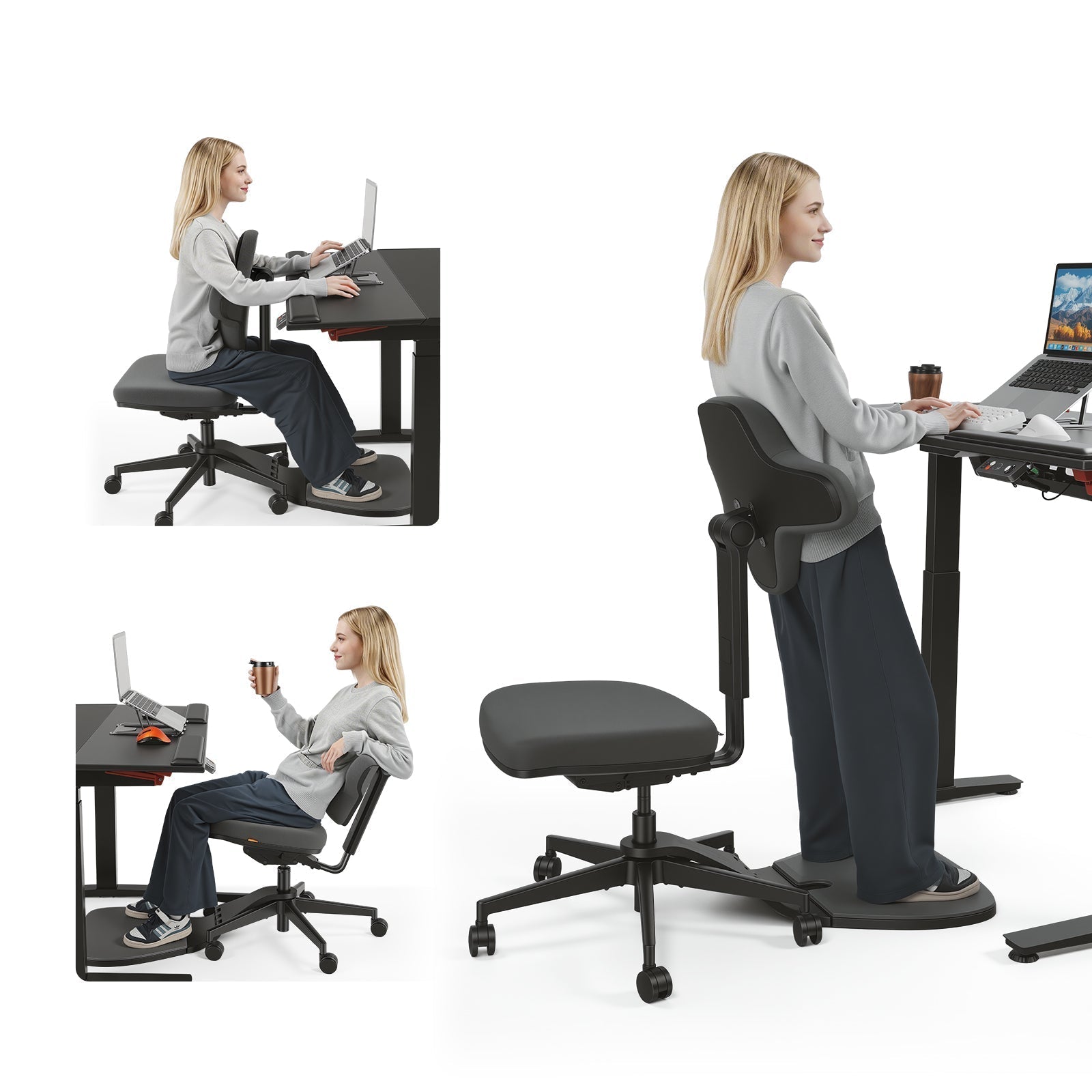
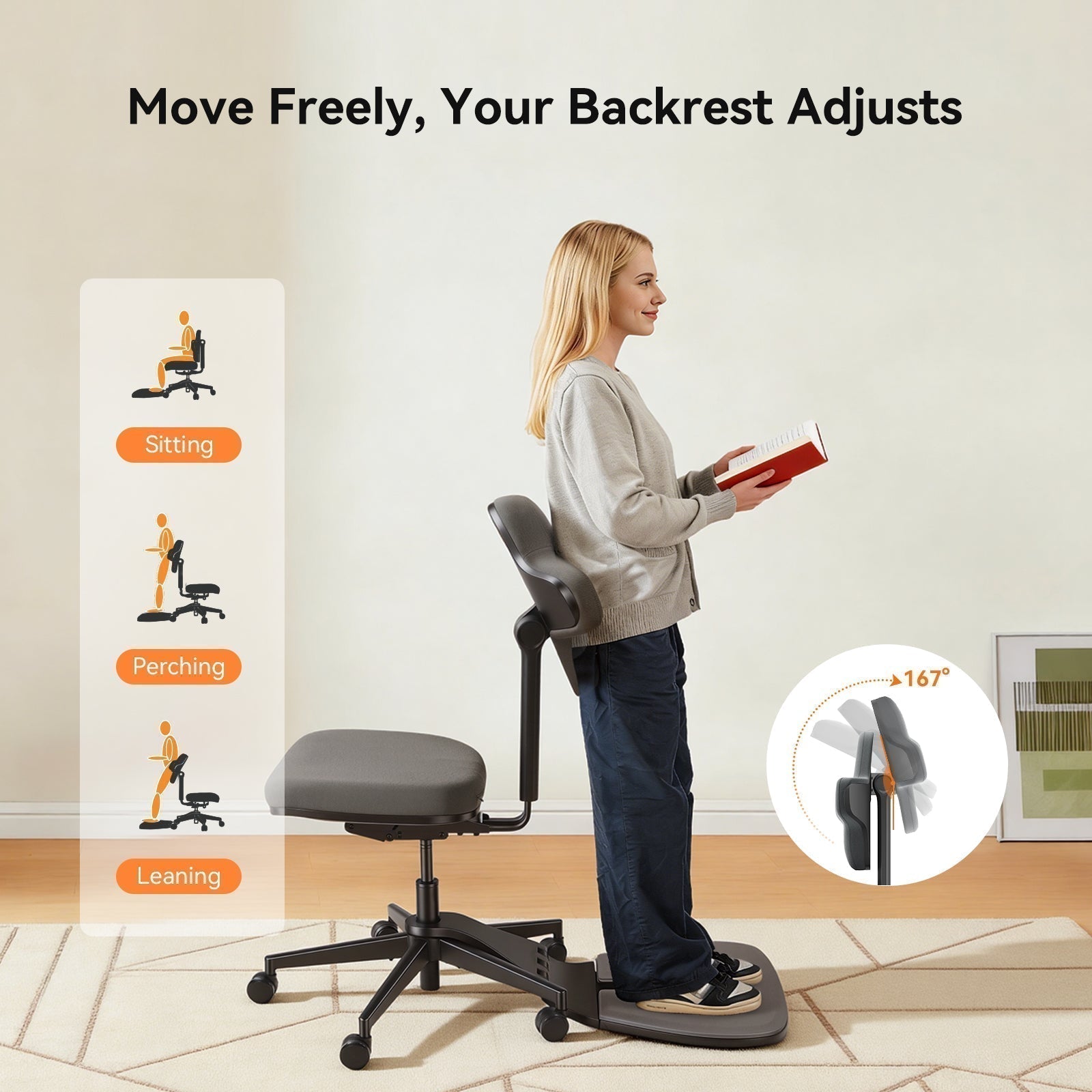
Leaning stools feature a padded rest at torso or hip height, allowing you to lean at an angle while remaining in a semi-standing position.
Each style suits different working habits and desk heights, so the right choice depends on how you move throughout the day.
The Problem They're Designed to Solve
The Risks of Prolonged Sitting
Prolonged sedentary time carries well-documented health risks. According to the WHO's guidelines on physical activity and sedentary behaviour, excessive sitting is associated with an increased risk of cardiovascular disease, type 2 diabetes, and musculoskeletal issues. For desk workers, the lower back and hips typically bear the greatest strain, often leading to chronic discomfort over time.
Why Standing All Day Isn't Ideal Either
Switching to a standing desk doesn't automatically solve the problem. As certified ergonomist Iris Sokol puts it, standing is simply a different static posture, one that can place significant stress on your hips, knees, feet, and veins when done without proper support. Common mistakes like locking the knees or shifting weight into one hip only compound the problem.
A useful ergonomic guideline: for every 50 minutes in a static posture, whether sitting or standing, aim for at least five minutes of movement to release the muscular tension that builds in that time. The real issue isn't sitting itself; it's the lack of movement. A sit stand desk chair addresses this directly by making it easy to shift between postures throughout the day.
Blog12

Pros and Cons
Understanding both sides helps you decide whether a standing desk chair is the right fit for your setup and working style.
Key Benefits
Encourages Active Sitting and Movement
Saddle and perch-style chairs promote micro-movements throughout the day. Because the seat surface is angled or slightly dynamic by design, your core and stabilizing muscles engage passively, improving circulation and reducing the stiffness that builds up during static sitting.
Reduces Lower Back and Hip Strain
When you stand supported in a lean-stand position, you engage your core without placing heavy load on your knees and joints. This is meaningfully different from unsupported standing, where joint compression and fatigue tend to accumulate quickly. Many users report a noticeable reduction in lower back tension after incorporating a standing desk chair into their daily routine.
Supports Better Posture Over Time
Without a backrest to slump against, the body is more inclined to maintain an upright spinal position. Over time, this can contribute to meaningful postural improvement, particularly for those prone to forward head posture or rounded shoulders.
Potential Drawbacks
Adjustment Period and Initial Discomfort
If you've spent years in a traditional office chair, the transition takes time. Expect some muscle soreness in the first week or two as your core and hip flexors adapt to the new posture demands. Starting with short intervals and gradually increasing use is the most comfortable approach.
Not Suited for All-Day Use
Standing desk chairs work best as part of a posture rotation, not as a full replacement for a supportive office chair. Ergonomic guidance recommends alternating between sitting, perching, and standing roughly every 20 to 30 minutes rather than staying in any single posture for extended periods.
Cost Compared to a Standard Chair
Quality standing desk chairs range from moderate to premium pricing. The value isn't always immediately obvious, but when factoring in reduced discomfort and improved daily energy levels, the investment often pays off over time.
|
Feature |
Standing Desk Chair |
Standard Ergonomic Chair |
|
Posture type |
Active, forward-tilting |
Passive, reclined support |
|
Back support |
Minimal to none |
Full lumbar and back support |
|
Movement encouraged |
Yes |
Limited |
|
Best suited for |
Sit-stand desk setups |
Traditional desk setups |
|
All-day use |
Not recommended |
Yes |
Who Should Consider One?
Long-Hours Desk Workers
If you're spending six or more hours at a desk each day, a standing desk chair can meaningfully reduce physical strain and help you stay more alert throughout the day.
People with Back or Hip Issues
Those experiencing chronic lower back pain or hip tightness often benefit from the forward pelvic tilt that standing desk chairs promote. If you're managing a diagnosed condition, consulting a physiotherapist or occupational health professional before making the switch is a sensible step.
Standing Desk Users
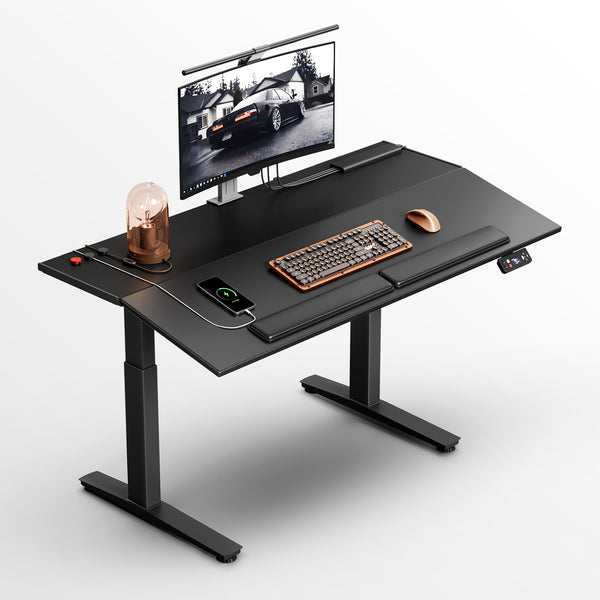
If you already own a height-adjustable desk, a standing desk chair is a natural complement. It lets you take full advantage of your desk's height range without having to choose between sitting and standing. Pairing one with a reliable adjustable height standing desk creates a setup that genuinely supports postural variety throughout the day.
Blog12
Blog18

What to Look for When Buying
|
What to Check |
What to Look For |
|
Height range |
Matches your standing desk's working height |
|
Seat tilt |
5 to 15 degrees forward tilt |
|
Base stability |
Wide base, non-slip feet or lockable casters |
|
Weight capacity |
Rated for your body weight with a comfortable margin |
|
Anti-fatigue mat |
Included or compatible with a separate mat |
|
Warranty |
At least one year, ideally longer |
Verdict: Are They Worth It?
For standing desk users and anyone dealing with persistent back or hip discomfort, a standing desk chair is a worthwhile investment. It delivers genuine ergonomic value without overcomplicating your workstation setup.
FAQs
Can you use a standing desk chair at a regular desk?
Most standing desk chairs are designed for heights above standard desk level, so they're not well suited to a fixed-height desk. Some perch stools can work at regular desk height, but the full ergonomic benefit comes from pairing one with a height-adjustable standing desk.
How long should you sit on a standing desk chair per day?
A practical starting point is 30 to 60 minutes of standing desk chair use per day, gradually increasing as your body adapts. The key is variety: no single posture, whether sitting, perching, or standing, should be held for more than about 30 minutes at a stretch.
Are standing desk chairs good for back pain?
They can help, particularly for lower back tension caused by prolonged sitting. By encouraging a more neutral spinal alignment, they reduce lumbar compression over the course of the day. They are not a substitute for professional medical advice if you're managing a diagnosed back condition.
What is the difference between a standing desk chair and a saddle chair?
A saddle chair is one specific type of standing desk chair, recognized by its curved seat that positions the hips similarly to sitting on a horse. Standing desk chair is the broader category, which also includes perch stools and leaning stools, each with a different seat shape and posture angle.
Recommended reading:




Laisser un commentaire
Tous les commentaires sont modérés avant d'être publiés.
Ce site est protégé par hCaptcha, et la Politique de confidentialité et les Conditions de service de hCaptcha s’appliquent.