
Table of Contents
Living with cervical radiculopathy and working at a desk is a difficult combination. The right office chair will not cure the condition, but the wrong one can compress the cervical nerve roots for hours every day and steadily worsen your symptoms. This guide covers what features matter most and which chairs are worth considering.
What Is Cervical Radiculopathy?
Common Causes and Symptoams
Cervical radiculopathy occurs when a nerve root in the cervical spine becomes compressed or irritated. The most common structural causes include herniated discs, bone spurs, and spinal stenosis, each of which can narrow the spaces where nerve roots exit the vertebrae.
Symptoms vary depending on which nerve root is affected but commonly include:
- Neck pain and stiffness
- Pain radiating from the neck into the shoulder, arm, or hand
- Numbness or tingling in the fingers
- Weakness in the hand or arm
According to the National Institute of Neurological Disorders and Stroke, cervical nerve compression is among the more common causes of chronic neck and upper limb pain in adults.

How Sitting Makes It Worse
A collapsed lower back is often where the problem starts. When the lumbar region loses its natural inward curve, the entire spine shifts out of alignment and the neck compensates to keep the head upright, increasing compressive pressure on the cervical nerve roots. Forward head posture adds to this: for every inch the head drifts in front of the shoulders, the effective load on the cervical spine increases considerably, compressing the discs and intensifying pressure on nearby nerve roots. Without a supportive headrest, the neck muscles fatigue steadily under this load throughout the workday.
What to Look for in a Chair?
|
Feature |
Why It Matters for Cervical Radiculopathy |
|
Adjustable headrest |
Supports the cervical curve and reduces sustained neck muscle load |
|
Auto-following lumbar support |
Maintains spinal alignment from the base up, reducing cervical compensation |
|
4D adjustable armrests |
Keeps shoulders relaxed and reduces tension traveling up through the trapezius |
|
Recline with adjustable tilt tension |
Reduces intradiscal pressure and shifts compressive load off the nerve roots |
Headrest and Neck Support
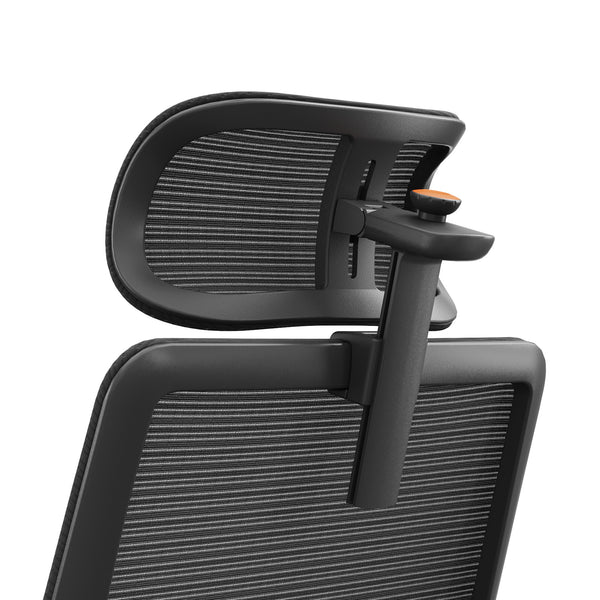
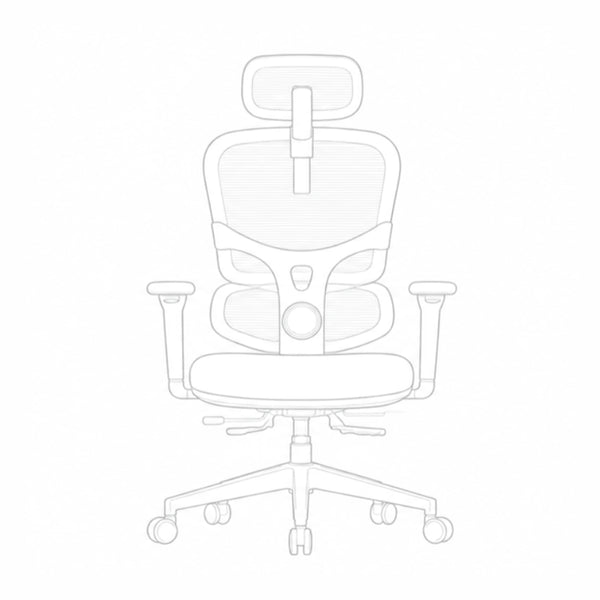
Look for a headrest that adjusts in both height and angle so it supports the back of the skull while keeping the head directly over the shoulders. Auto-following capability is the most useful since it maintains neck support across sitting positions without manual readjustment each time you shift. Fixed-position headrests are generally unsuitable for cervical radiculopathy as they only support one angle of posture.
If your current chair lacks an adequate headrest, the Newtral 5D Headrest offers five-directional adjustability (height, forward/back angle, left/right pivot, and lateral slide) and is compatible with a range of chairs, making it a practical upgrade without replacing the whole chair.
A useful positioning benchmark: ears aligned with the shoulders, no forward tilt at the chin. That neutral head position minimizes compressive load on the cervical spine.
blog18

Lumbar Support and Spinal Alignment
When the lumbar region loses its natural inward curve, the neck compensates and pressure on the cervical nerve roots increases. A good lumbar support needs to maintain continuous contact with the lower back as you move, not just when sitting perfectly upright. Auto-following lumbar systems handle this better than static supports because they adapt to your movement rather than requiring a fixed posture to be effective.
Armrest Adjustability
Poorly positioned armrests directly aggravate cervical symptoms:
- Too low: shoulders drop, pulling the neck and upper back muscles into sustained tension
- Too high: shoulders shrug upward, producing the same strain through a different mechanism
Four-directional (4D) armrests that adjust for height, depth, width, and pivot allow your elbows to rest at a neutral angle, keeping shoulders relaxed and reducing tension traveling up through the trapezius into the cervical spine.
Recline and Tilt
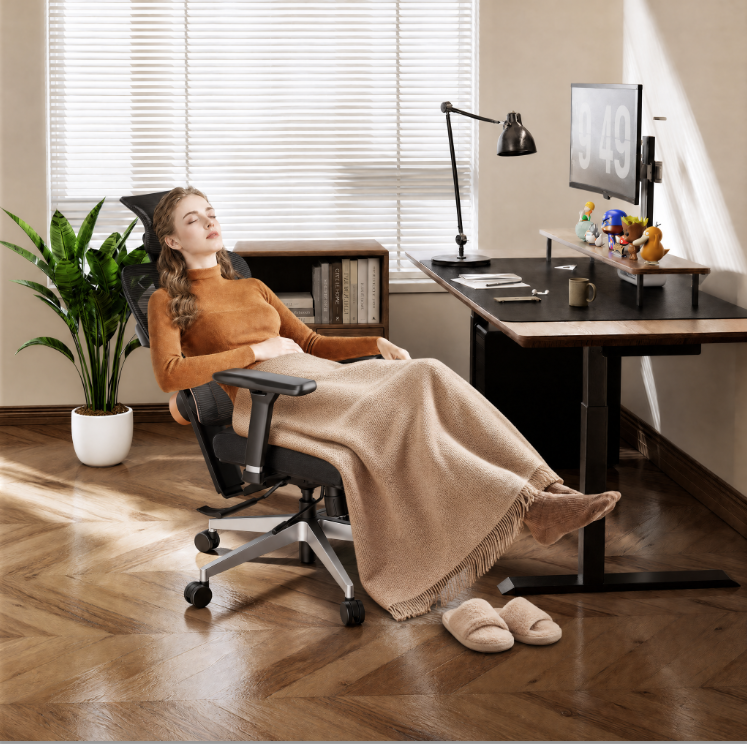
Spinal biomechanics research indicates that a slightly reclined position of around 110 to 120 degrees reduces intradiscal pressure and shifts compressive load away from the nerve roots, making it more favorable than a rigid 90-degree posture for extended work. A chair with a smooth, lockable recline and adjustable tilt tension lets you alternate positions throughout the day rather than sustaining one static posture for hours.

Best Office Chairs for Cervical Radiculopathy
|
Chair |
Best For |
Headrest Type |
Lumbar System |
Recline Range |
Starting Price |
|
NT001 |
Best overall |
Auto-following |
Auto-following |
96° to 136° |
$349 |
|
Magic H-Bpro |
Neck and shoulder pain |
Adjustable |
Auto-following |
96° to 126° |
$379 |
|
NT002 |
Long hours |
Auto-following |
Auto-following |
96° to 136° |
$499 |
|
Magic H003 |
Budget pick |
Adjustable |
Auto-following |
96° to 126° |
$279 |
Best Overall
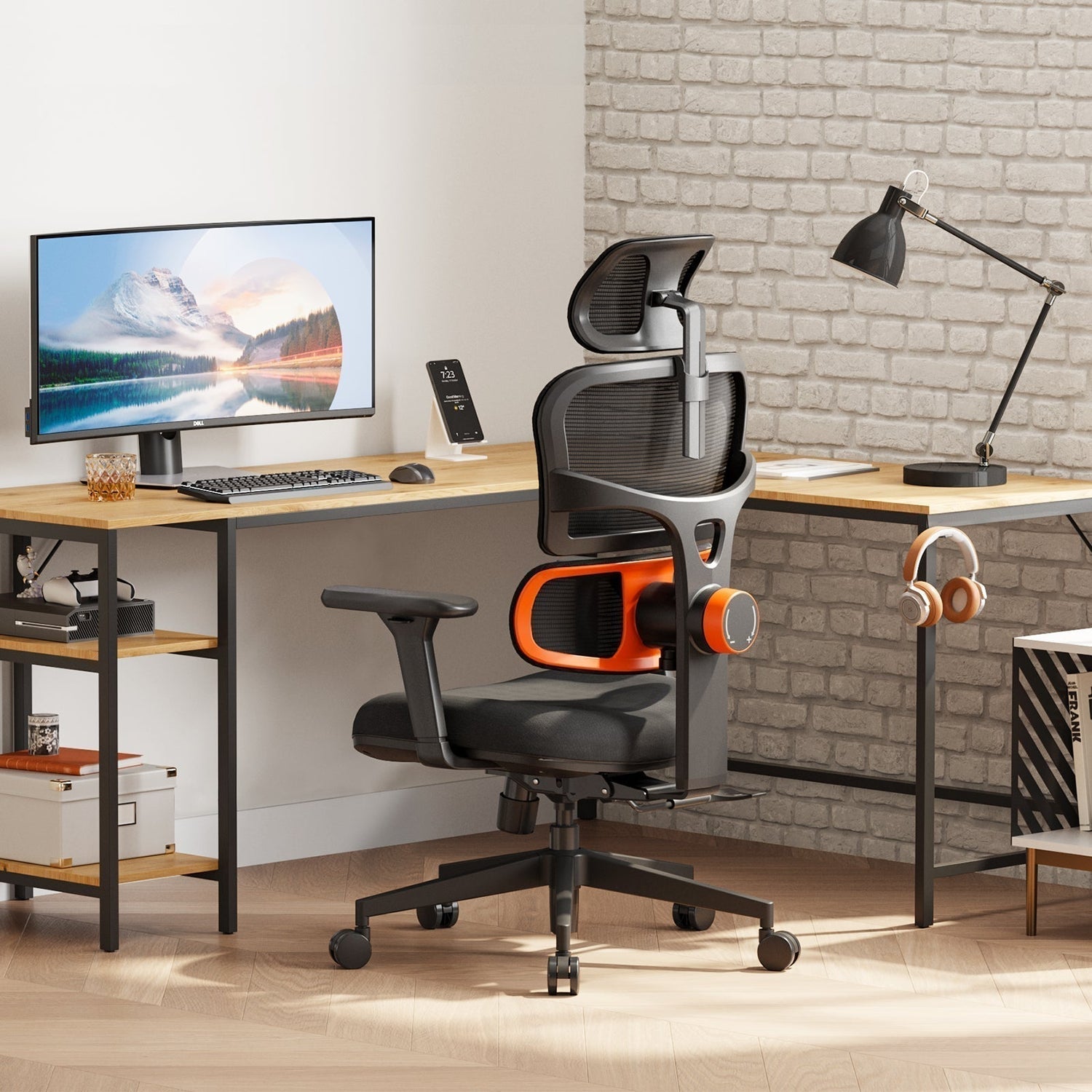
The NT001 Ergonomic Office Chair is the most well-rounded choice for cervical radiculopathy. Its auto-following headrest adjusts in sync with the recline mechanism, keeping neck support consistent whether you are sitting upright or leaning back. The 4D armrests keep the shoulders in a neutral, relaxed position, and the auto-following lumbar support maintains continuous contact with the lower back through movement. For a condition where all three postural contributors need to be managed simultaneously, the NT001 covers them in one package.
- Headrest: Auto-following, adjusts with recline
- Lumbar support: Auto-following
- Recline range: 96° to 136°
- Armrests: 4D adjustable
- Starting price: $349
Best for Neck and Shoulder Pain
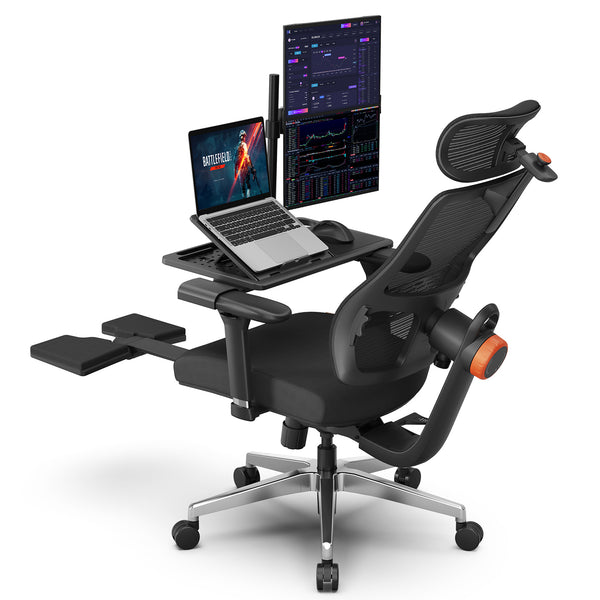
For those whose symptoms present primarily as neck stiffness and shoulder tension rather than radiating arm or hand pain, the Magic H-Bpro Ergonomic Office Chair is worth considering. Its built-in laptop table reduces the forward reach that leads many users to round their shoulders and push their head forward, one of the most common aggravators of cervical symptoms at the desk. An adjustable headrest and auto-following lumbar support cover the remaining key cervical risk factors.
- Headrest: Adjustable height and angle
- Lumbar support: Auto-following
- Recline range: 96° to 126°
- Notable feature: Built-in laptop table
- Starting price: $379
Best for Long Hours
If you regularly work ten or more hours at your desk, the NT002 Ergonomic Home Office Chair is worth the additional investment. It matches the NT001's auto-following headrest and lumbar support, and adds a retractable footrest that makes it easier to shift your overall posture at regular intervals. For cervical radiculopathy, sustained static postures are a significant contributor to symptom flare-ups, and the NT002's footrest and multi-posture design make postural variation throughout the day a natural habit.
- Headrest: Auto-following, adjusts with recline
- Lumbar support: Auto-following
- Recline range: 96° to 136°
- Notable feature: Retractable footrest
-
Starting price: $499
 $39.00 $79.00Coupon:
blog185D Dynamic AdjustabilityAuto-Neck Tracking3-Minute Setup
 $379.00 $459.00Coupon:
Blog18Compatible NEWTRAL Laptop TableAdaptive lumbar support5D adjustable headrestRecline + Leg Rest
Best Budget Pick
The Magic H003 Ergonomic Office Chair brings auto-following lumbar support and a broad recline range into a more accessible price point without compromising the core ergonomic essentials. The headrest is manually adjustable rather than auto-following, so careful initial setup is needed to achieve adequate cervical support. For users new to ergonomic seating, it is a practical starting point before committing to a higher-priced model.
- Headrest: Manually adjustable
- Lumbar support: Auto-following
- Recline range: 96° to 126°
- Starting price: $279

Conclusion
Cervical radiculopathy makes every hour at your desk harder if your chair is not supporting your spine from the base up. Prioritizing headrest quality, dynamic lumbar support, and proper armrest positioning can meaningfully reduce the daily load on your cervical nerve roots and make desk work more manageable.
FAQs
Can an office chair cause cervical radiculopathy?
A chair cannot directly cause cervical radiculopathy, which has structural origins such as disc herniation or bone spur formation. However, a chair that promotes forward head posture or a collapsed lumbar position can accelerate cervical disc degeneration and significantly worsen existing symptoms over time.
Is a headrest necessary for neck nerve pain?
For cervical radiculopathy specifically, yes. Without one, the neck muscles must hold the full weight of the head unsupported for hours, increasing both fatigue and compressive load on the nerve roots. A well-positioned headrest allows the neck musculature to relax, particularly when the chair is reclined. If your current chair does not have one, a dedicated accessory such as the Newtral 5D Headrest can provide the adjustability needed for proper cervical support without requiring a full chair replacement.
What chair position is best for neck pain?
A slightly reclined angle of around 110 to 120 degrees reduces intradiscal pressure and is generally more favorable than a rigid 90-degree posture. Position the headrest so the ears are level with the shoulders and there is no forward chin tilt. Varying your position every 30 to 60 minutes is equally important, as any sustained static posture increases spinal load over time regardless of how well-supported it is.
Further reading:


Hinterlasse einen Kommentar
Alle Kommentare werden vor der Veröffentlichung geprüft.
Diese Website ist durch hCaptcha geschützt und es gelten die allgemeinen Geschäftsbedingungen und Datenschutzbestimmungen von hCaptcha.