
Table of Contents
Your lower back does not care what a chair is called. It cares whether the chair matches what you are actually doing in it.
That is the detail most "best chair for back pain" lists skip over. Kneeling chairs, saddle chairs, massage chairs, rocking chairs, recliners, and ergonomic office chairs each solve a real problem, just not the same problem. A chair built for a quick recovery break will not hold up through an eight hour workday, and a chair built for eight hours of desk work is overkill for a ten minute stretch between tasks.
This guide skips the rankings and goes straight to matching: what each chair type genuinely does well, and the kind of day it was built for.

Why One Chair Doesn't Fit Every Back
Lower back pain rarely has a single cause. It can build up from:
- long periods of static sitting
- a slouched posture in front of a laptop or phone
- a lack of proper lumbar support
- staying in one position for too long without moving
Because the triggers differ, the seating solution that helps one person may do very little for another. A chair that feels great for a two hour reading session will not necessarily help someone who sits at a desk for eight hours straight.
That points to a more useful question than "which chair cures back pain": which chair supports the activity you are doing? A dentist bent over a patient all day has very different seating needs from someone typing at a computer, even if both are dealing with the same ache by evening. Once you separate the activity from the pain itself, matching a chair becomes far more straightforward.
Kneeling Chair: Best For
Short bursts of active sitting
A kneeling chair tilts the hips forward and opens the hip angle, encouraging a more upright spine and shifting some body weight onto the shins. This tends to feel good during focused, shorter sessions when the goal is to stay alert and engaged. A pilot study published in The Spine Journal found that lumbar curvature was better maintained on a kneeling chair than on a standard flat chair, in both people with low back pain and healthy participants.
Building core and postural strength
Because a kneeling chair has no backrest, it puts more of the work on the core and postural muscles. Used for shorter stretches throughout the day, this can help reinforce better sitting habits and gradually build core strength. The trade-off shows up over long, uninterrupted hours: those same muscles fatigue, posture starts to slip, and much of the benefit fades with it.

Saddle Chair: Best For
Detail-focused tasks like dental or salon work
A saddle chair splits body weight across a wider, forward-tilted seat, similar to sitting on a horse. This naturally opens the hips and keeps the spine upright, which is why saddle chairs are common in dental offices, salons, and studios where the practitioner needs to lean in close to detailed work for long stretches without hunching forward.
Open hip posture for pelvic alignment
The forward-tilted seat keeps the pelvis in a more neutral position, reducing the rounding of the lower back that happens when leaning forward from a standard flat seat. This makes saddle chairs a strong fit for tasks that require constant forward leaning. They are less suited to general desk work, where typing, mousing, and resting the arms for hours at a time call for more structured back and arm support.

Massage Chair: Best For
Short-term muscle relief after sitting
A massage chair uses rollers, airbags, or vibration to work on tight muscles around the back and shoulders. It is genuinely useful for short-term relief after a long day of sitting, easing tension that has built up in the surrounding muscles. It is not designed as a primary work chair, since it is built around recovery rather than sustained desk posture.
Post-workout or end-of-day recovery
Many people use a massage chair as part of a wind-down routine at the end of the day, or after physical activity when muscles are already sore. Used this way, it complements whatever chair is used during the day rather than replacing it.
Rocking Chair: Best For
Gentle movement and relaxation
The gentle back-and-forth motion of a rocking chair encourages small, natural shifts in posture instead of one fixed position. That light, ongoing movement can ease stiffness and feel more comfortable than sitting completely still, particularly during rest rather than focused work.
Nursing, reading, or light rest breaks
Rocking chairs suit activities like reading, nursing, or simply taking a break, where the goal is comfort and gentle motion rather than productivity. They do not offer the adjustability, lumbar support, or armrest positioning that a desk-based workday requires.

Recliner Chair: Best For
Semi-reclined pressure relief
Reclining backward shifts some body weight from the spine to the backrest, which can meaningfully reduce the compression that builds up in the lower back after hours of upright sitting. Pairing a reclined backrest with elevated leg support distributes weight more evenly, which is why a semi-reclined position often feels more comfortable during a break than sitting fully upright.
Evening relaxation and work breaks built in
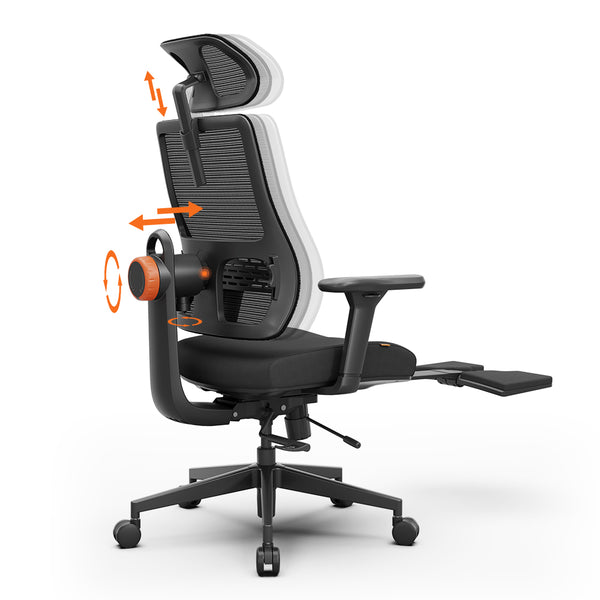
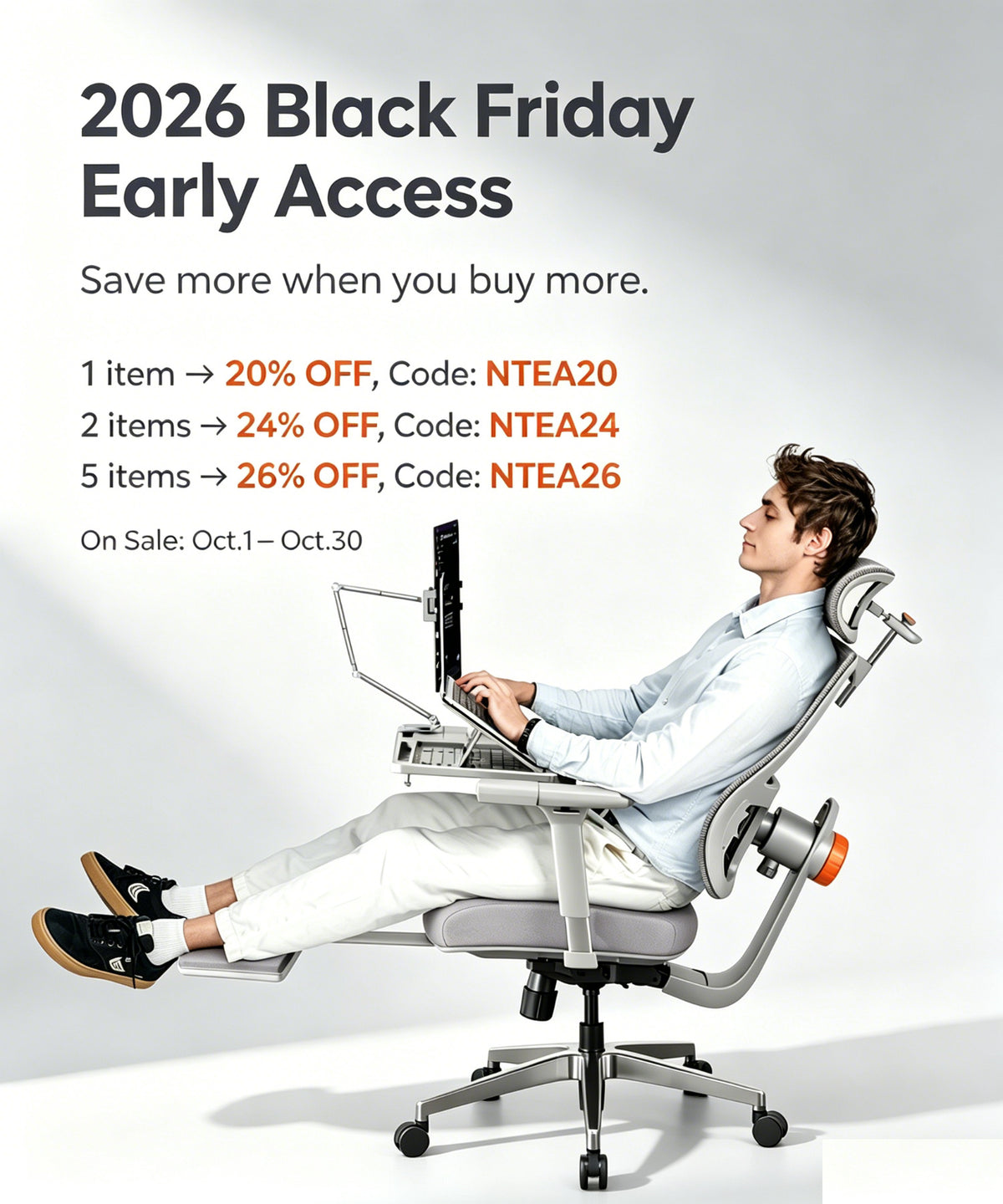
A recliner is a natural fit for evenings, movie nights, or unwinding after work. Some ergonomic office chairs now bring that same kind of relief into the workday itself, reclining up to 135 degrees with an extended footrest so a short recovery break is possible between tasks before returning to an upright posture. The chairs with footrest are built around this sit, recline, and reset cycle.

Ergonomic Office Chair: Best For
Long desk hours and remote work
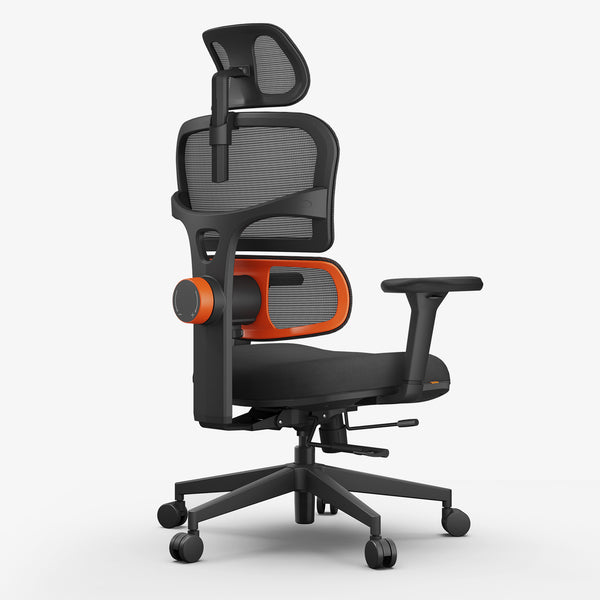
For anyone spending several hours a day at a desk, an ergonomic office chair is generally the most practical long-term solution, because it is designed to support the spine continuously rather than only during a brief recline or a short focused session. Reputable office chairs are typically tested against recognized safety and durability standards, such as ANSI/BIFMA X5.1 in North America and EN 1335 in Europe, which cover structural safety, stability, and dimensional requirements for general-purpose office seating. The ergonomic office chairs are built around this kind of everyday, standards-tested seating for people who sit for extended periods.
Why the lumbar mechanism matters more than the label
Passing a safety standard is a baseline, not a guarantee of comfort. The more meaningful question for back pain is whether the lumbar support keeps adjusting as posture shifts throughout the day, rather than staying fixed in one shape after the first setup. That distinction is explored further below, since it changes depending on how many hours a day someone actually spends seated.

Matching a Chair to Your Daily Routine
Knowing what each chair type does well is only half the picture. The other half is recognizing which routine you actually have.
Full-time desk workers
Anyone sitting for six to eight or more hours a day benefits most from a lumbar mechanism that actively follows the spine as it moves, rather than one that is adjusted once and left in place. This kind of continuous tracking, rather than the presence of any single adjustable feature, is what separates a chair built for full workdays from one built for occasional use. The auto-following lumbar support chairs are built specifically around this kind of continuous, all-day tracking.
Mixed activity or hybrid schedules
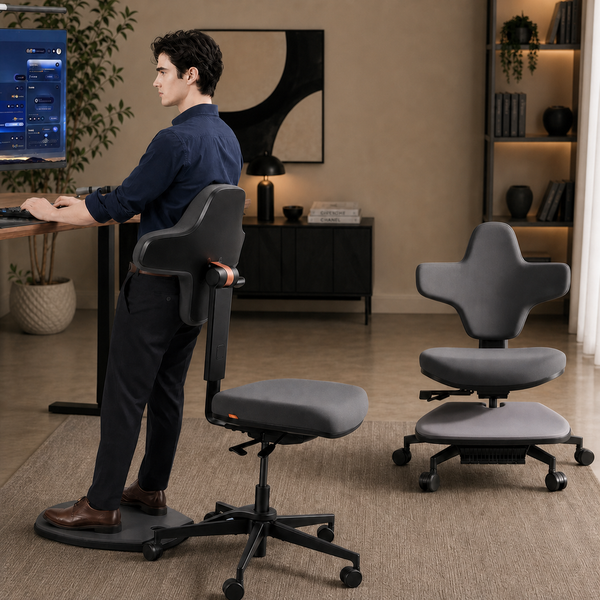
For people who split their day between sitting and standing, a chair that adjusts across postures is often more useful than one built for a single fixed position. The Standing-Mate ergonomic chair uses a flip-back backrest that switches between sitting and standing support, and is best suited to roughly four to six hours of daily sitting paired with regular standing breaks, rather than a full stationary workday.
When one chair isn't enough
No single chair, however well designed, is a cure for back pain on its own. Movement breaks, posture awareness, and addressing the root cause of the discomfort all matter alongside the chair itself. For anyone whose main concern is the hours spent at a desk, the office chairs for back pain collection is a reasonable place to start narrowing down the options.
Blog12
Blog18
blog18
Here is a quick summary of how these chair types line up against typical daily situations.
|
Chair type |
Best suited for |
Typical session length |
|
Kneeling chair |
Short, focused, active sitting |
Under an hour at a time |
|
Saddle chair |
Detail work like dental or salon tasks |
A few hours with breaks |
|
Massage chair |
Muscle recovery after sitting |
15 to 30 minutes |
|
Rocking chair |
Gentle rest and light activities |
Variable, low intensity |
|
Recliner chair |
Evening relaxation or work breaks |
An hour or more |
|
Ergonomic office chair |
Full desk workdays |
6 to 8+ hours |
FAQs
Is a kneeling chair good for lower back pain?
Yes, for short and focused sitting sessions. A kneeling chair can support better spinal alignment and reduce lumbar pressure, but the core muscles it relies on tend to tire within an hour, so it is not ideal as the only chair for a full workday.
Is a saddle chair good for back pain?
Yes, particularly for tasks that involve leaning forward for extended periods, such as dental or salon work. The open hip posture helps keep the pelvis neutral, though it is less practical for typical desk-based computer work.
Is a massage chair good for back pain?
Yes, as a short-term recovery tool. A massage chair can ease muscle tension after a long day, but it is meant for temporary relief rather than for sitting in throughout a workday.
Is a rocking chair good for back pain?
Yes, for gentle relaxation and light activity. The rocking motion can ease stiffness during rest, but it does not offer the adjustable lumbar support or posture control that extended desk work requires.
Is a recliner chair good for back pain?
Yes, especially for semi-reclined relief during breaks or evening relaxation. Reclining shifts pressure away from the spine, and some ergonomic office chairs now build a similar recline function directly into the workday.
Is a Roman chair good for lower back pain?
A roman chair is a piece of fitness equipment used for back extension exercises, not a seating chair. It can help strengthen the lower back and core muscles when used correctly as part of an exercise routine, but it is not a chair meant for daily comfort or desk work.




Hinterlasse einen Kommentar
Alle Kommentare werden vor der Veröffentlichung geprüft.
Diese Website ist durch hCaptcha geschützt und es gelten die allgemeinen Geschäftsbedingungen und Datenschutzbestimmungen von hCaptcha.