
Table of Contents
For a large share of the workforce, the day looks the same: wake up, sit down at a desk, and barely stand up again until dinner. This pattern often goes unnoticed because it builds up gradually rather than all at once. Over weeks and months, though, it adds up to a real health question worth taking seriously.
This article breaks down why sitting has become the default for so many people, what it actually does to the body, the long-term health risks worth knowing about, and practical ways to sit smarter without giving up a desk job or day-to-day comfort.
Why We Sit So Much Today?
Rise of Desk Jobs
A few decades ago, most jobs required people to be on their feet for a good part of the day. Today, a large share of the workforce spends the majority of working hours in front of a screen. Remote work has accelerated this shift further, since commuting, walking between meetings, and even standing at the water cooler have largely disappeared from the daily routine. The result is a workday that can easily involve eight, nine, or more hours of near-continuous sitting.
Sedentary Lifestyle Creep
Sedentary habits rarely arrive all at once. A little more sitting at work, a little more screen time at home, a little less walking because everything can be delivered or streamed. Each choice feels minor on its own, but together they add up to a lifestyle where sitting is the default state and moving is the exception rather than the rule. Some national health surveys suggest adults now spend more than half of their waking hours in sedentary behavior, which puts an eight-hour workday of sitting in a much bigger context than it might first appear.

Effects of Sitting Too Long
Spine and Posture
Sitting for extended periods puts sustained pressure on the discs in the lower back, especially as posture tends to slouch later in the day. Over time, this can lead to a rounded upper back, a forward head position, and tight hips that pull on the lower spine. Even a well-designed chair cannot fully offset the strain of staying in one fixed position for hours.
Blood Circulation
When the legs stay bent and still for long stretches, blood flow slows, particularly in the lower body. This can leave the legs feeling heavy or swollen by the end of the day. In more serious cases, prolonged immobility is also associated with a higher risk of blood clots, including deep vein thrombosis.
Muscle Stiffness
Muscles that go unused for long periods tend to shorten and tighten. Hip flexors, hamstrings, and the muscles around the shoulders and neck are especially prone to this after hours of sitting, which is part of why standing up after a long meeting can feel oddly stiff.
Weight Gain
Sitting burns far fewer calories than standing or moving, and a sedentary day often overlaps with more snacking and less overall activity. Over time, this combination can shift the body's energy balance in a way that makes weight gain more likely, even without any change in diet.

Long-Term Health Risks
Beyond day-to-day discomfort, sitting for most of the day on a regular basis is linked to several chronic health conditions.
Heart Disease
Regularly sitting for long stretches is associated with unfavorable changes in blood pressure, blood sugar regulation, and blood fat levels, all of which are established risk factors for cardiovascular disease. According to the World Health Organization, people who do not get enough physical activity face a meaningfully higher risk of early death compared to those who stay active, and high amounts of sedentary time are a significant contributor to that gap.
Diabetes Risk
Muscle contraction plays an important role in helping the body use insulin efficiently. When the legs stay still for hours at a time, that process slows down, and blood sugar is cleared from the bloodstream less effectively. Repeated day after day, this can raise the long-term risk of developing type 2 diabetes, particularly for people who are also inactive outside of working hours.
Chronic Back Pain
Occasional stiffness can, over time, develop into persistent lower back pain. Sitting places more load on spinal discs than standing does, and when this happens daily without much variation in posture, the cumulative strain can become a chronic issue rather than a passing ache.

Signs You’re Sitting Too Much
The body usually gives clear signals before a sedentary routine turns into a bigger problem. Common warning signs include:
- A dull ache in the lower back or neck by mid-afternoon
- Legs that feel stiff, heavy, or swollen after work
- Noticeably tight hips when finally standing up
- A general sense of fatigue that does not match how physically active the day actually was
None of these signs necessarily point to something serious, but they are worth paying attention to and addressing early.
|
Warning Sign |
What It Often Means |
|
Lower back or neck ache by afternoon |
Prolonged static posture straining the spine |
|
Swollen or heavy legs |
Reduced circulation from limited movement |
|
Tight hips when standing up |
Shortened hip flexors from sitting |
|
Persistent fatigue despite low activity |
Poor circulation and reduced muscle engagement |
How to Reduce the Risks?
The good news is that most of the risks above can be meaningfully reduced without giving up a desk-based job. A few consistent habits go a long way.
Take Movement Breaks
One of the simplest and most effective habits is standing up and moving for a few minutes every 30 to 60 minutes. This does not need to be a full workout. Any of the following can help:
- A short walk to refill a water bottle
- A few minutes of stretching between tasks
- Pacing during a phone call
- Taking stairs instead of an elevator when possible
Small, frequent breaks like these do more to support circulation than one long walk at the end of the day.
Stretch Key Muscles
Targeted stretching for the hip flexors, hamstrings, chest, and shoulders helps counteract the tightness that builds up from sitting. A few minutes of stretching in the morning and again in the mid-afternoon can make a noticeable difference in how the body feels by evening.
Fix Your Posture
Keeping the ears, shoulders, and hips roughly aligned, with the screen at eye level and feet flat on the floor, reduces unnecessary strain on the spine and neck. Small adjustments, such as moving the monitor closer or raising the chair slightly, often make a bigger difference than expected.
Try a Sit-Stand Setup
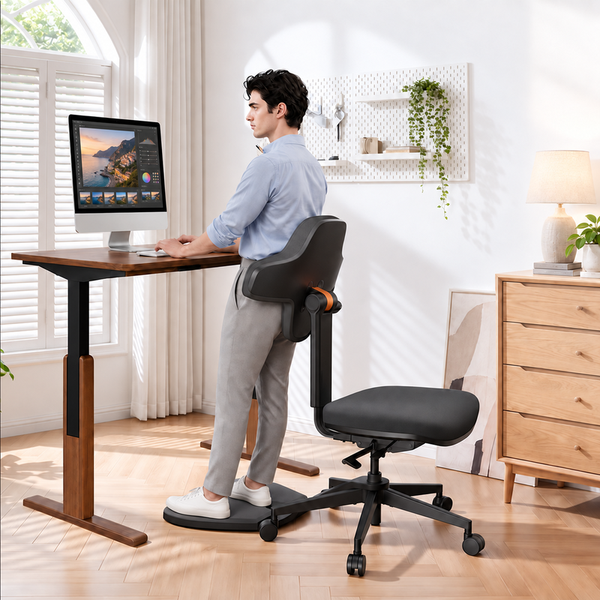
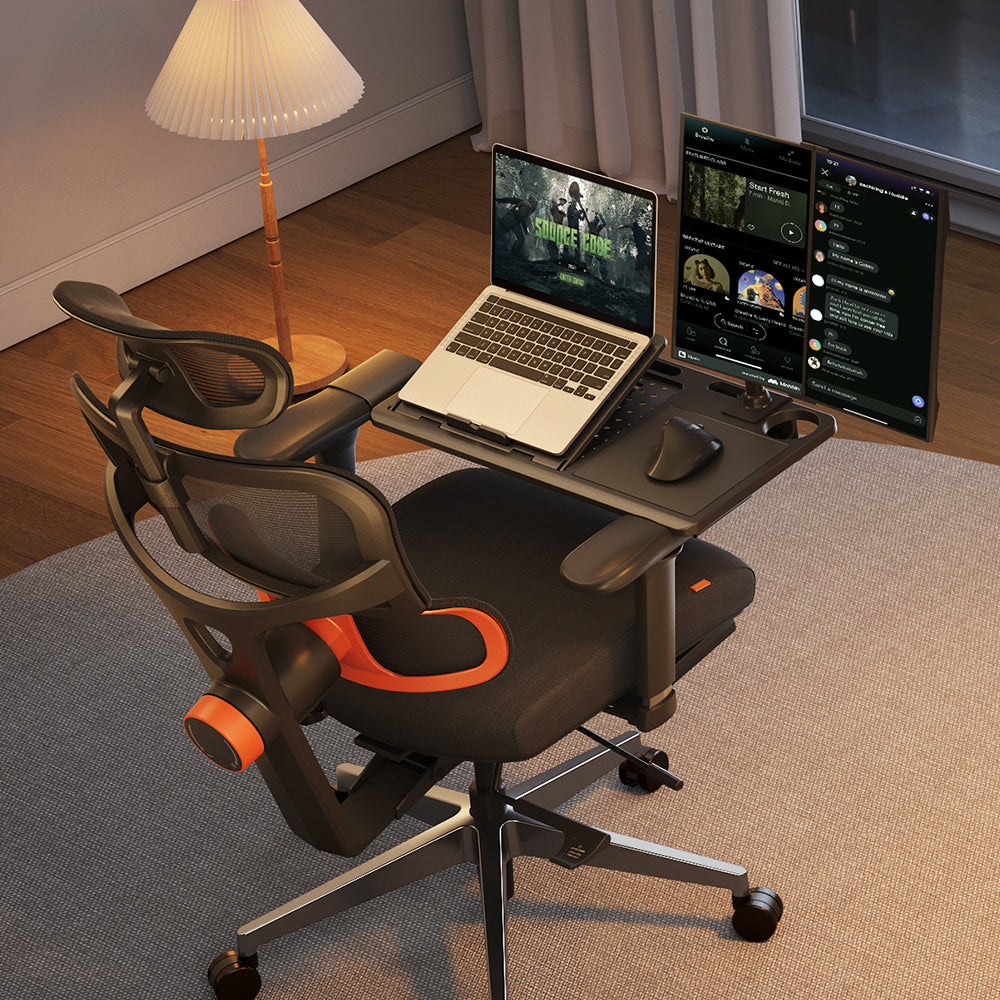
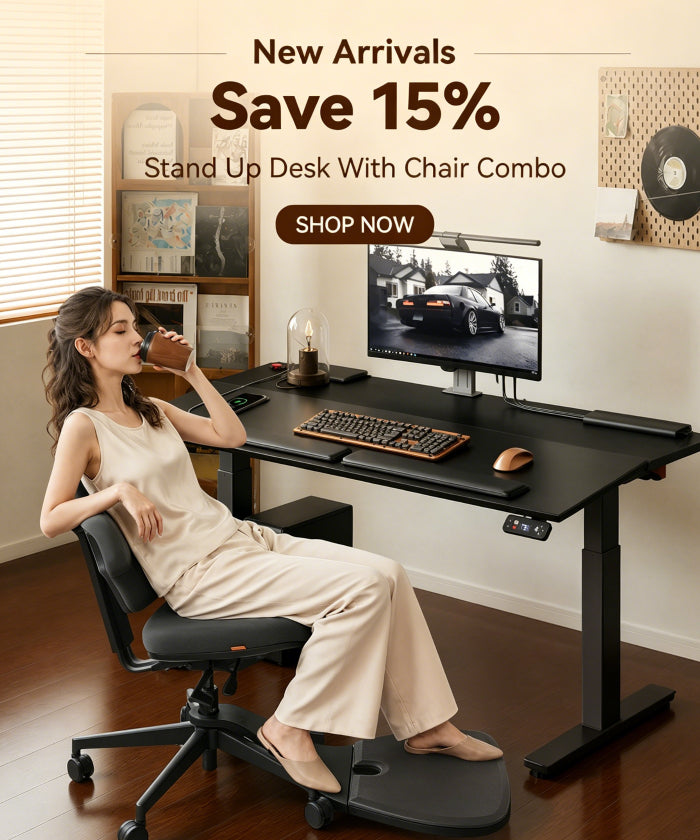
The core problem with staying still for hours is the absence of change, not sitting itself. A setup built around multiple postures makes it easier to shift position without interrupting a workflow. The Newtral Standing-Mate Chair is built specifically around this idea, with six working positions, including straddle sitting, leaning, perching, upright sitting, reclining, and chest-supported standing, so the body is never locked into a single fixed posture for hours at a stretch. It also includes a built-in anti-fatigue pad that absorbs spine pressure and reduces foot fatigue during standing positions, and it is tested to BIFMA, SGS, and TÜV certification standards for durability.
Blog12
Use an Ergonomic Chair
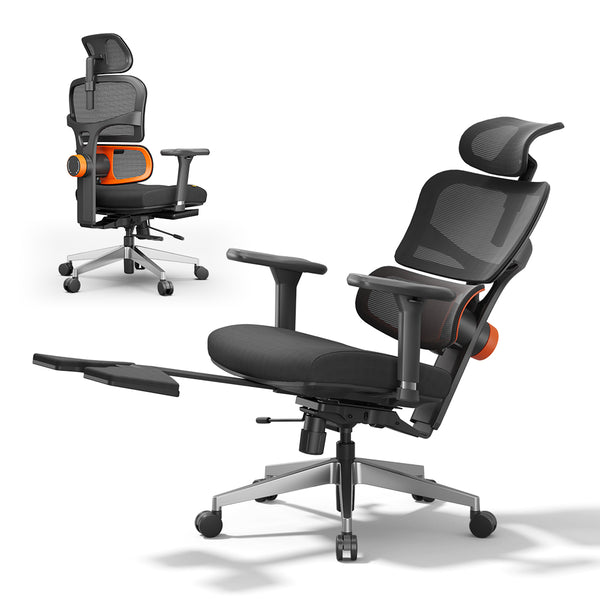
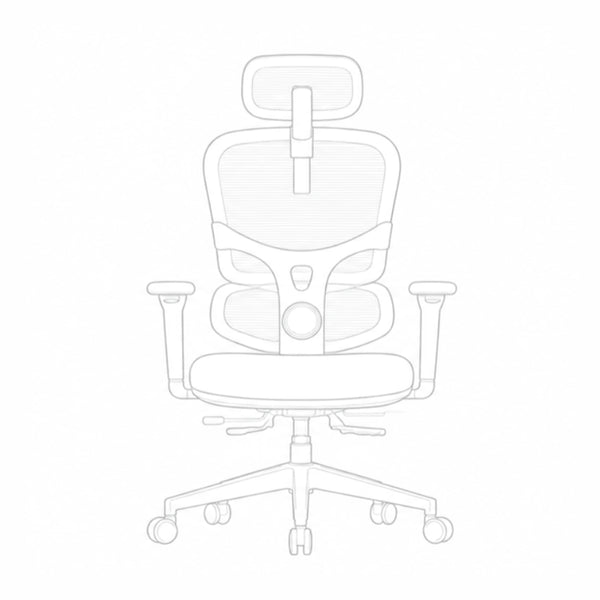
For the hours still spent seated, the chair itself matters more than most people realize. A chair with auto-following lumbar support adjusts in real time as posture shifts, keeping the lower back supported rather than allowing a slump to set in as the day wears on. The Newtral NT002 Ergonomic Office Chair pairs auto-following lumbar support with a built-in footrest, making it a practical example of a chair engineered for extended, all-day sitting rather than short-term use.
blog18
Choosing the Right Chair
What to Look For
Not every office chair is built with long sitting sessions in mind. When evaluating a chair, look for:
- Adjustable lumbar support that moves with the body
- A seat depth that matches leg length
- Breathable seat material for long sessions
- A base that allows smooth height and recline adjustments
- Testing against recognized furniture safety and durability standards, such as those maintained by BIFMA
Certified testing does not guarantee comfort, but it offers some assurance that a chair is built to hold up under daily use.
|
Feature to Check |
Why It Matters |
|
Adjustable lumbar support |
Keeps the lower spine supported as posture shifts |
|
Seat depth and height adjustment |
Ensures proper leg and hip alignment |
|
Breathable seat material |
Reduces discomfort during long sitting sessions |
|
Recognized safety and durability testing |
Confirms the chair is built for daily, long-term use |
How a Standing Desk Completes the Setup
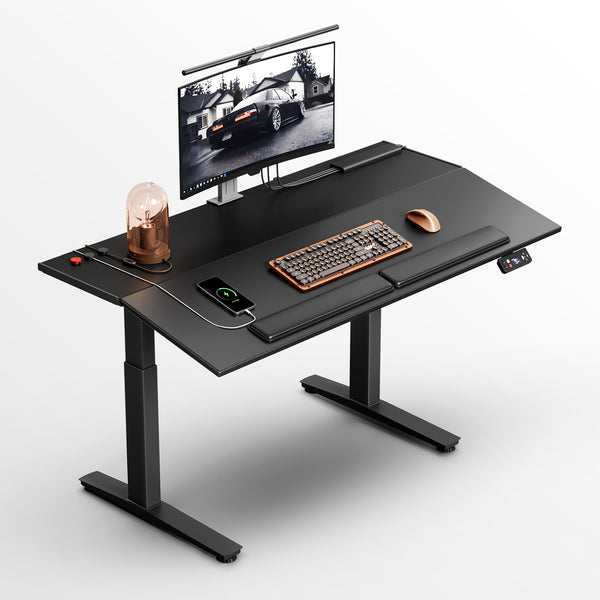
A chair alone only solves half of the equation. To actually reduce total sitting time rather than just sit more comfortably, the desk itself needs to move too. The Newtral DE-A Smart Electric Tilt Standing Desk adjusts electrically from 29.5 to 48.03 inches, covering everything from a seated working height to a full standing position, and its 15-degree tilting front surface keeps wrists at a more natural angle during typing or writing. A smart controller with memory presets saves up to three preferred height and tilt combinations, so switching postures takes one touch rather than a manual reset each time. Paired with a chair like the Standing-Mate, the desk and chair together create a workstation that supports continuous movement throughout the day instead of forcing a single fixed posture at any one time.
Blog18
Which Setup Fits Your Work Pattern
Not every workday looks the same, so the right chair depends on how much of it is actually spent sitting still versus moving between positions.
|
Consideration |
Sit-Stand Setup (Standing-Mate) |
Seated Ergonomic Chair (NT002) |
|
Best suited for |
Frequent posture changes throughout the day |
Long stretches of focused seated work |
|
Posture options |
Six positions, including standing and straddle sitting |
Upright seated support with recline |
|
Lumbar support |
Adjusts across leaning, sitting, and standing |
Auto-following support while seated |
|
Added feature |
Built-in anti-fatigue standing pad |
Built-in footrest |
Workers who alternate frequently between tasks tend to benefit most from a sit-stand setup, while those who stay focused at a desk for most of the day may prioritize deep seated support instead.
Bottom Line
Sitting for eight or more hours a day is common, but it does not have to come at the cost of long-term health. Regular movement breaks, better posture habits, and equipment built to support multiple positions throughout the day can meaningfully reduce the risks discussed above. Small, consistent changes tend to matter more than any single fix, so starting with one habit, whether that is a standing break every hour or a properly adjusted chair, is a reasonable place to begin.
FAQs
Is sitting 8 hours a day bad?
Sitting for eight hours in one continuous stretch, without breaks, is generally considered unhealthy, especially when it happens most days of the week. The bigger factor is not the total hours but how uninterrupted the sitting is. Breaking that stretch into shorter segments with regular movement can meaningfully reduce the associated health risks, even if the total sitting time stays about the same.
How many sitting hours is unhealthy?
There is no single official cutoff, but public health research generally treats around eight or more hours of total daily sedentary time as a threshold where risk starts climbing, particularly for people who are not otherwise physically active. This total counts sitting across the whole day, not just at a desk, so time spent sitting during a commute or in front of a screen at home adds to the same daily total.
Can an ergonomic chair help?
An ergonomic chair can meaningfully reduce strain on the back and neck by supporting proper posture and adjusting along with movement throughout the day. That said, no chair fully eliminates the risks of prolonged sitting on its own. It works best when combined with regular movement breaks and, where possible, a sit-stand routine.
How often should you stand up?
The 30 to 60 minute range mentioned earlier is a widely cited benchmark, but the exact interval matters less than consistency. Standing up on a predictable schedule, rather than only when discomfort sets in, is what actually keeps circulation and muscle stiffness in check over a full workday.
What is the best way to sit for long work hours?
The most effective approach combines a supportive, adjustable chair with regular posture changes and movement breaks rather than relying on any single fix. Alternating between sitting and standing throughout the day, when possible, tends to produce the best results for both comfort and long-term health.




Hinterlasse einen Kommentar
Alle Kommentare werden vor der Veröffentlichung geprüft.
Diese Website ist durch hCaptcha geschützt und es gelten die allgemeinen Geschäftsbedingungen und Datenschutzbestimmungen von hCaptcha.